

Transforming Pharmaceuticals with Business Intelligence


Introduction
The pharmaceutical industry is vital and rapidly evolving. It’s also increasingly relying on business intelligence (BI) solutions to enhance decision-making, reduce operational costs, and improve sales management. As data becomes more integral, BI serves as a crucial tool for pharmaceutical companies to maintain their competitive edge. In this blog, we will delve into the necessity of business intelligence in pharmaceuticals, explore key challenges in the company, and examine how BI dashboards address them. Let’s get started.
Why pharmaceutical companies need business intelligence
Pharmaceutical companies face a lot of competition and need to make smart decisions. BI in the pharmaceutical industry helps by providing useful insights, improving work processes, and supporting better choices. It is needed for:
- Clinical trial optimization: Tracking patient data and trial progress helps spot issues early. The pharmaceutical industry needs BI to make data analysis faster, helping bring new drugs to market sooner.
- Patient insights and engagement: Understanding patients helps in creating better treatments. Business intelligence in the pharmaceutical industry helps analyze patient data, contributing to the design of better treatment plans.
- Financial tracking: Pharmaceutical companies must manage their budgets and profits well. Business intelligence gives financial forecasts for projects, helping them plan investment better.
- Supply chain management: Managing inventory helps avoid shortages. BI predicts stock needs, making sure medicines are always available.
5 key challenges in pharmaceutical analytics
Pharmaceutical companies handle a lot of data, but making sense of it can be hard. They struggle with accuracy, system integration, and following regulations.
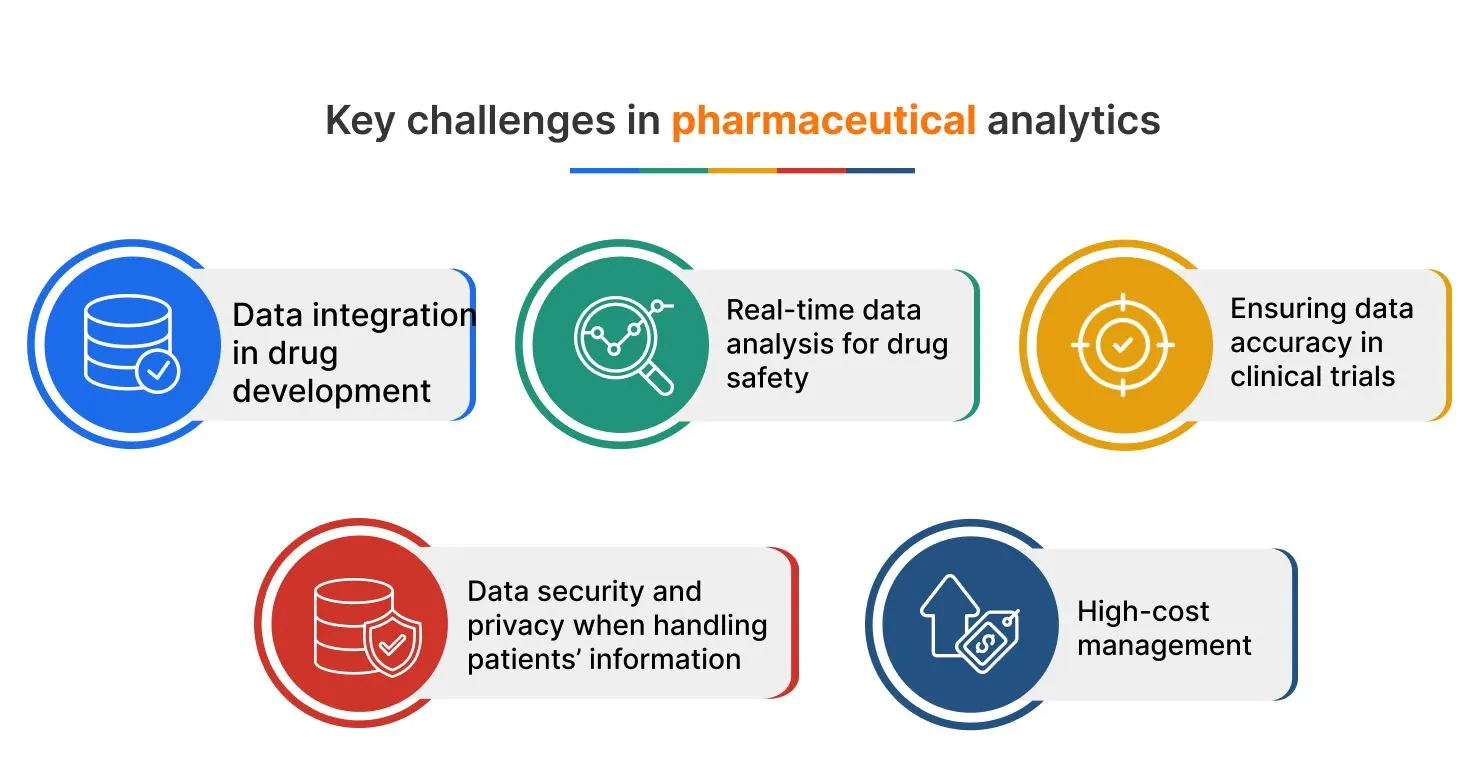
- Data integration: Pharmaceutical companies gather data from trials and labs, but bringing it all together is hard. This slows down decisions and drug development.
- Real-time data analysis for drug safety: The pharmaceutical industry collects vast amounts of data daily, making it difficult to process everything quickly. This can delay the detection of safety issues, putting patients at risk and slowing drug approvals.
- Ensuring data accuracy in clinical trials: If trial data isn’t accurate, it can lead to wrong conclusions and problems with drug approval. This wastes time and resources.
- Data security and privacy when handling patients’ information: Patient information must be protected, but weak security can lead to leaks. This can cause legal trouble and loss of trust.
- High-cost management: Research and approvals are expensive. Poor cost management can cause delays and make it harder to bring new medicines to market.
How BI dashboards address pharmaceutical company challenges
Business intelligence dashboards help pharmaceutical companies handle their challenges by bringing data together and showing real-time metrics, resulting in better decisions.
Examples of these dashboards are those of Bold BI® for pharmaceutical companies. These dashboards make it easy to connect different data sources, track important metrics, and get alerts when something needs attention.
Pharmaceuticals Production Analysis Dashboard
Integrating data from clinical trials and manufacturing can be tough, but a Pharmaceuticals Production Analysis Dashboard can help. This dashboard brings together information from different places, providing a clear picture of production performance. It allows manufacturers to keep an eye on efficiency, check how well production is going, and improve lead times, leading to quicker drug production and fewer delays.
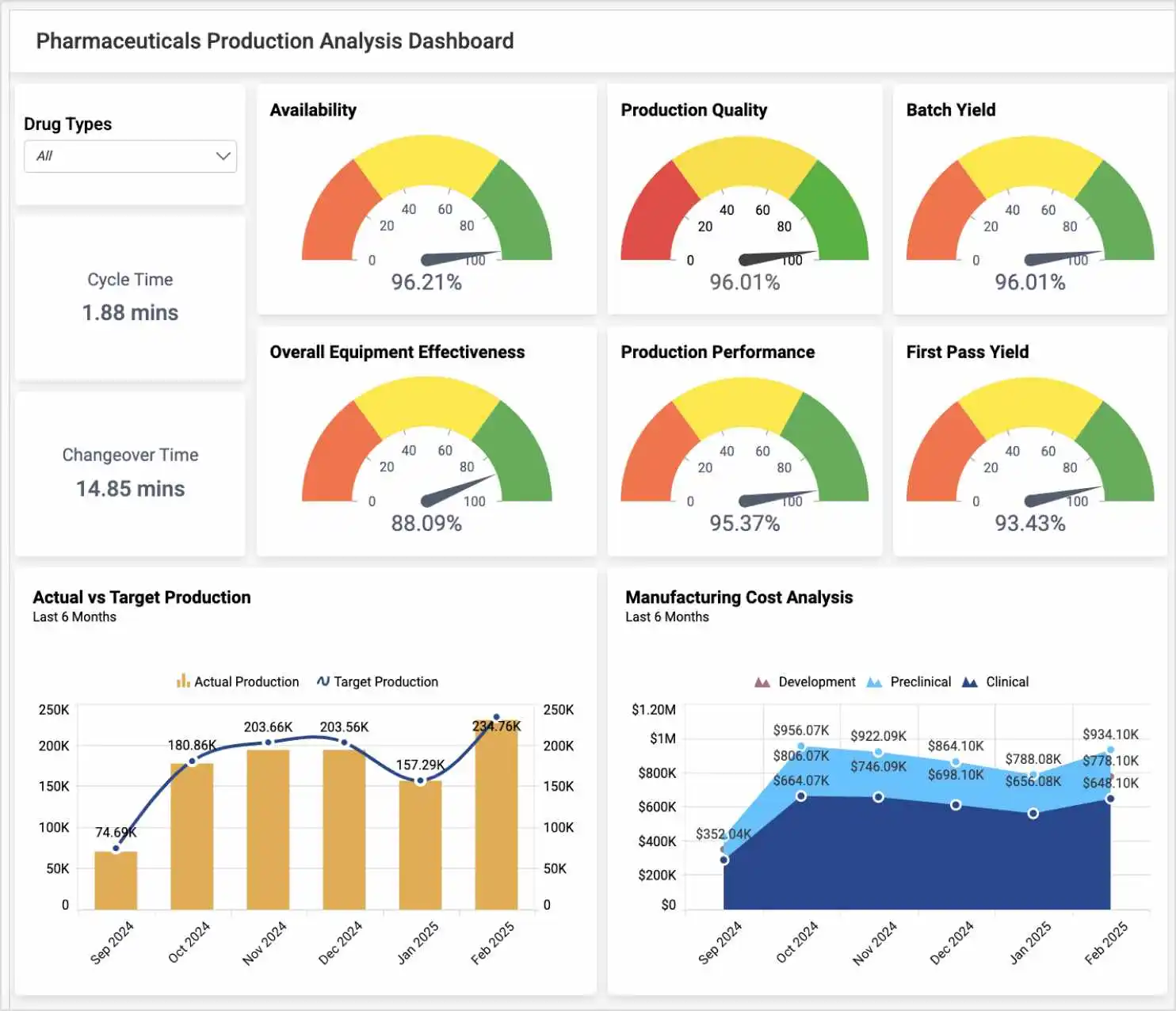
With this dashboard, you can track metrics like:
- Production efficiency: Measures how effectively a pharmaceutical company utilizes its resources.
- Production performance: Shows the overall effectiveness of the production process in terms of meeting production goals, timelines, and cost targets.
- Lead time: Shows the amount of time it takes from the initiation of the production process until the product is completed and ready for distribution.
Pharmaceuticals Sales Performance Dashboard
Tracking sales across various regions and drug types can be challenging. A Pharmaceuticals Sales Performance Dashboard provides a detailed view of sales trends, market share, and regional performance, empowering businesses to make informed sales decisions and boost revenue.
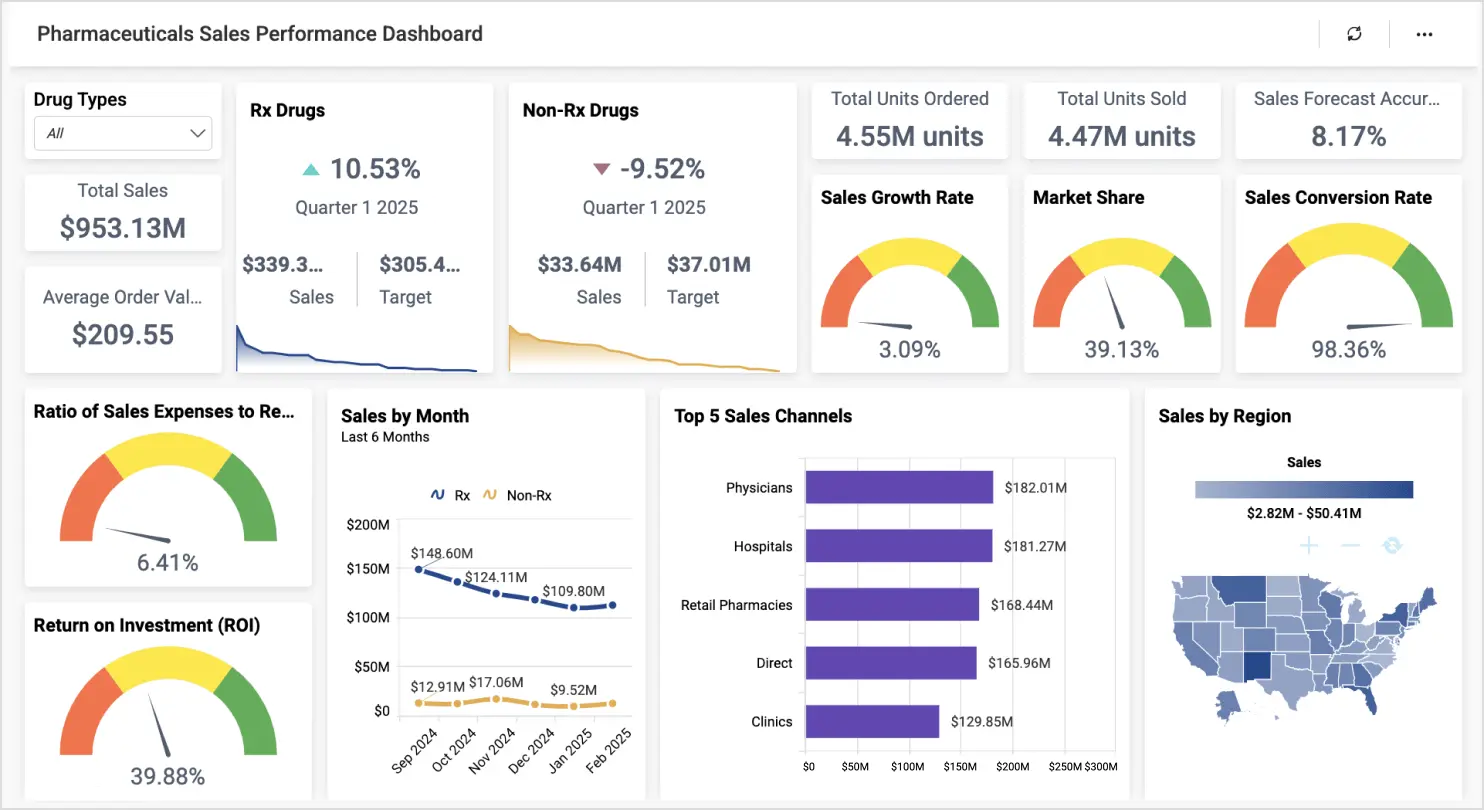
This dashboard tracks key metrics and KPIs like:
- Sales growth rate: Shows the percentage increase (or decrease) in sales over a specific period of time.
- Market share: Represents the percentage of the total market that a pharmaceutical company controls with its products.
- Sales region: Measures the sales performance of a company across different geographic areas.
- Rx and non-Rx drugs: Shows the quarter’s actual versus target sales of prescription and nonprescription drugs and the percentage of change from the previous quarter.
Pharmaceutical Labor Dashboard
A Pharmaceutical Labor Dashboard can help tackle issues like managing labor costs, tracking how well employees are doing, and making sure rules are followed. This dashboard gives companies useful information about how productive their workers are, what labor costs look like, and how satisfied employees are, making it easier to improve their workforce.
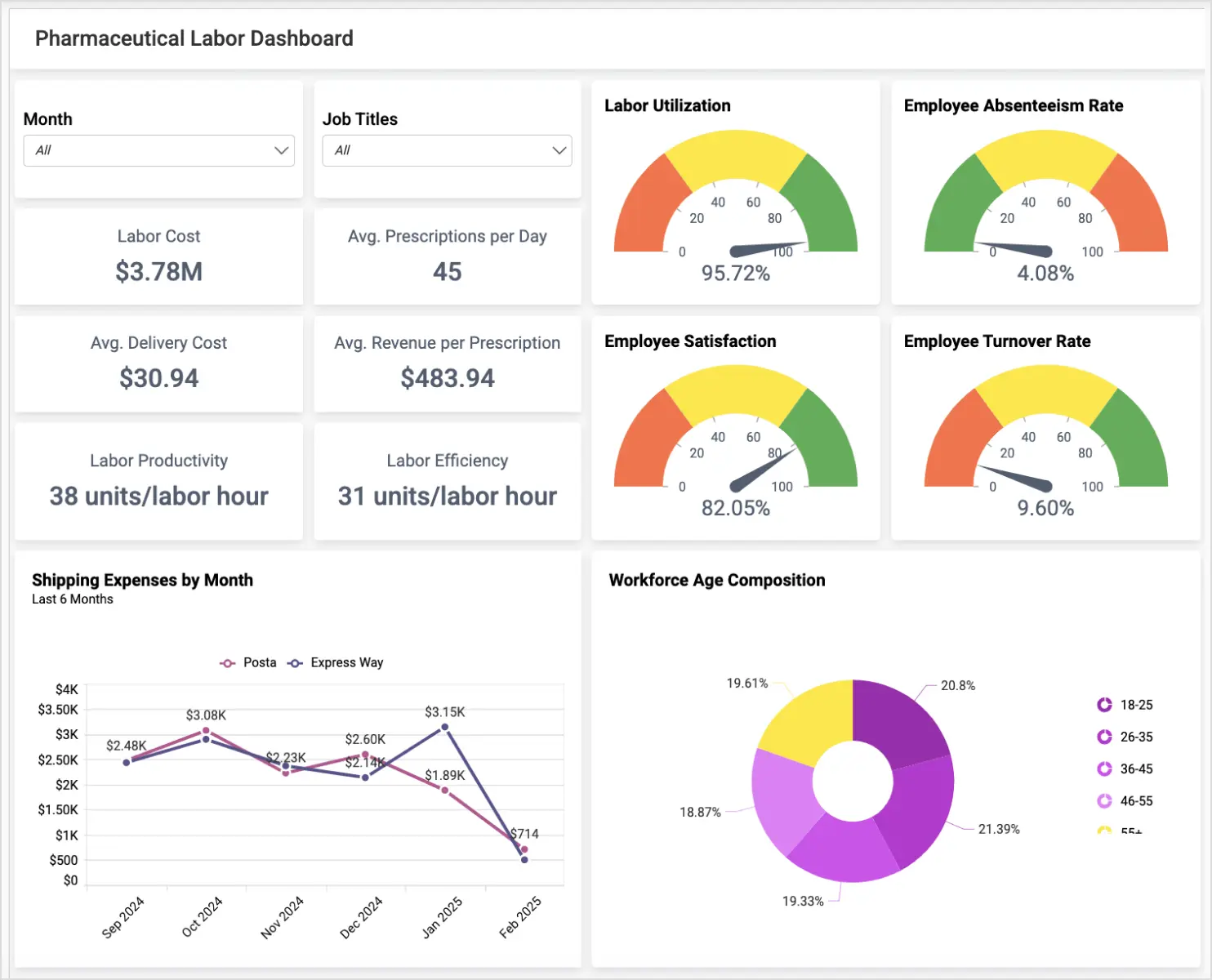
This dashboard tracks the following KPIs and metrics:
- Labor utilization: Measures the percentage of available working hours spent on productive tasks.
- Employee satisfaction: Reflects the level of contentment employees have with their work environment, management, and job roles.
- Employee turnover: Tracks the rate at which employees leave the organization, providing insights into workforce stability.
Now that you understand how business intelligence dashboards can address the challenges of the pharmaceutical industry, take the next step by implementing business intelligence software in your company. Let’s explore the key practices for implementing a BI tool successfully.
5 best practices for implementing BI in a pharmaceutical company
When implementing business intelligence in your company, keep these best practices in mind.
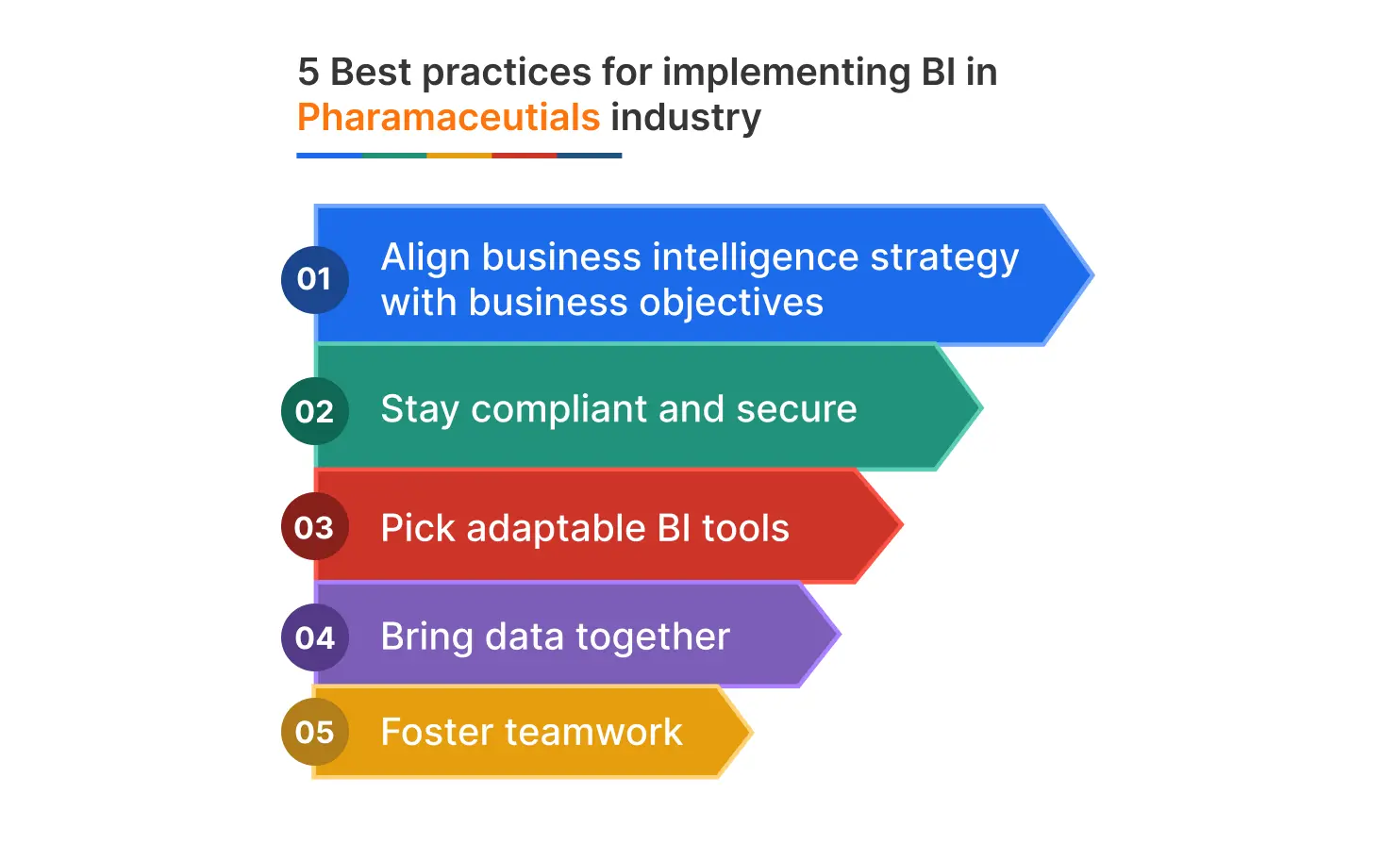
- Align BI strategy with business objectives: BI should be tailored to support the company’s strategic goals, helping departments make data-driven decisions that align with long-term business priorities.
- Stay compliant and secure: Ensure the BI tools meet global regulations and keep sensitive information safe.
- Pick adaptable BI tools: Choose BI solutions that can grow with the business, handle new technologies, and adjust to market changes.
- Bring data together: Combine data from clinical trials, sales, market trends and regulations in one business intelligence system for appropriate decisions.
- Foster teamwork: Encourage collaboration between R&D, manufacturing, sales and compliance teams to get the most out of BI.
Conclusion
I hope you now have a better understanding of business intelligence and how it can help you overcome the challenges of dealing with data in a successful pharmaceutical company. Get started with Bold BI® today by signing up for a free trial and transform your data into actionable insights us! For inquiries, please contact us through our website or log in to your account.
Ready to optimize your pharmaceutical processes? Implement business intelligence to streamline your operations and drive better decision-making!