
Why Traditional BI Fails and How Embedded Analytics Wins

TL;DR: Many BI implementations fail because dashboards become difficult to use, business metrics lose consistency, and analytics stays disconnected from everyday workflows. Organizations in 2026 are improving BI adoption with self-service analytics, embedded dashboards, centralized governance, and real-time business visibility.
Introduction
Business intelligence promises faster decisions, clearer visibility, and better operational insights. Yet many organizations still struggle to turn dashboards into something employees actually use every day. Teams continue relying on spreadsheets, KPI discussions become inconsistent, and analytics adoption slows across departments.
The issue is rarely the idea of BI itself. Most implementation challenges happen when analytics becomes difficult to access, difficult to trust, or disconnected from business workflows.
Embedded analytics platforms like Bold BI® help organizations simplify analytics adoption with embedded dashboards, self-service analytics, and interactive business insights that fit naturally into daily operations.
In this blog, we will explore the most common reasons BI implementations fail in 2026, what companies can do to improve adoption, and the key capabilities to evaluate while choosing a modern BI platform.
5 Realistic Reasons Traditional BI Fails
BI implementation fails when analytics does not deliver trusted, usable, and relevant insights. In 2026, many organizations still struggle to turn dashboards into dependable decision-making tools. These failures usually come from weak data practices, unclear analytics goals, poor dashboard adoption, and a lack of ownership across teams.
1. Disconnected data sources create inconsistent KPIs
Organizations pull analytics data from CRMs, ERPs, spreadsheets, cloud apps, and operational databases. When these systems are not properly connected, dashboards show different KPI values across teams, reducing trust in analytics.
2. Business users cannot access self-service analytics easily
Many BI platforms still require analysts or technical teams to create dashboards, modify filters, or prepare datasets. This slows analytics adoption because business users cannot explore insights independently.
3. Dashboards are not embedded into operational workflows
Analytics often lives in separate reporting portals instead of inside the applications employees already use. Users must switch between systems to access dashboards, reducing visibility and everyday analytics usage.
4. Real-time analytics performance becomes difficult to maintain
As organizations scale data volumes, many BI systems struggle with slow dashboard loading, delayed refresh cycles, and inconsistent real-time visibility. This limits operational decision-making and reduces confidence in analytics.
5. Analytics governance becomes difficult across departments
Different teams often define KPIs differently, create duplicate dashboards, or manage separate reporting logic. Without centralized governance, organizations struggle to maintain consistent analytics experiences across departments.
When features become the focus, dashboards may become overloaded, difficult to interpret, or disconnected from real business needs. As a result, analytics fails to support clear decisions, even when the BI platform offers many advanced capabilities.
To recover from these challenges, organizations need analytics platforms that improve accessibility, usability, governance, and day-to-day adoption. Next, let’s explore how analytics platforms help recover failed traditional BI implementations.
How Modern Analytics Platforms Help Recover Failed BI Implementations
Modern analytics platforms help organizations restart failed BI initiatives by making dashboards easier to access, use, and trust across everyday workflows. Here are a few ways they help recover failed BI implementations.
- Analytics becomes part of everyday workflows: Embedded analytics places dashboards directly inside SaaS applications, portals, and operational systems. Users can access insights naturally while working instead of opening separate BI tools.
- Self-service analytics improves accessibility: Employees can filter dashboards, explore trends, and interact with data independently without depending constantly on technical teams. This improves adoption because users can access insights whenever decisions need to be made.
- Embedded dashboards increase visibility: When dashboards are integrated into business applications, analytics becomes easier to discover and use regularly. This encourages teams to rely more on data during everyday work.
- Governed analytics improves KPI consistency: Centralized governance helps organizations maintain consistent KPI definitions, secure access control, and reliable business metrics across departments. This improves trust in analytics and creates a more consistent experience for teams.
- Real-time dashboards support faster decisions: Organizations increasingly need live visibility into operational activity, customer behavior, and sales performance. Real-time embedded dashboards help teams respond quickly without waiting for delayed updates or manual exports.
These recovery approaches are especially valuable for SaaS businesses, where analytics must fit naturally into customer-facing applications, internal tools, and daily workflows. The impact of modern analytics platforms can be seen across several SaaS use cases where traditional BI often struggles with adoption, accessibility, and visibility. Let’s explore a few practical use cases.
Use Cases of Embedded Analytics Platforms Across SaaS Industries
These platforms solve traditional BI failures across industries by embedding dashboards directly into business workflows, making insights easier to access, use, and act on. Examples include:
Sales: Improving dashboard adoption inside CRM workflows
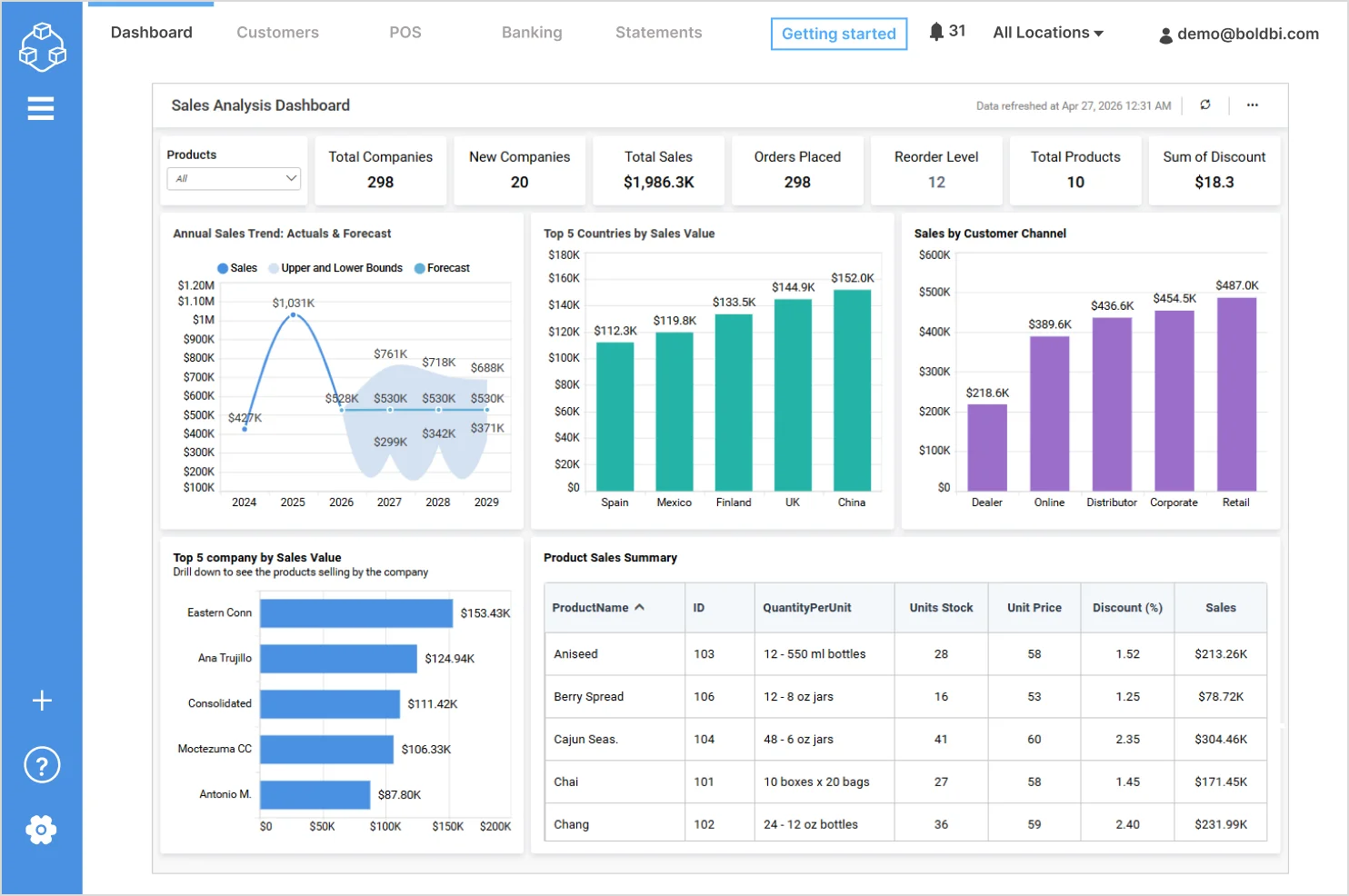
Sales teams often struggle with traditional BI when dashboards are separated from the systems they use to monitor customers, products, orders, and sales performance.
When traditional BI workflows are disconnected:
- Teams may switch between multiple tools to track total sales, orders placed, reorder levels, and product performance.
- Dashboard adoption can decrease when sales analytics are not available within daily workflows.
- Decision-making may slow down due to delayed visibility into sales trends, customer channels, and top-performing regions.
With embedded analytics solutions, sales dashboards can be integrated directly into sales portals, CRM systems, and internal business applications. This helps teams monitor sales trends, customer channel performance, product summaries, and regional sales insights from one centralized dashboard.
Marketing: Centralizing marketing performance analytics for better visibility
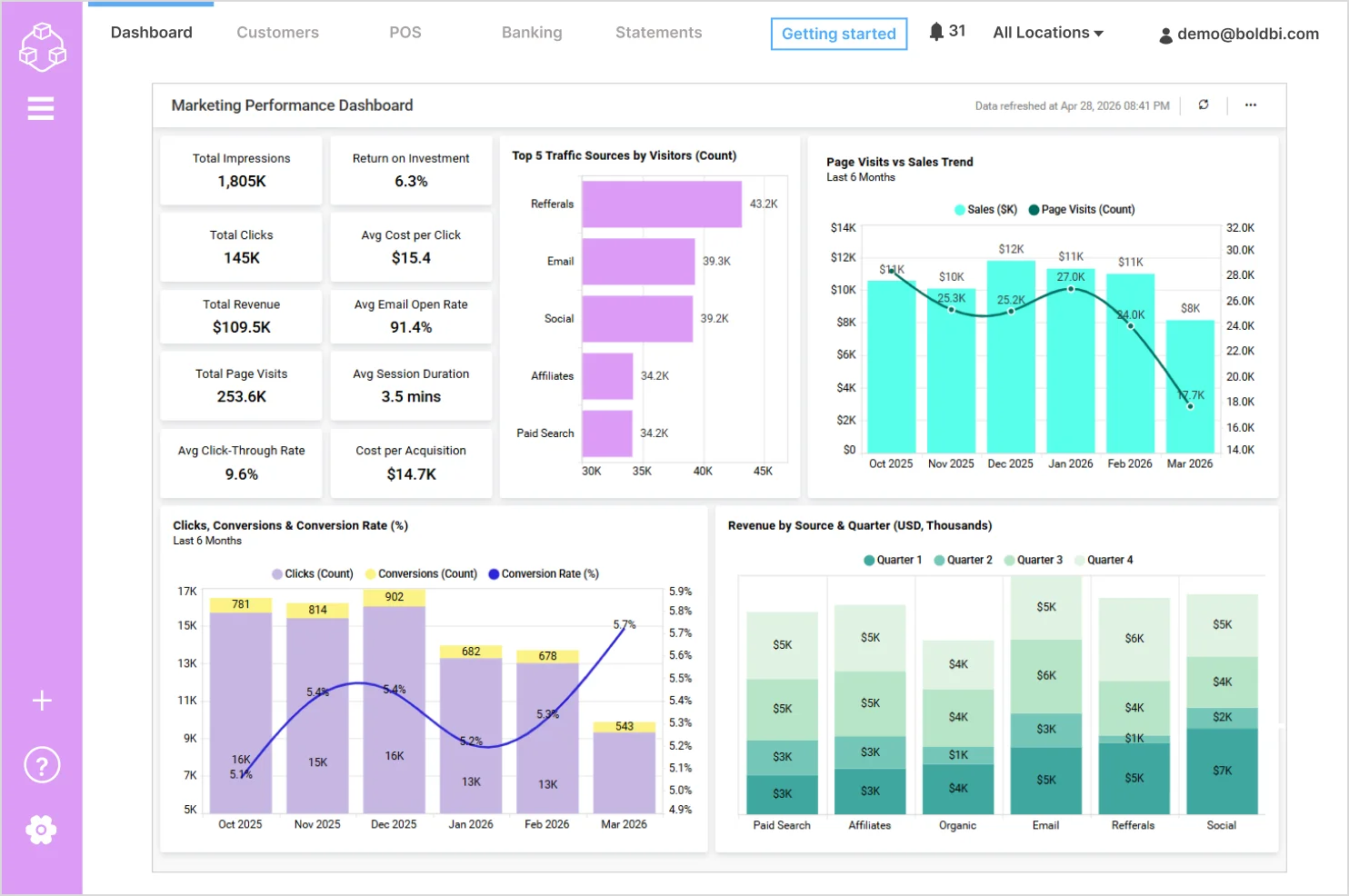
Marketing teams often face traditional BI challenges when performance data is spread across multiple tools and analytics are not connected to daily marketing workflows.
When traditional BI environments are fragmented:
- Teams may struggle to track impressions, clicks, page visits, conversions, and revenue from one centralized dashboard.
- Insights can become delayed when traffic sources, engagement metrics, and performance data are disconnected.
- Dashboard adoption may decrease when marketing analytics are difficult to access during everyday decision-making.
With embedded analytics solutions, marketing dashboards can be embedded into existing marketing systems and internal portals without switching tools. This helps teams monitor traffic sources, engagement metrics, conversions, revenue trends, acquisition costs, and overall marketing performance from a centralized analytics view.
These use cases show how embedded analytics platforms can improve dashboard adoption and make analytics more relevant to daily business operations. However, choosing the right platform is critical because not every solution offers the flexibility, scalability, and governance SaaS businesses need.
Let’s look at the key features to consider when choosing an embedded analytics platform for your SaaS business in 2026.
What to Look for in a SaaS Embedded Analytics Platform in 2026
Choosing the right embedded analytics platform for SaaS requires evaluating the analytics capabilities that directly affect adoption, governance, usability, and long-term analytics performance.
Here are the key capabilities to evaluate.
- Multi-tenant analytics support: SaaS businesses need secure tenant-level dashboard access that separates customer data while maintaining consistent analytics experience.
- Flexible embedding options: The platform should support embedded dashboards inside web applications, customer portals, enterprise systems, and mobile environments.
- Self-service analytics capabilities: Business users should be able to explore dashboards, apply filters, and analyze insights independently without technical complexity.
- Real-time dashboard performance: Fast-loading dashboards and live business monitoring are essential for operational visibility and customer-facing analytics experiences.
- Role-based access control: Organizations need role-based permissions to ensure employees and customers only access the dashboards and data relevant to them.
- Flexible deployment options: Many organizations require cloud, on-premises, or hybrid deployment depending on security, infrastructure, and compliance requirements.
- Wide data source connectivity: An embedded analytics platform should connect easily with databases, APIs, ERP systems, CRMs, spreadsheets, and cloud applications.
- Transparent and scalable pricing: Choose a pricing model that fits your current analytics needs and remains manageable as users, data sources, and embedded analytics requirements grow.
- Low-maintenance platform management: The platform should reduce administrative effort through easier updates, centralized management, and simple user access control.
- Dashboard customization: SaaS businesses often need dashboards that match their product branding and user experience. White-label analytics helps organizations deliver customer-facing dashboards without building analytics infrastructure from scratch.
By evaluating these capabilities carefully, you can choose a BI platform that improves analytics adoption, supports long-term scalability, and reduces the risks that commonly lead to BI implementation failure.
For example, a platform like Bold BI brings these capabilities together through flexible deployment, embedded analytics, self-service dashboards, real-time visibility, and centralized governance. Let’s explore how Bold BI helps reduce traditional BI implementation challenges.
How Bold BI Helps Reduce Traditional BI Implementation Challenges
Modern analytics solutions like Bold BI help organizations simplify analytics adoption with self-service dashboards, embedded analytics, real-time visibility, and centralized governance:
- Flexible deployment and scalability: Bold BI supports cloud, on-premises, and hybrid deployment options, helping organizations choose the environment that fits their infrastructure and compliance requirements.

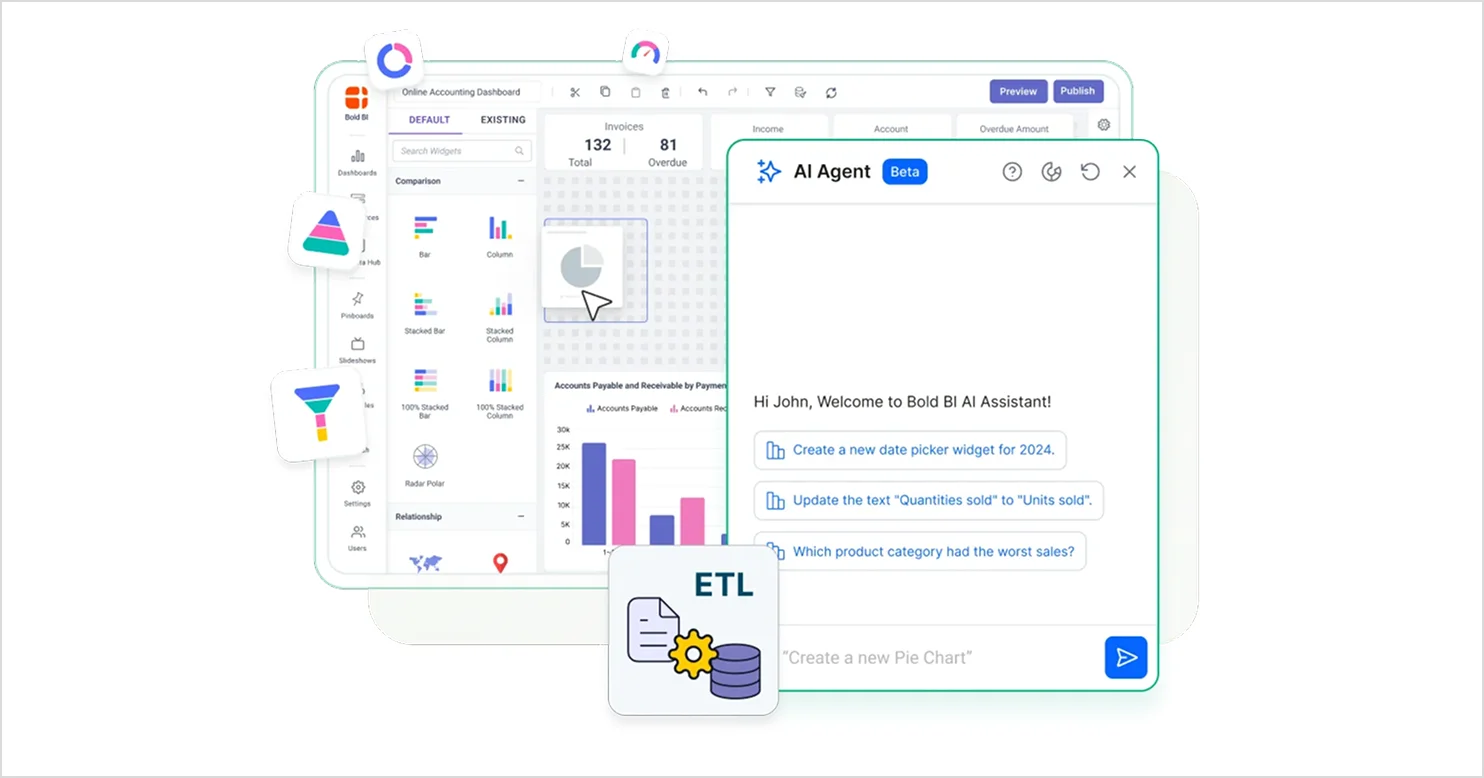
Deployment - Self-service analytics that improve user adoption: Bold BI enables users to explore dashboards, filter data, and access KPIs independently without depending heavily on technical teams. This improves dashboard adoption and helps teams make faster business decisions.
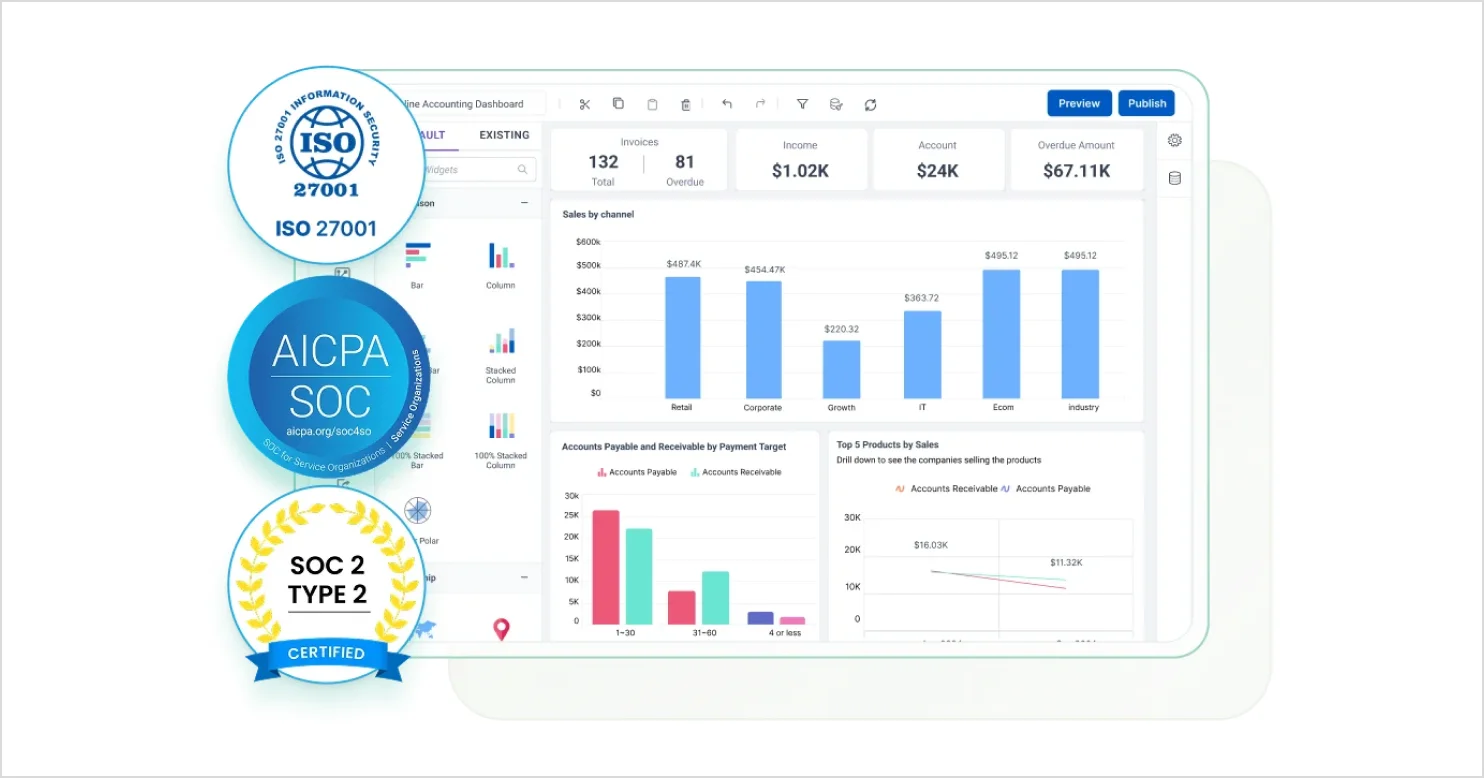
Self-service analytics - Secure governance and role-based access: Bold BI supports role-based permissions, governed dashboard access, and centralized management to help organizations maintain reliable KPI visibility across teams.
Enterprise-grade security - Embedded analytics for SaaS application: Bold BI supports embedded analytics that integrates dashboards directly into SaaS applications, customer portals, internal business systems, and operational workflows. This keeps analytics connected to the tools employees already use every day.
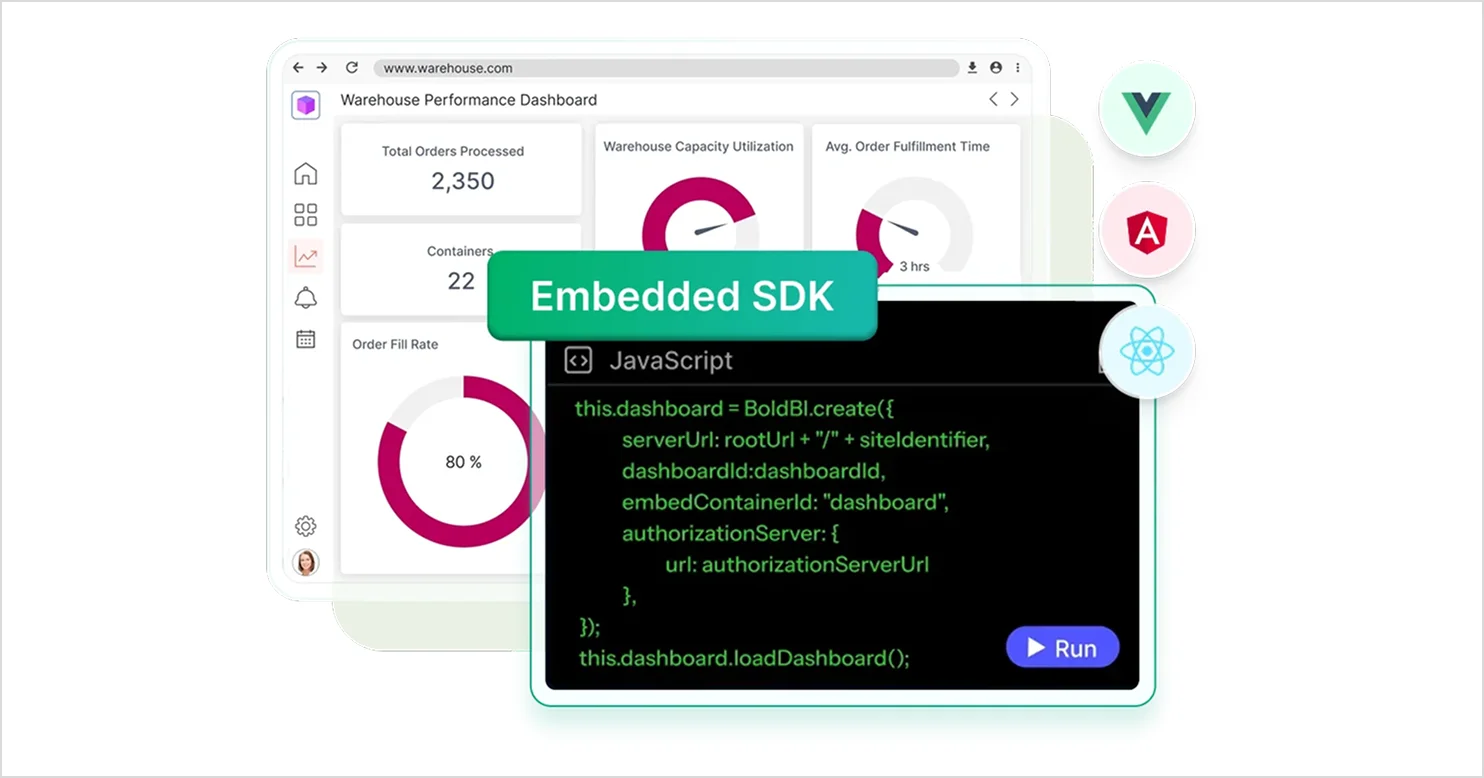
Embedded analytics - Interactive dashboards with real-time visibility: Bold BI provides interactive dashboards that help organizations monitor operational KPIs, sales performance, customer analytics, and business trends from a centralized analytics environment.
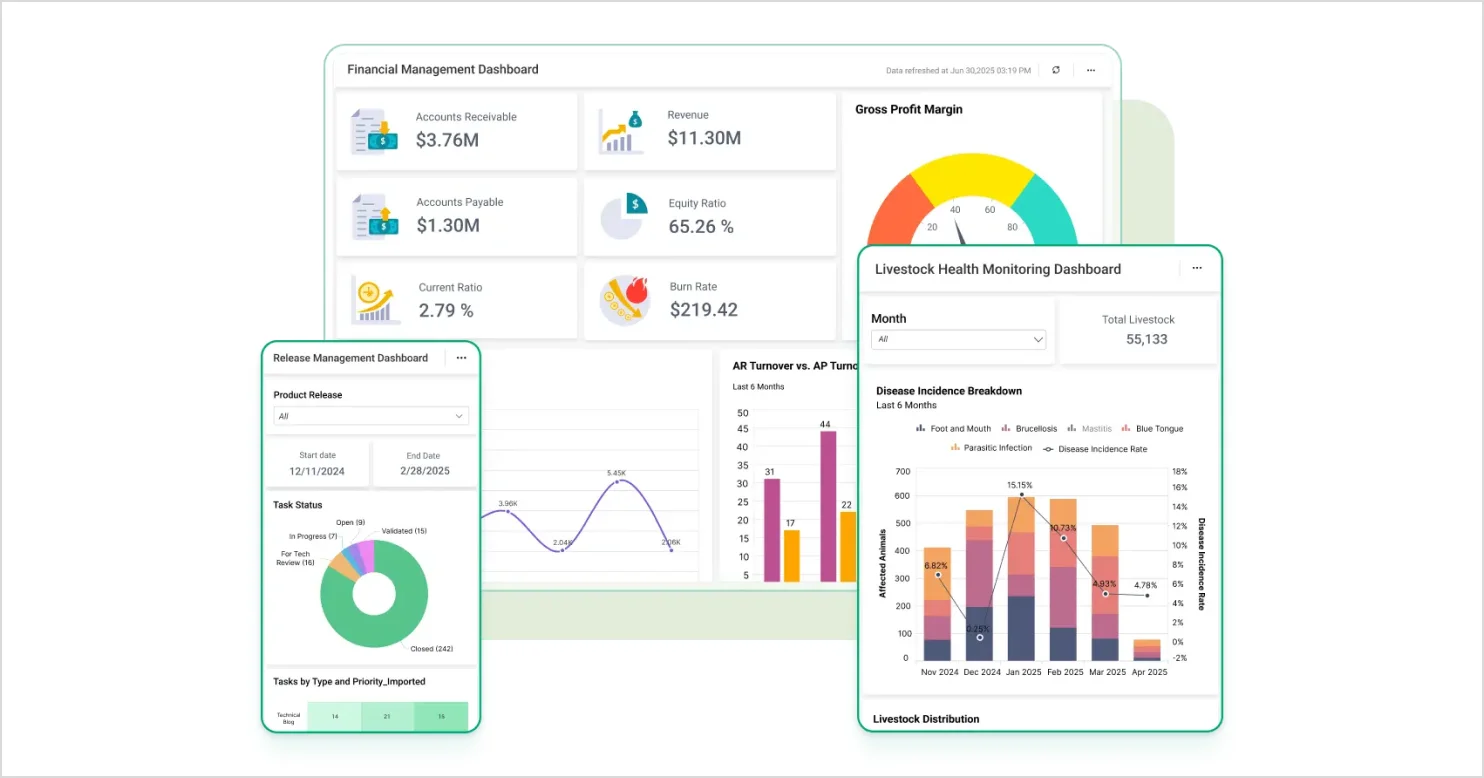
Enterprise dashboards - Effective team collaboration and sharing: Bold BI allows teams to share dashboards and analytics with the right users through role-based access and scheduled sharing. This helps departments, business users, and customers collaborate around trusted insights while maintaining centralized governance.
- Wide connectivity across data sources: Bold BI connects with multiple databases, cloud applications, APIs, spreadsheets, and business systems, helping organizations centralize analytics without complicated manual integration processes.
Data connectors - Multi-tenant analytics for growing SaaS platforms: Organizations building customer-facing analytics experiences often require tenant-based dashboard access and secure data separation. Bold BI supports multi-tenant analytics capabilities that help SaaS businesses deliver secure dashboards for different customer environments.
Organizations looking to recover from traditional BI implementation failures need analytics platforms that prioritize usability, accessibility, scalability, and long-term adoption. With embedded analytics, self-service dashboards, and flexible deployment capabilities, Bold BI helps businesses simplify analytics delivery across SaaS applications and operational workflows. To learn more about embedded analytics capabilities, explore our blog, “Why You Should Choose Bold BI for Embedded Analytics.”
Final Thoughts
Business intelligence implementation failure is not inevitable. Most BI projects succeed when organizations prioritize data governance, user adoption, clear KPIs, and phased deployment over unnecessary complexity and feature overload.
By choosing the right BI platform like Bold BI® and aligning analytics initiatives with real business goals, organizations can improve analytics accuracy, accelerate decision-making, increase user adoption, and maximize long-term ROI from their BI investments.
Want to experience analytics with a modern platform that simplifies BI adoption and implementation? Look no further. Bold BI helps teams create, embed, and manage interactive dashboards with ease. Whether you are a new developer or experienced analytics professional, Bold BI provides a smooth onboarding experience that allows you to create your own dashboard quickly. Additionally, with a 24/7 support team, Bold BI enables you to resolve questions faster and move forward with confidence. Sign up for a free trial or request your personalized demo to explore the full features of Bold BI today.
Related Resources:
- Secure Embedded Analytics for SaaS Applications in 2026
- SaaS Analytics Platform in 2026: Why It Matters & Use Cases
- 7 SaaS Dashboard Examples to Track Business Growth in 2026
- 7 Business Intelligence Trends to Watch in 2026
- Top Embedded Analytics Tools for SaaS Product Teams in 2026
- Top 5 Embedded Analytics Use Cases for SaaS in 2026
Frequently Asked Questions
- 1.
Why do BI implementations fail?
Most BI implementations fail because of disconnected data sources, inconsistent KPIs, complex dashboard experiences, low analytics adoption, and limited self-service access for business users.
- 2.
How does self-service analytics improve BI adoption?
Self-service analytics allows employees to explore dashboards, analyze trends, and access business insights independently without depending constantly on analysts or technical teams.
- 3.
What is embedded analytics?
Embedded analytics allows organizations to integrate dashboards directly into SaaS applications, customer portals, and internal systems so users can access insights within their existing workflows.
- 4.
Why do employees avoid dashboards?
Employees often avoid dashboards when metrics are inconsistent, dashboards are difficult to use, or analytics is disconnected from the systems they use every day.
- 5.
How does Bold BI help improve analytics adoption?
Bold BI helps organizations improve analytics adoption with self-service dashboards, embedded analytics, real-time business visibility, secure governance, and scalable BI capabilities designed for modern business teams.