7 Business Intelligence Trends to Watch in 2026


 6 min read
TL;DR: Business intelligence in 2026 is shifting from static dashboards to intelligent, automated, and embedded analytics experiences. AI, real-time data, and user-friendly tools are making insights faster and more accessible than ever. Organizations that adapt to these trends will gain a significant competitive edge.
Introduction
Business intelligence (BI) is a strategic engine that drives real-time decision-making, operational efficiency, and competitive advantages. As data volumes grow and decisions move faster in 2026, the expectations for BI tools have evolved significantly. Modern businesses demand faster insights, deeper analytics, seamless integrations, and intuitive user experiences that empower both technical and non-technical users.
Emerging technologies like AI, embedded analytics, and augmented data discovery are transforming how organizations interact with data, shifting BI from a reactive tool to a proactive decision partner while driving a stronger focus on responsible data use. In this article, we explore seven business intelligence trends defining modern decision-making in 2026.
Why business intelligence trends matter in 2026
Understanding and adopting new BI trends enables organizations to stay ahead in rapidly changing markets. Modern BI:
- Enables faster decision‑making: Modern BI trends support real‑time and predictive insights, allowing organizations to respond quickly to market changes.
- Shifts from reactive to proactive analytics: BI now focuses on anticipating outcomes and recommending actions rather than only reporting past performance.
- Democratizes access to data: AI‑driven and self‑service BI tools empower non‑technical users to explore data and make informed decisions independently.
- Improves operational efficiency: Automation and augmented analytics reduce manual analysis and speed up insight generation across teams.
- Supports complex data environments: Emerging BI solutions handle increasing data volume, variety, and velocity more effectively.
- Strengthens data trust and governance: Current trends emphasize data quality, security, regulatory compliance, and explainable insights.
- Drives competitive advantage: Organizations aligned with contemporary BI trends can innovate faster, optimize operations, and make more confident strategic decisions. Ignoring these trends can lead to slower decisions, missed opportunities, and reliance on outdated reporting methods.
7 business intelligence trends in modern businesses in 2026
As organizations continue to rely on data for critical decisions, business intelligence is evolving to become more powerful, accessible, and integrated into everyday workflows. The following trends highlight how BI is transforming in 2026 and what businesses should focus on to stay competitive.
1. AI-powered analytics assistants
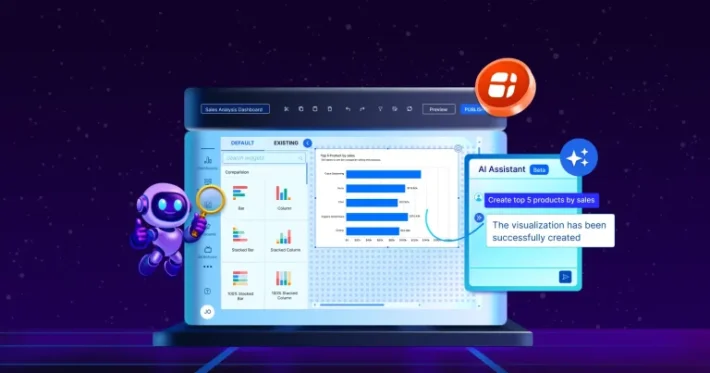
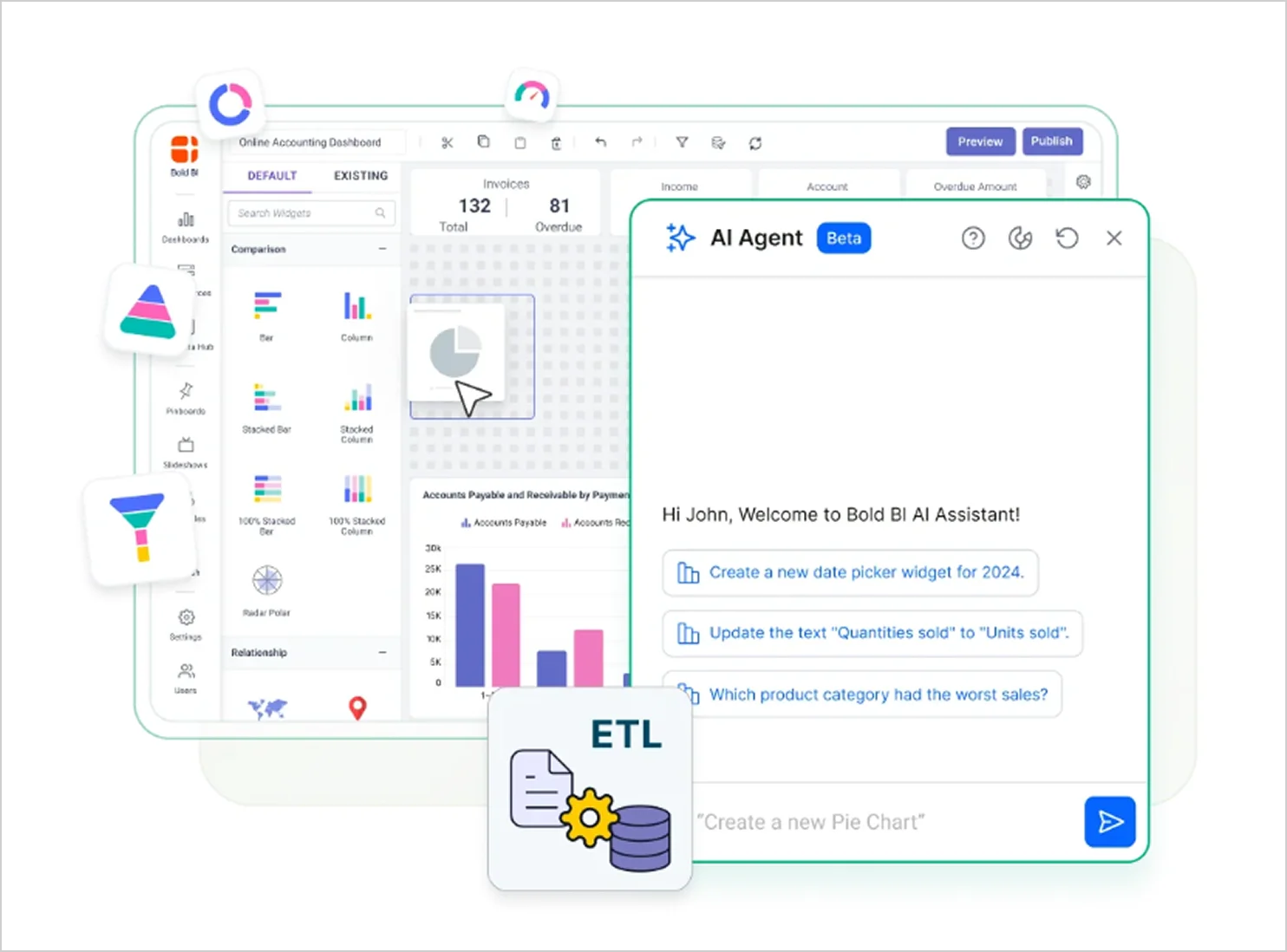
AI is transforming BI from a passive tool into an active assistant. Modern BI platforms now use AI agents to automate data exploration, generate insights, and even recommend actions. Instead of manually building reports, you can rely on AI to:
- Detect patterns and anomalies.
- Generate insights automatically.
- Answer complex queries instantly.
This significantly reduces the workload on analysts and accelerates decision-making.
2. Embedded analytics in everyday applications
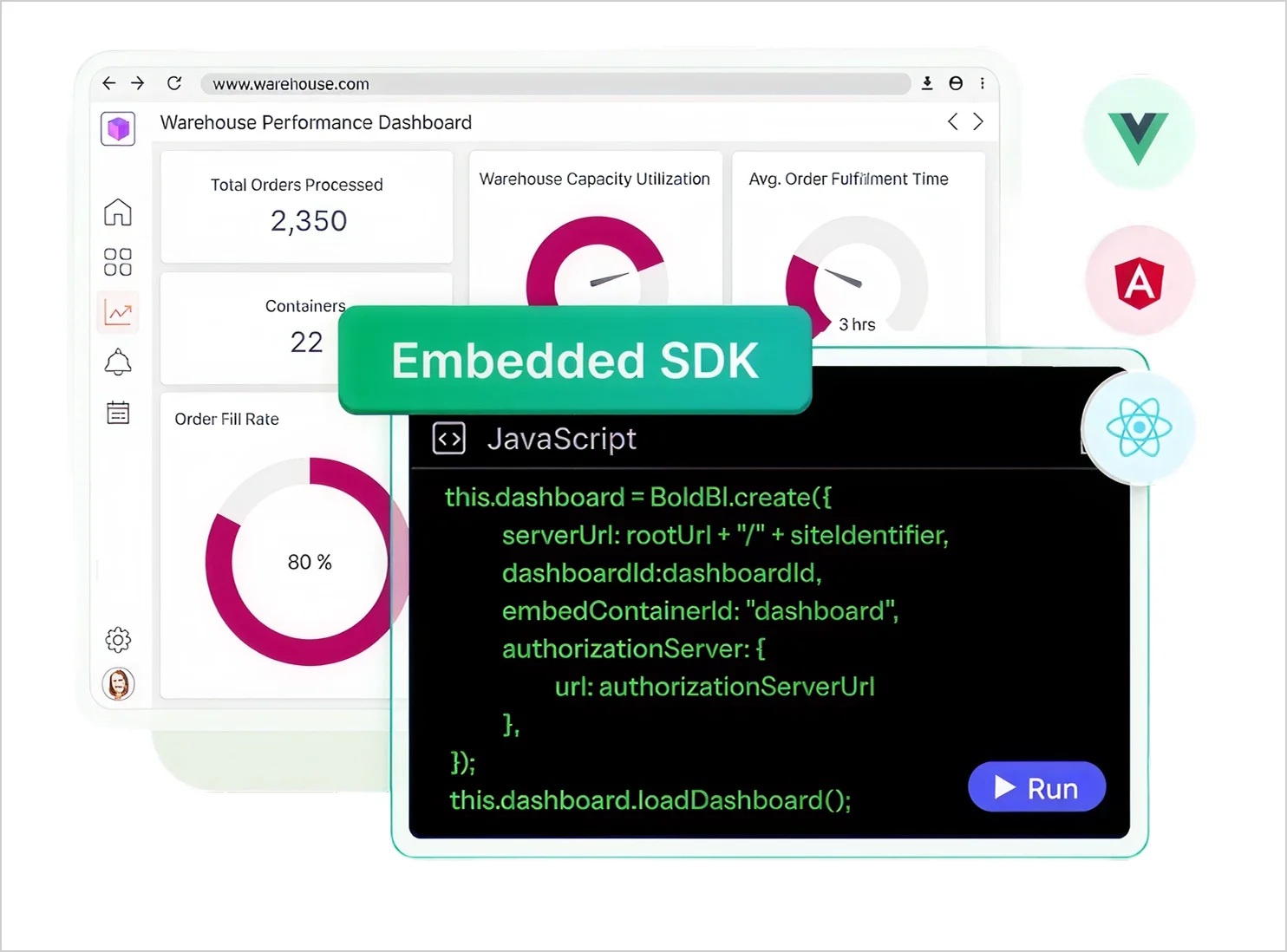
BI is moving beyond standalone tools and becoming part of everyday business applications. Embedded analytics allows you to access insights directly within CRM systems, ERPs, or custom apps. This trend ensures:
- Faster decision-making within workflows.
- Increased adoption of BI tools.
- Contextual insights where they are needed most.
3. Scalable and flexible cloud-based BI
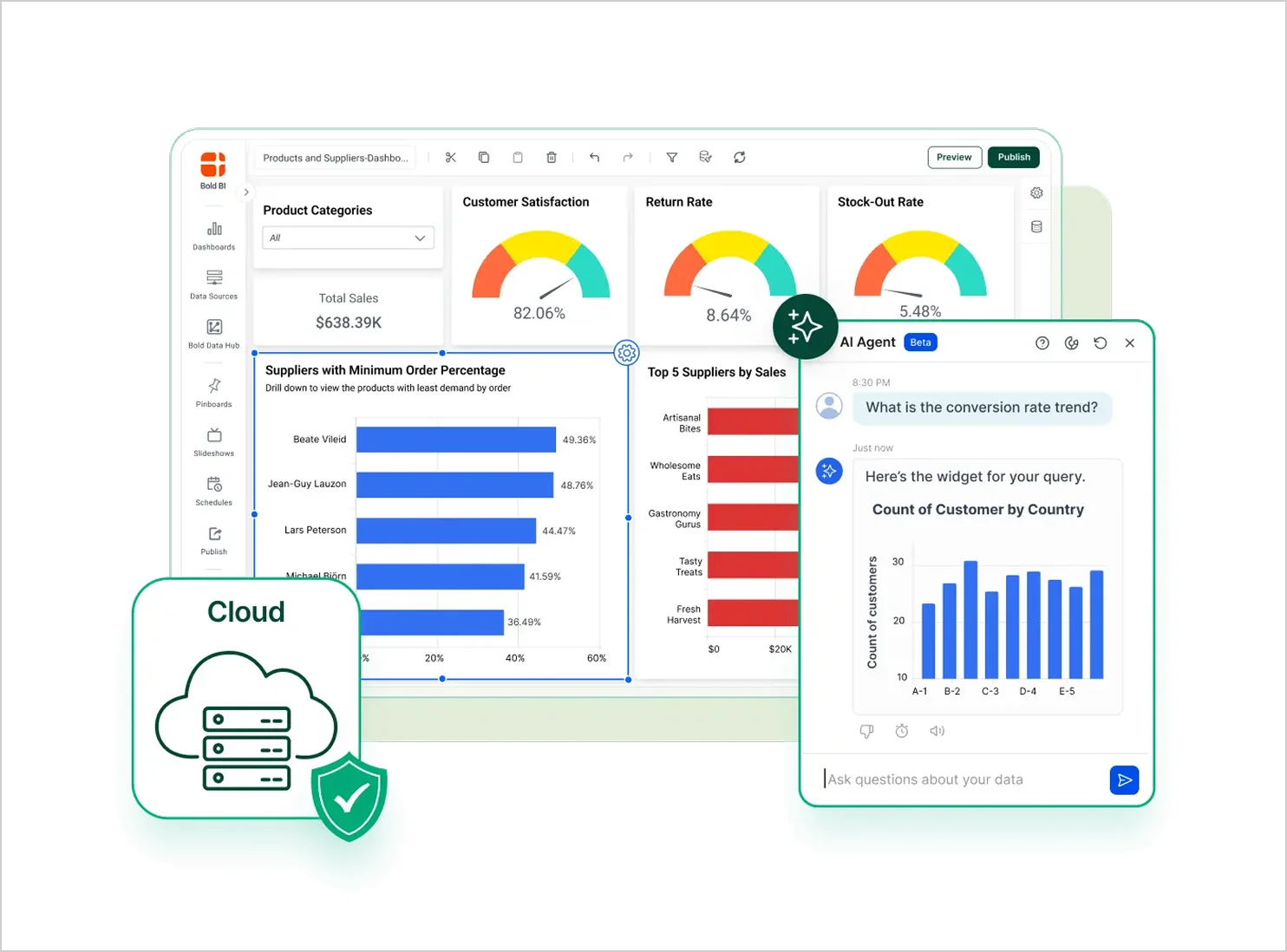
Cloud BI continues to dominate due to its scalability, flexibility, and cost efficiency. Organizations are shifting to cloud-native analytics platforms for the following reasons:
- Real-time data access from anywhere.
- Easy scalability as data grows.
- Reduced infrastructure maintenance.
4. Stronger focus on data governance and trust
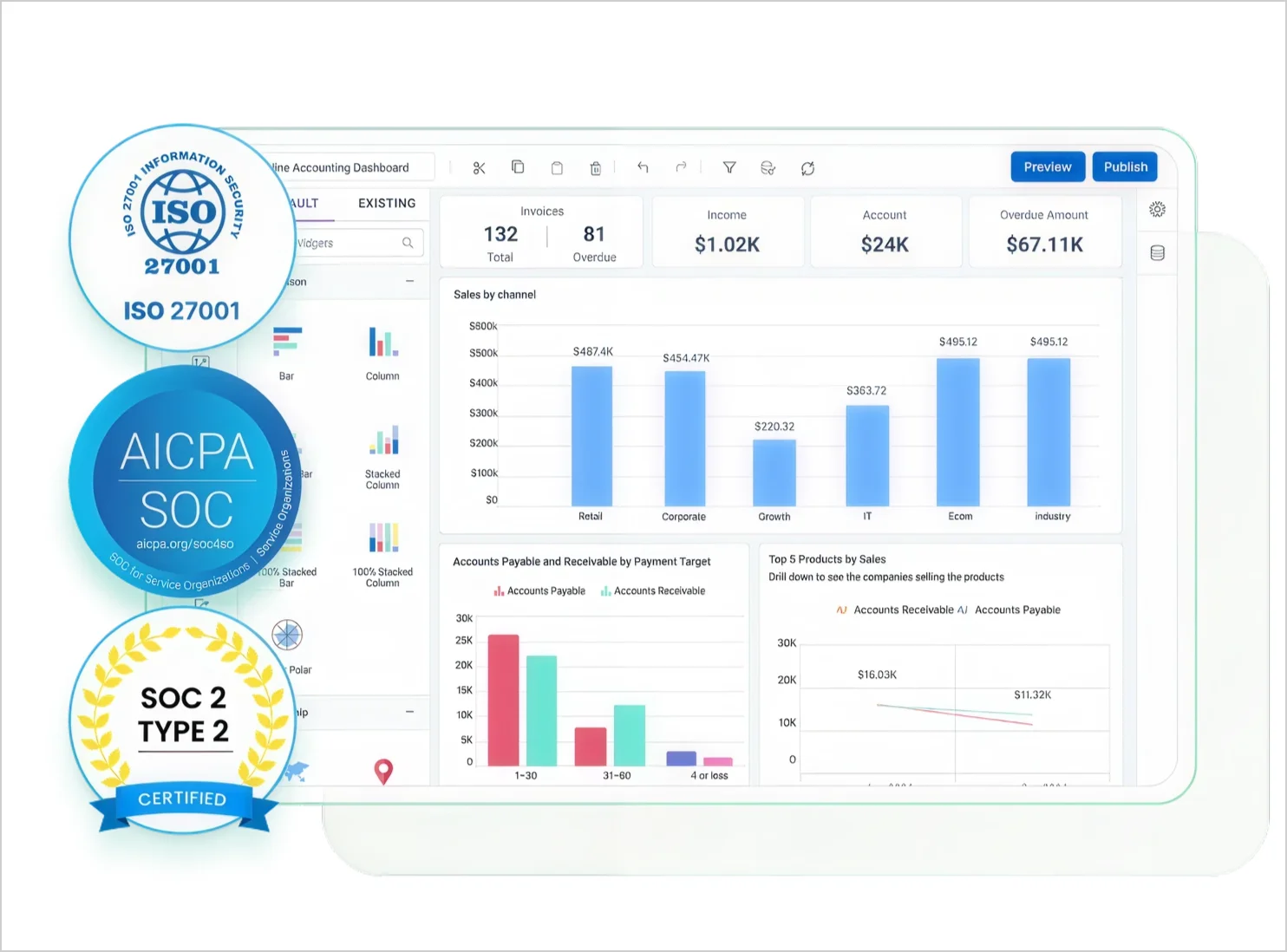
As data usage increases, so does the need for reliable and secure data. Data governance ensures that data is accurate, consistent, and compliant with regulations. In 2026, businesses are prioritizing:
- Data quality and consistency.
- Role-based access control.
- Compliance with data regulations.
Trustworthy data is the foundation of effective decision-making.
5. Truly accessible self-service BI
Self-service BI is becoming more intuitive, enabling non-technical users to explore and analyze data without relying on IT teams. Modern platforms focus on delivering:
- Drag-and-drop interfaces.
- Guided analytics experiences.
- Tools that are easy to learn.
This democratization of data empowers employees across all departments.
6. Natural language and conversational BI
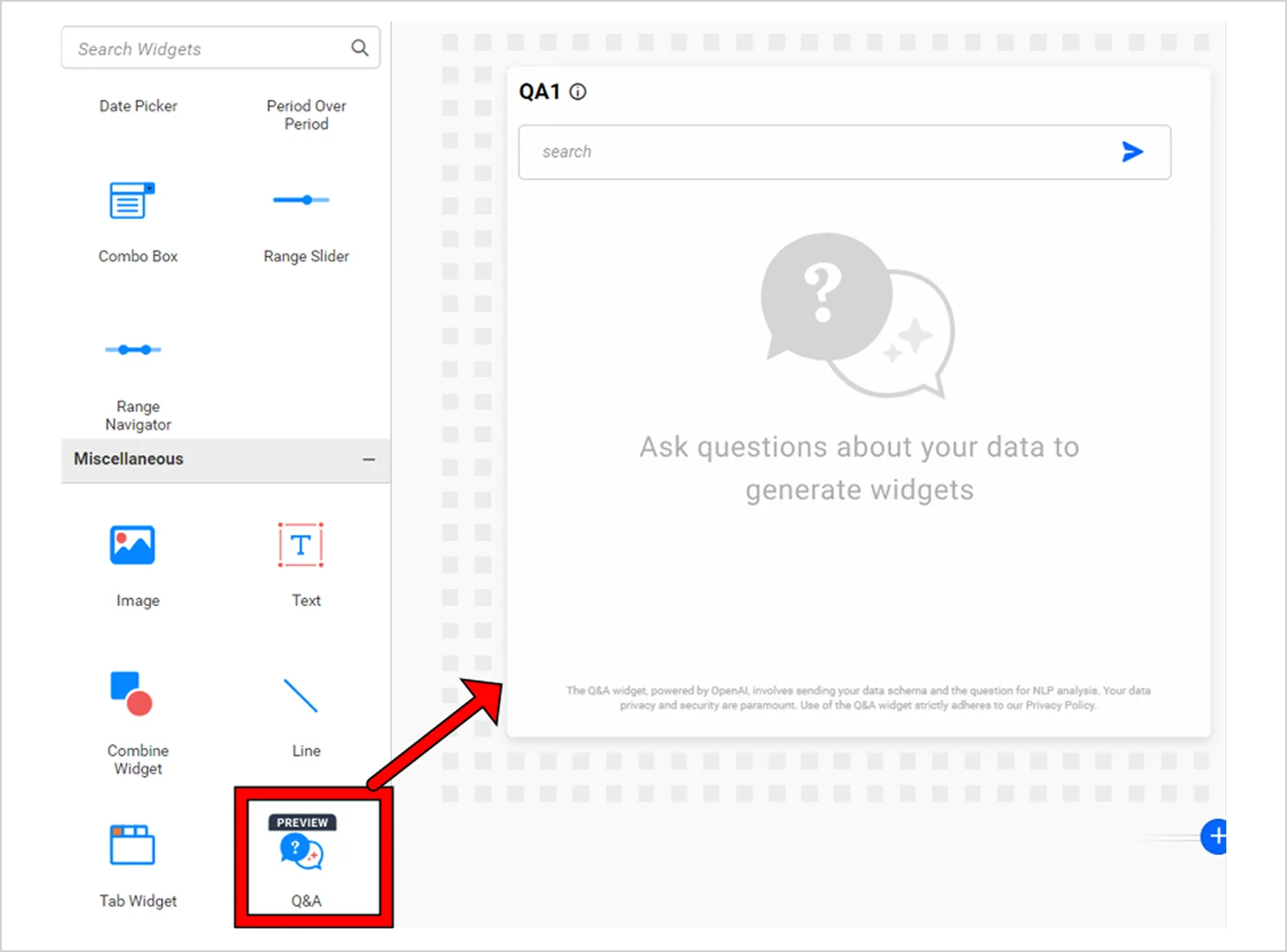
Conversational analytics allows you to interact with data using simple language. Instead of writing queries, you can ask questions like “What were last quarter’s sales?” This trend improves:
- Accessibility for nontechnical users.
- Speed of data exploration.
- Overall user experience.
It bridges the gap between data and decision-makers.
7. Real-time data processing and instant insights
Batch analytics is no longer sufficient in fast-paced business environments. Real-time analytics enables organizations to act on data as events happen. With real-time BI, businesses can:
- Monitor live performance metrics.
- Respond to issues immediately.
- Make time-sensitive decisions confidently.
Together, these seven trends highlight a clear shift: business intelligence is moving from static reporting to dynamic decision-making. Those that adopt these modern BI capabilities will gain a critical advantage.
Final thoughts: Turning BI trends into business advantages
Business intelligence in 2026 is defined by speed, intelligence, and accessibility. Spanning AI-driven insights, real-time analytics, and embedded experiences, BI is a critical driver of everyday decision-making. Organizations that embrace these trends will be better equipped to act faster, innovate smarter, and stay ahead of the competition. However, adopting these trends requires the right BI platform, one that combines flexibility, scalability, and ease of use.
Bold BI® empowers organizations to stay ahead with AI-powered analytics, embedded dashboards, real-time insights, and enterprise-grade governance, all in one platform. Start your free trial of Bold BI today and experience how modern business intelligence can transform your data into actionable insights.
Frequently asked questions
- 1.
What is the biggest trend in business intelligence for 2026?
AI-powered analytics is the most significant trend because it automates data analysis and delivers insights faster than traditional methods.
- 2.
Why is real-time analytics important?
Real-time analytics allows businesses to react instantly to changes, improving responsiveness.
- 3.
What is embedded BI?
Embedded BI integrates analytics directly into business applications, enabling users to access insights without leaving their workflow.
- 4.
How does self-service BI benefit organizations?
It empowers nontechnical users to analyze data independently, reducing reliance on IT teams and speeding up decision-making.