
Top 5 Embedded Analytics Use Cases for SaaS in 2026

TL;DR: Embedded analytics transforms SaaS products into insight-driven platforms. By delivering real-time dashboards, contextual insights, and self-service capabilities directly within applications by using platforms like Bold BI®, SaaS companies can improve user experience, increase retention, and unlock new revenue opportunities.
Introduction
In 2026, SaaS users expect more than flashy features. They expect answers. But in many applications, analytics is disconnected from the core experience. Data lives in separate tools, dashboards take time to generate, and users depend on analysts to answer even simple questions. This slows down decision-making and reduces the overall value of the product. Embedded analytics changes this by bringing insights directly into the application. Instead of switching tools or waiting for dashboards, users can access real-time data exactly where they work and take action immediately. For SaaS product teams, this is a shift from treating analytics as an add-on feature to treating it as a core product capability.
In this blog, we’ll explore the top five embedded analytics use cases for SaaS platforms in 2026 and how embedded analytics transforms applications into insight-driven platforms.
What is embedded analytics for SaaS?
Embedded analytics for SaaS is the integration of dashboards, analytics, and interactive data exploration directly inside a SaaS application so users can get answers without disrupting their workflow.
It typically includes:
- In-app dashboards and analytics.
- Contextual metrics inside workflows.
- Drilldowns, filters, and other interactive features.
- Role-based and tenant-aware access.
- Exports, alerts, and scheduling.
The goal is simple: turn your SaaS product into a place where decisions happen, not just where data lives.
Why does embedded analytics for SaaS matter?
Embedded analytics for SaaS offers a variety of benefits to businesses, including:
- Faster decision‑making: Users get real‑time insights directly inside the application, without switching tools or waiting for dashboards.
- Trusted and consistent data: Centralized KPIs and governed metrics eliminate conflicting numbers across spreadsheets and dashboards.
- Higher customer adoption and retention: When users clearly see value and outcomes, they stay engaged and are more likely to renew.
- Competitive differentiation and monetization: Embedded analytics help SaaS products stand out by providing premium features, unlocking data‑driven revenue streams.
Top 5 use cases for embedded analytics for SaaS to know in 2026
In 2026, successful SaaS companies are moving beyond basic dashboards to deliver more advanced and innovative BI experiences.
1. Embedded analytics for healthcare
Scenario
Healthcare providers and hospital administrators rely on digital platforms to monitor patient admissions, bed occupancy, treatment costs, readmissions, and doctor utilization across departments.
Problem
Critical operational insights are often scattered across systems or reviewed after the fact. Delayed visibility into patient trends, readmission rates, and resource utilization makes it difficult to reduce costs, improve patient outcomes, or respond quickly to capacity constraints.
How embedded analytics solves it
Embedded healthcare dashboards deliver a real‑time, unified view of hospital performance, empowering leaders to make informed, timely decisions that improve efficiency and quality of care. With embedded analytics:
- Patient flow is always visible through live metrics on admitted and readmitted patients, helping hospitals manage capacity proactively.
- Care quality is measurable with real‑time readmission rates and average length of stay, enabling early intervention and better outcomes.
- Resource utilization is optimized by tracking doctor availability, bed occupancy rates, and department‑level demand.
By embedding analytics directly into healthcare management platforms, hospitals move from reactive analytics proactive care delivery, reducing inefficiencies, managing risk, and ensuring better experiences for both patients and providers.
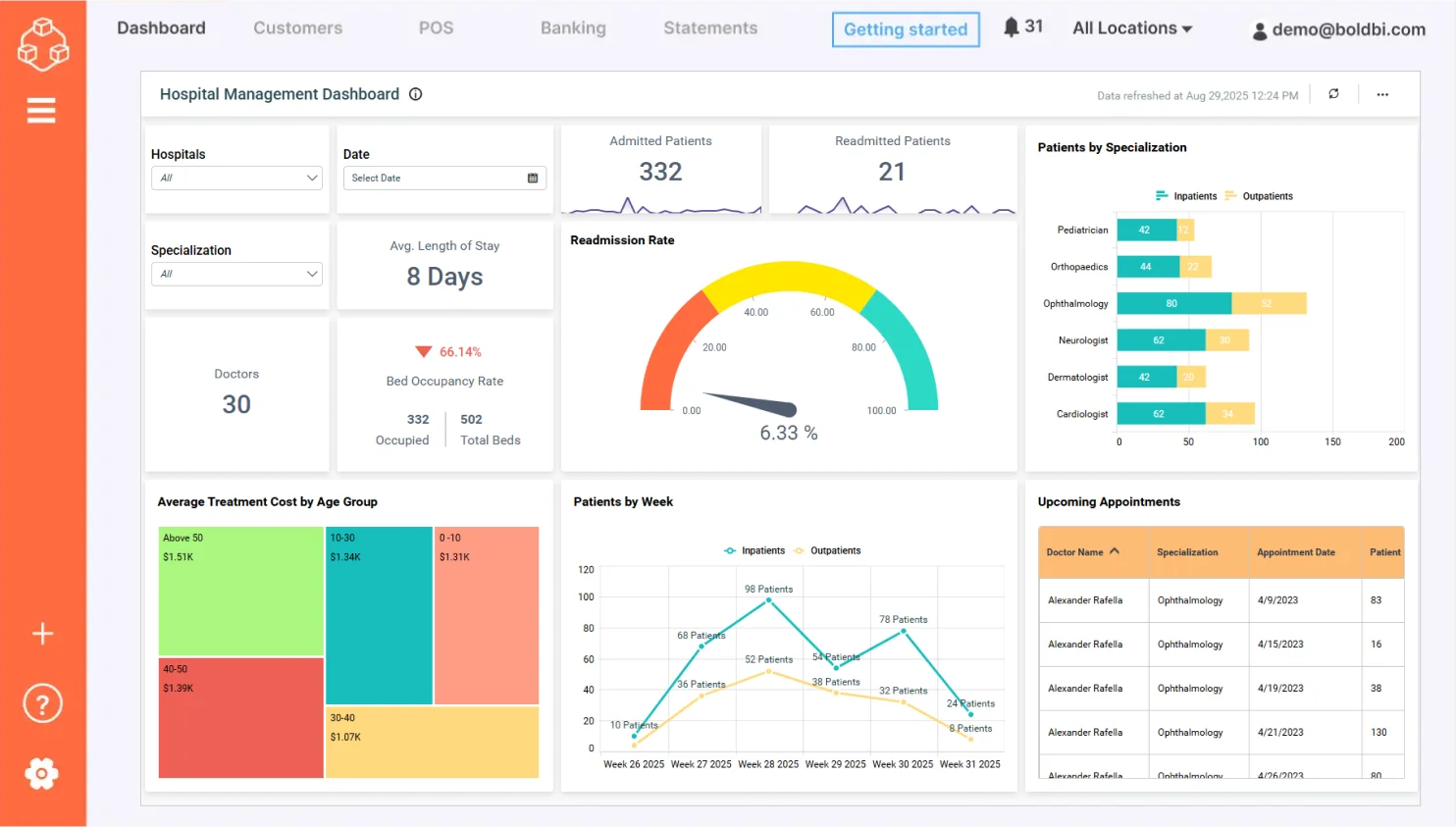
Explore detailed insights into these key metrics and KPIs on our sample page.
2. Embedded analytics for finance
Scenario
Finance leaders, controllers, and CFOs rely on digital finance platforms to monitor cash flow, revenue performance, profitability, expenses, inventory levels, and payables and receivables across business units and locations.
Problem
Financial insights are often fragmented across accounting systems, spreadsheets, and static dashboards. By the time metrics like cash position, gross margin, or burn rate are reviewed, the opportunity to optimize working capital, control costs, or mitigate risk has already passed. Limited real‑time visibility makes it difficult to respond quickly to cash constraints, margin erosion, or operational inefficiencies.
How embedded analytics solves it
Embedded finance dashboards deliver a real‑time, unified view of financial health, empowering decision‑makers to act faster, manage risk proactively, and drive sustainable growth. With embedded analytics:
- Cash flow visibility improves through live tracking of Accounts Receivable ($3.76M) and Accounts Payable ($1.30M), helping finance teams optimize working capital and reduce liquidity risk.
- Revenue performance is always in focus with real‑time monitoring of total revenue ($11.30M) and weekly trends, enabling faster course correction when growth slows or demand shifts.
- Profitability is measurable at a glance using dynamic Gross Profit Margin (39.29%) indicators, making it easier to identify margin pressure early and protect profitability.
By embedding analytics directly into finance and ERP platforms, organizations move from reactive analytics to proactive financial management, improving cash discipline, increasing profitability, reducing financial risk, and enabling faster, more confident decision‑making across the business.
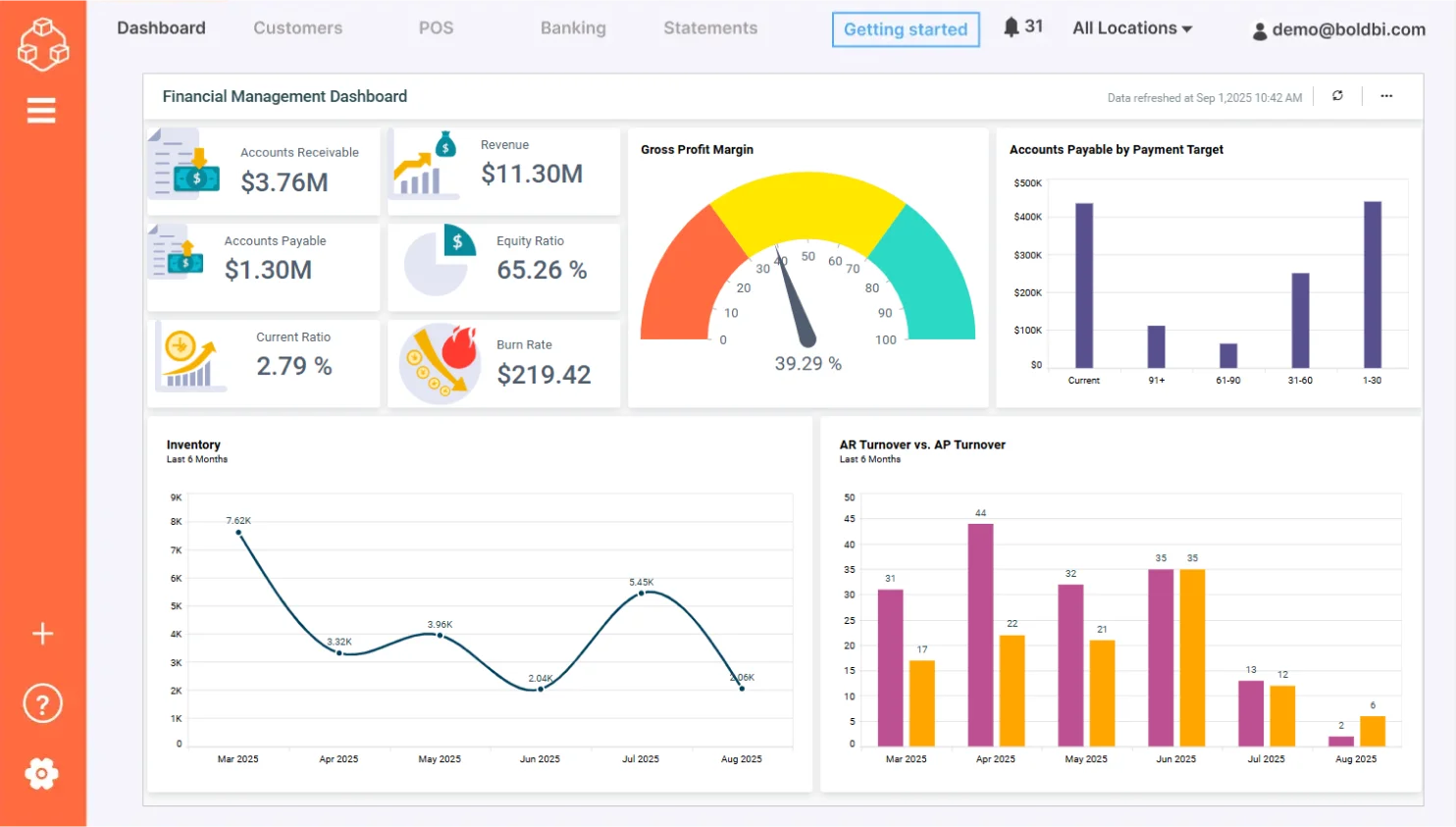
For detailed insights into the key metrics and KPIs in this dashboard, see our demo page.
3. Embedded analytics for education
Scenario
Higher education leaders, admissions teams, and academic administrators rely on digital platforms to monitor student enrollment, retention, course completion, placement outcomes, and demographic trends across campuses and fields of study.
Problem
Academic and enrollment insights are often distributed across student information systems, LMS platforms, and static dashboards. By the time trends in retention, completion rates, or student demand are identified, institutions may already be experiencing declining enrollment, increased dropouts, or misaligned program offerings. Limited real‑time visibility makes it difficult to improve student success, optimize recruitment strategies, or respond quickly to performance gaps across campuses.
How embedded analytics solves it
Embedded education dashboards deliver a real‑time, consolidated view of institutional performance, empowering academic and administrative leaders to improve student outcomes, increase retention, and drive data‑informed decisions across the student lifecycle. With embedded analytics:
- Student retention is always visible through live tracking of Freshman Retention Rate (92.50%), enabling early intervention strategies to reduce attrition and improve first‑year success.
- Academic success is measurable with real‑time insights into Course Completion Rate (81.67%), helping institutions identify at‑risk programs or cohorts and improve curriculum effectiveness.
- Career outcomes are transparent through Student Job Placement Rate (95.80%), supporting stronger alignment between academic programs and workforce demand.
By embedding analytics directly into education management platforms, institutions move from reactive analytics to proactive student success management, improving retention, maximizing enrollment yield, aligning programs with labor‑market outcomes, and delivering better learning experiences for students while strengthening institutional sustainability.
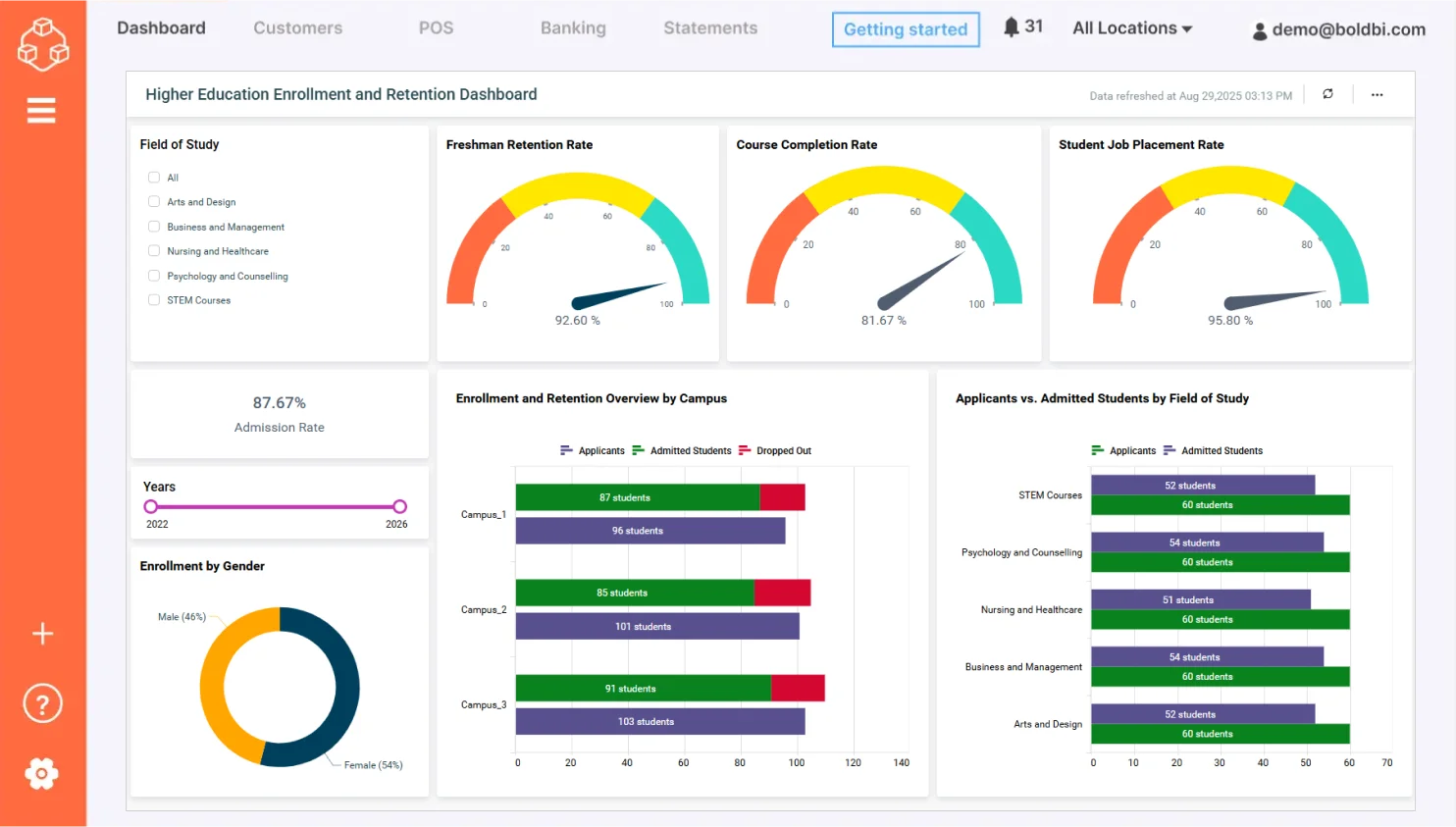
Explore our sample dashboard to learn more about these metrics and KPIs in detail.
4. Embedded analytics for retail
Scenario
Retail executives, store managers, and merchandising teams rely on digital commerce and POS platforms to track sales performance, customer behavior, inventory movement, pricing effectiveness, and store‑level profitability across locations.
Problem
Retail insights are often siloed across POS systems, inventory tools, and spreadsheets. By the time sales trends, conversion issues, or inventory bottlenecks are identified, stores may already be losing revenue, over‑stocking slow‑moving products, or missing opportunities to optimize customer experience. Delayed visibility makes it difficult to respond quickly to demand shifts, promotional performance, or store‑level inefficiencies.
How embedded analytics solves it
Embedded retail dashboards deliver a real‑time, end‑to‑end view of store and product performance, enabling retailers to optimize operations, increase conversions, and maximize profitability across channels and locations. With embedded analytics:
- Sales performance is always visible through real‑time tracking of total net sales ($321,985.40), total discounts ($120.35), and inventory turnover (9), helping retailers balance demand, pricing, and stock levels.
- Customer conversion is measurable with live monitoring of the Conversion Rate (38.92%), allowing teams to quickly identify in‑store or online friction points and improve the path to purchase.
- Revenue per customer improves through insights into Average Transaction Value ($150.94) and monthly transaction trends, helping retailers optimize promotions, bundling, and upsell strategies.
By embedding analytics directly into retail management and POS platforms, retailers move from reactive analytics to real‑time retail intelligence, increasing conversion rates, optimizing inventory, improving customer experiences, and driving higher margins across every store and product category.
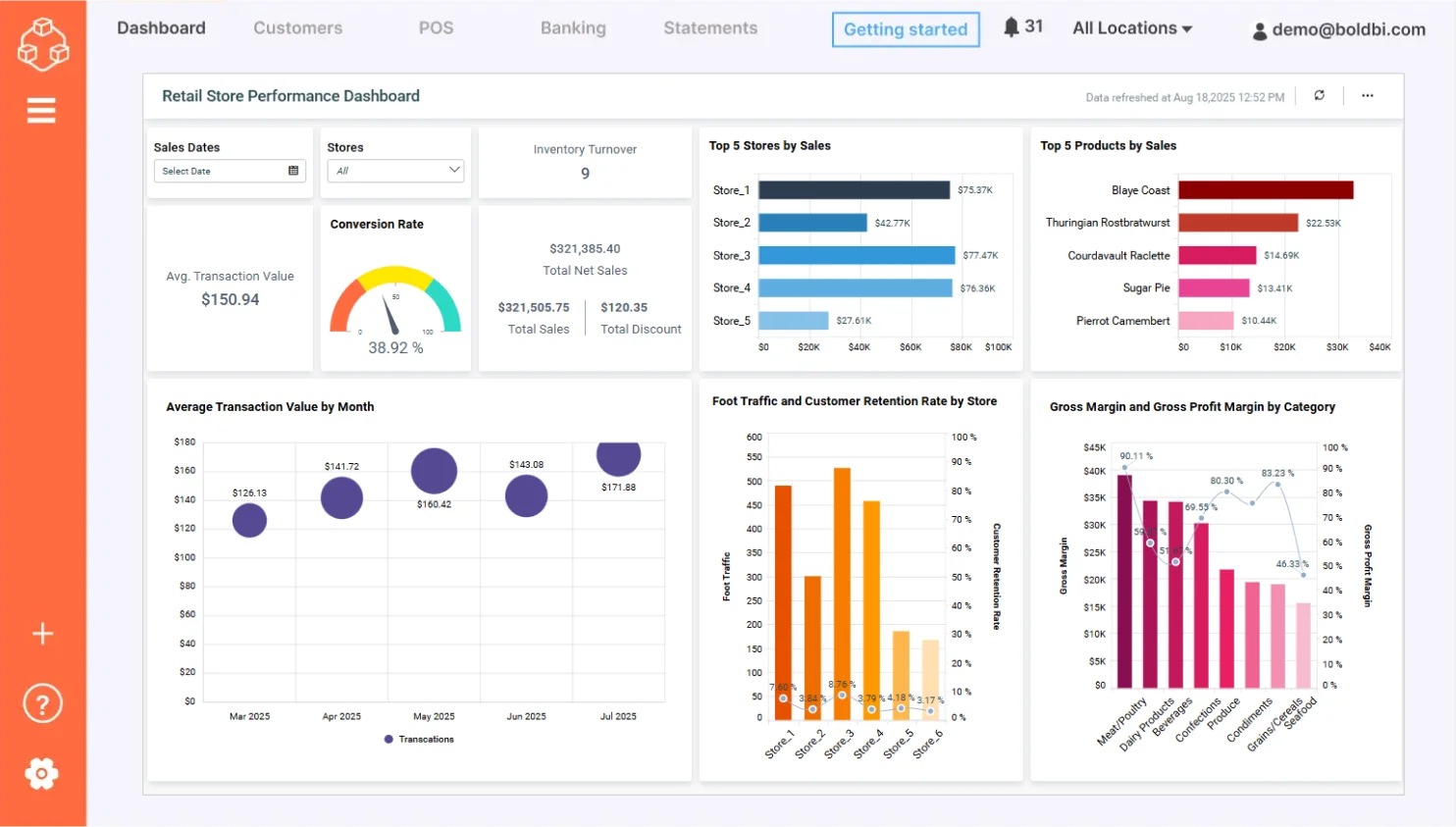
Explore these key metrics and KPIs in our live demo.
5. Embedded analytics for hospitality
Scenario
Hotel owners, revenue managers, and hospitality executives rely on digital hospitality platforms to monitor revenue performance, occupancy, guest stay patterns, marketing effectiveness, and market penetration across properties and regions.
Problem
Hospitality insights are often spread across property management systems (PMS), booking engines, marketing tools, and static dashboards. By the time metrics such as occupancy, average daily rates, or booking channel performance are reviewed, opportunities to optimize pricing, improve marketing ROI, or respond to demand fluctuations have already passed. Limited real‑time visibility makes it difficult to maximize revenue, manage costs, or adapt quickly to changing travel trends.
How embedded analytics solves it
Embedded hospitality dashboards provide a real‑time, unified view of hotel performance, empowering leaders to optimize revenue strategies, improve operational efficiency, and enhance guest experiences. With embedded analytics:
- Revenue performance is always visible through live tracking of Total Revenue ($3.73M) and Operating Profit ($3.53M), enabling faster decision‑making to maximize profitability.
- Pricing and yield management improves with real‑time insights into Average Room Rate (ARR – $185.20), helping revenue teams adjust rates dynamically based on demand and seasonality.
- Occupancy trends are actionable with continuous monitoring of Occupancy Rate (62.07%), supporting smarter capacity planning and demand optimization.
By embedding analytics directly into hospitality management platforms, hotels move from reactive analytics to proactive revenue intelligence, increasing occupancy, optimizing pricing, improving marketing efficiency, and delivering better guest experiences while strengthening overall financial performance.
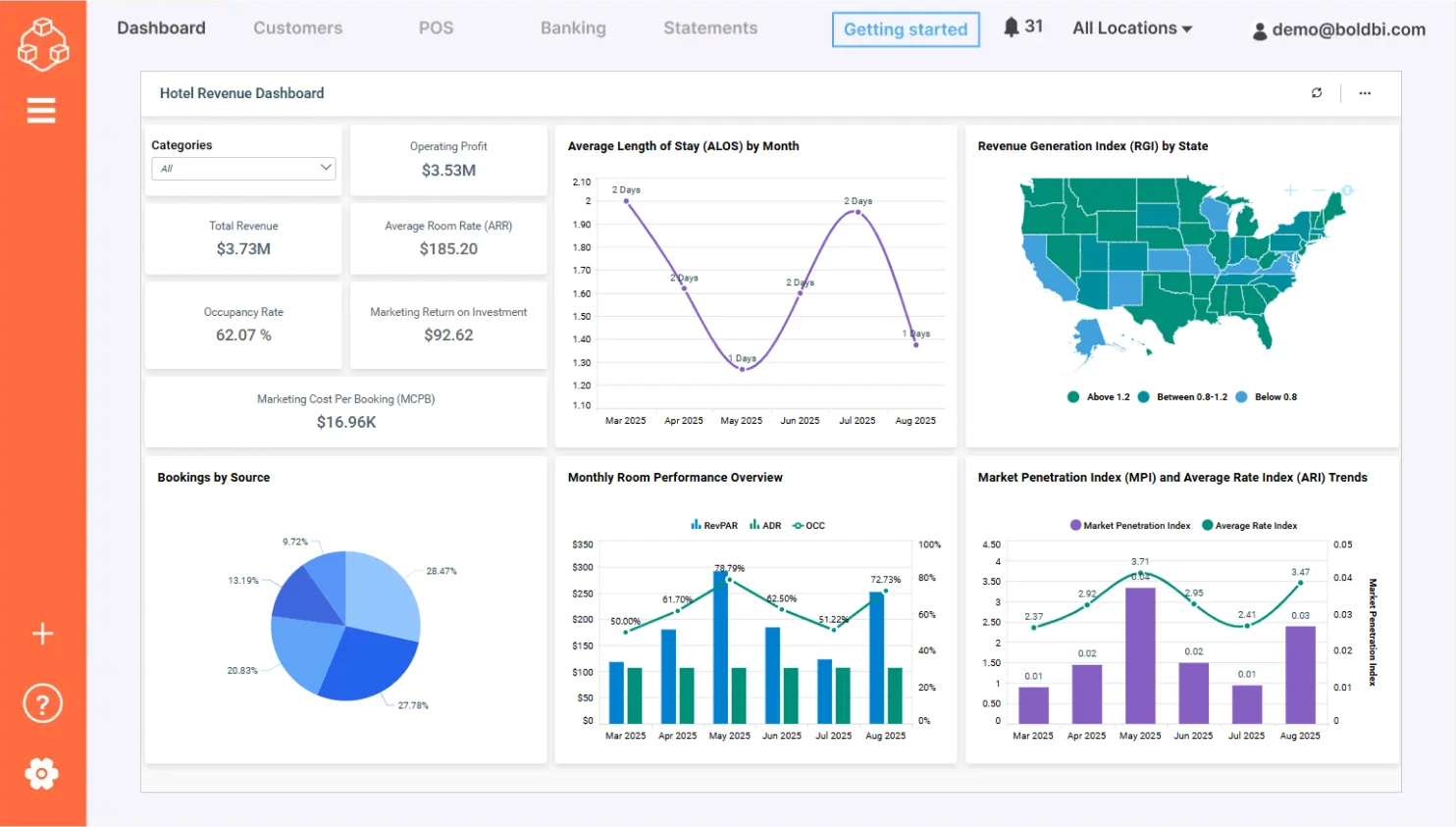
See the key metrics and KPIs in this embedded dashboard in our live demo.
What to look for in an embedded analytics platform for SaaS
Whether you choose to build or buy, embedded analytics only delivers value when it feels native to your product and scales readily as your business grows. Key capabilities to prioritize include:
- Seamless embedding: Delivers a fully white‑labeled, product‑native analytics experience so users stay engaged in your application without context switching or feeling like they’ve left your product.
- Security at scale: Ensures each user only sees what they’re authorized to see through row‑level security and role‑based access, protecting sensitive data as usage grows.
- Multitenant readiness: Safely isolates customer data within a shared architecture, enabling you to scale across many customers without compromising performance or trust.
- Interactivity: Empowers users to explore insights on their own with drill-down and drillthrough capabilities, reducing reliance on static dashboards or analyst support.
- Flexible integration: Fits into your existing ecosystem with APIs, connectors, and sharing options that adapt to different workflows and customer needs.
- High performance: Maintains fast, reliable dashboard responsiveness even under heavy concurrency, ensuring analytics never becomes a bottleneck.
- Strong governance: Preserves trust in data through audit logs, controlled datasets, and consistent metrics, giving teams confidence in the numbers they use to make decisions.
If you’re evaluating platforms, Bold BI is offering interactive dashboards, secure multitenant embedding, and AI-assisted insights so you can deliver customer‑facing analytics without building a BI stack from scratch.
Ready to embed analytics in your SaaS Product?
In 2026, SaaS teams must thoughtfully choose between building and buying embedded analytics while balancing speed, scalability, and long-term product focus. Choosing a proven platform like Bold BI® allows teams to embed analytics faster, reduce manual effort, and stay focused on delivering value through their core SaaS product.
To help you make an informed decision, on whether to build or buy embedded analytics for your SaaS product, you can explore these resources to learn the pros and cons in each scenario:
- Build vs. Buy Analytics: Which Is Best for Your Business?
- Choosing Embedded BI: Build or Buy?
- Why Embedded BI Is Better Than Custom-Built BI Solutions
Ready to see how Bold BI can elevate your product with embedded analytics? Sign up for a free trial or request a personalized demo now; to experience how embedded and self‑service analytics can help your organization grow revenue and cut costs.
Frequently asked questions
- 1.
What are embedded analytics tools?
Embedded analytics tools are platforms designed to integrate analytics capabilities directly into applications, rather than operating as standalone BI or analytics products.
- 2.
Are embedded analytics tools only relevant for SaaS?
No. Embedded analytics tools are also widely used in internal systems, enterprise portals, and commercial software products, not just SaaS applications.
- 3.
How do embedded analytics tools differ from traditional BI platforms?
Embedded analytics tools are typically evaluated as application infrastructure. They prioritize integration, scalability, controlled access, and extensibility, rather than standalone analytics exploration.
- 4.
What should teams prioritize when choosing an embedded analytics tool?
Key considerations include the embedding approach, security and access control, customization requirements, scalability, deployment flexibility, and licensing models.
- 5.
What are embedded analytics tools used for?
They are commonly used to deliver operational dashboards, customer-facing analytics, internal dashboards, and compliance dashboards as part of a software application.