
Boost Your Online Sales with E-Commerce Analytics

In the ever-evolving world of online commerce, the quest to maximize your digital store’s potential can feel complex. With e-commerce booming, understanding your customers and their behavior is paramount. This is precisely where e-commerce analytics comes in. In this blog, we embark on a journey through the realm of e-commerce analytics, unravelling its power to unearth insights that can catapult your online sales. Turn raw data into strategy and overcome the obstacles that stand between you and e-commerce success.
What is e-commerce analytics?
E-commerce analytics is the use of data and software to analyze online consumer behavior, assisting firms in enhancing customer satisfaction, streamlining operations, and increasing profitability. It involves tracking various metrics to gain insights into the performance of an online store or e-commerce website.
Why do analytics matter for your e-commerce business?
E-commerce stores benefit from analysis of customer behavior, website performance, and marketing reach. They can use analysis results to make data-driven decisions to improve exposure and profitability. Use analytics tools in your e-commerce store to:
- Identify customer preferences and behavior.
- Improve website design and user experience.
- Increase customer retention and loyalty.
- Track and measure key performance indicators (KPIs)
- Understand sales trends and patterns.
- Identify potential areas for cost savings and efficiency improvements.
- Measure the success of promotional campaigns and discounts.
Key benefits of using e-commerce analytics
E-commerce analytics has numerous benefits.
- Data-Driven Business Strategy: E-commerce analytics provide essential customer insights that guide decision-making. This not only aligns business strategies with customer preferences and market trends but also ensures businesses are responsive and adaptable to changing consumer behaviors and market dynamics.

Data-Driven Business Strategy - Customized Marketing: E-commerce analytics can inform more targeted marketing strategies, leading to increased conversions and sales. By determining the demographics of a company’s customers, teams can design marketing content relevant to their customers base and more easily target demographics to whom they want to expand their reach. Businesses can engage more effectively with their audience if they know who they are, fostering loyalty and repeat purchases.
- Efficient Inventory Management: E-commerce analytics can optimize inventory levels, reducing costs associated with stockouts and surplus inventory. This ensures optimal stock availability, minimizing the risk of losing sales due to products being out of stock and avoiding unnecessary costs of storing excess inventory.

Efficient Inventory Management - Product Performance Improvement: Data analysis and visualization can highlight top-selling products and suggest areas for product improvement or new product introduction. This can enhance overall product performance and customer satisfaction, as businesses can better meet customer needs and preferences by refining their product offerings.
- Gaining a Competitive Edge: Monitoring market trends and competitor strategies through analytics can give businesses a competitive advantage. This informed approach allows businesses to stay ahead in a dynamic market landscape, developing proactive strategies rather than reactive ones.
- Marketing Effectiveness Tracking: Analytics can track the return on investment for marketing campaigns and other business activities. This helps businesses optimize their marketing efforts, ensuring they can allocate resources effectively for maximum impact and make adjustments as necessary based on real-time data.

Marketing Effectiveness Tracking
Challenges of e-commerce analytics
E-commerce has transformed how businesses run and how customers shop, but analyzing its data effectively presents several difficulties. Among the main obstacles are:
- Data Integration Challenges: Merging data from e-commerce platforms can be time-consuming and complicated, potentially obstructing a complete view of the customer journey.
- Real-Time Data Processing: Timely, accurate decision-making from e-commerce analytics often demands real-time data processing, which can be demanding of resources during busy periods.
- Attribution Complexity: Determining the influence of different marketing channels on sales requires sophisticated attribution models.
- Data Quality: Ensuring data accuracy and quality is key for meaningful insights, as flawed data can lead to misguided decisions. Cleaning data can be time-consuming.
- Cyber and Data Security: One of the most significant obstacles is maintaining data security. A vast amount of sensitive data is involved in e-commerce transactions and mishandling it can seriously tarnish a retailer’s brand reputation.
Best practices of e-commerce analytics
Here are some of the best practices for e-commerce analytics implementation to help overcome some of these challenges.
- Establishing Clear Objectives: Establish clear goals for your analytics. Decide which metrics you want to track and why. Understand what data is required for those metrics and whether or not your company is currently collecting it.
- Effective Data Gathering and Structuring: Figure out where the data you need is and and utilize tools for CRM integration and other forms of connecting and meshing your data sources.
- Visualize Metrics: Use visualization tools and statistical methods to transform your data into comprehendable and visually appealing graphs. Examine them for patterns and trends.
- Making Decisions Based on Data: With the story in your data clear, you can make better-informed e-commerce strategy decisions, including for website improvements, marketing adjustments, and customer experience enhancements.
- Regular Monitoring and Refinement: Regularly observe and assess the effect of your decisions on your e-commerce performance. Revise your strategy to keep it in line with evolving customer preferences.
- Prioritizing Tracking Setup: Proper tracking ensures accurate data gathering, preventing incomplete or inaccurate analysis. Ensure you are tracking all the data you need for essential metrics.
- Prioritize Mobile: With more and more people shopping on mobile devices, it’s essential to track and optimize for mobile performance.
Key metrics for e-commerce businesses
The success of your e-commerce business hinges on your ability to decipher the metrics that matter most. The following are some key metrics for e-commerce analytics.
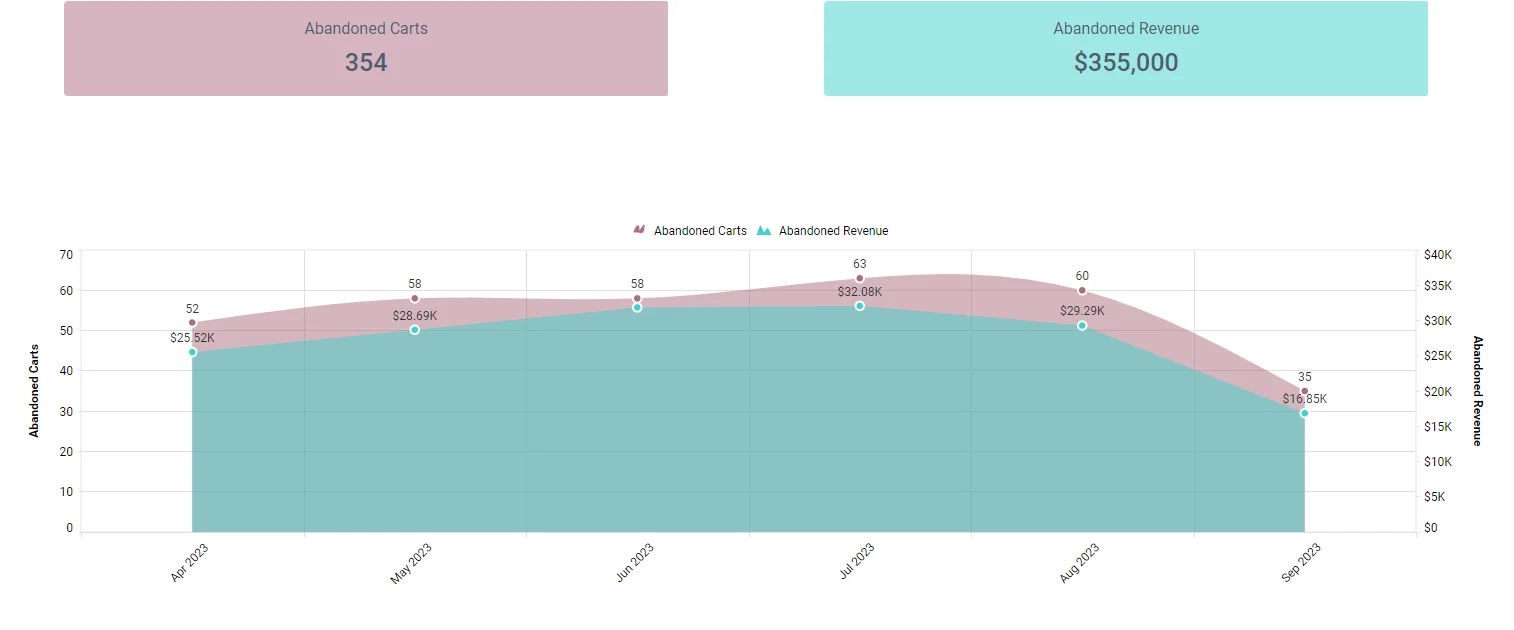
Abandoned Carts vs. Abandoned Revenue
Abandoned carts and abandoned revenue metrics give e-commerce businesses an understanding of how many customers leave without finishing a purchase and the financial implications of these unfinished transactions respectively. Dramatic shifts in these metrics can alert you to issues in the payment process, and tracking them lets you know whether your efforts to reduce cart abandonment rates are successful.
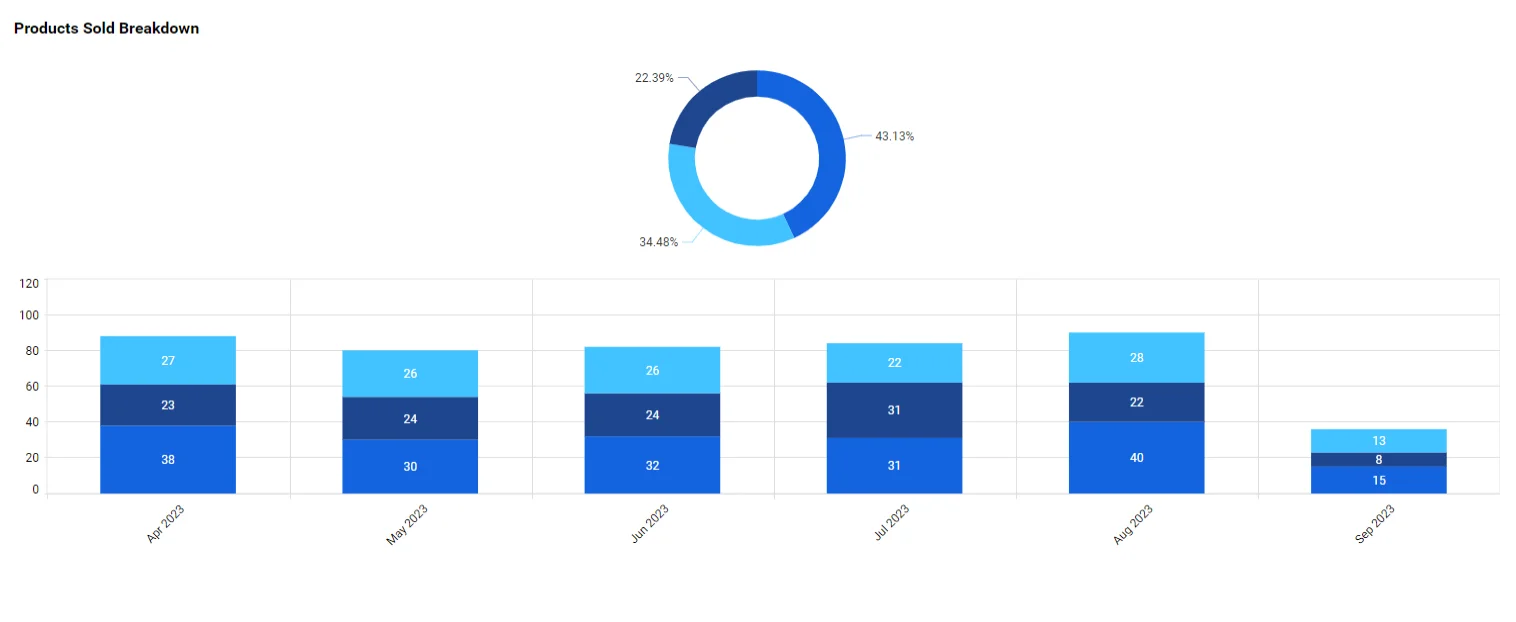
Products Sold Breakdown
This metric gives insight into the popularity of products from different categories by month. It offers a comprehensive view of how the categories contributed to total sales and monthly sales, helping businesses make informed decisions about inventory control, marketing, and product evolution.
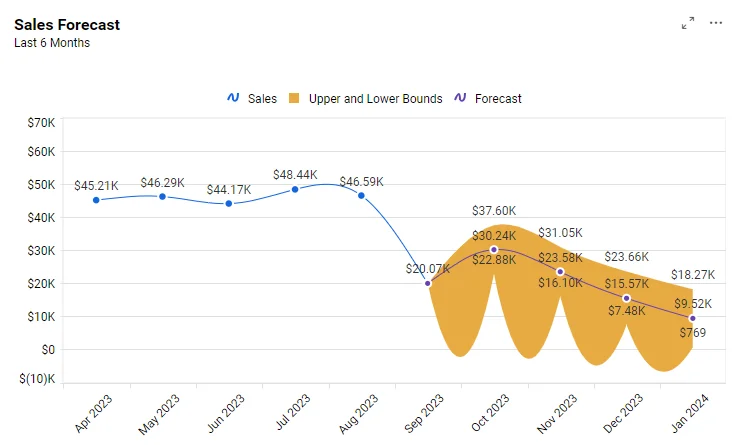
Sales Forecast
The sales forecast metric estimates future sales revenue. This estimation is derived from past data, market trends, and various prediction techniques. It is useful for resource distribution and comprehensive business planning.
Page Visits by State
This metric is used by e-commerce companies to track and analyze the geographic distribution of visitors to their website or online store. It provides insight into where website traffic originates, allowing businesses to make data-driven decisions related to marketing, sales, and user experience.

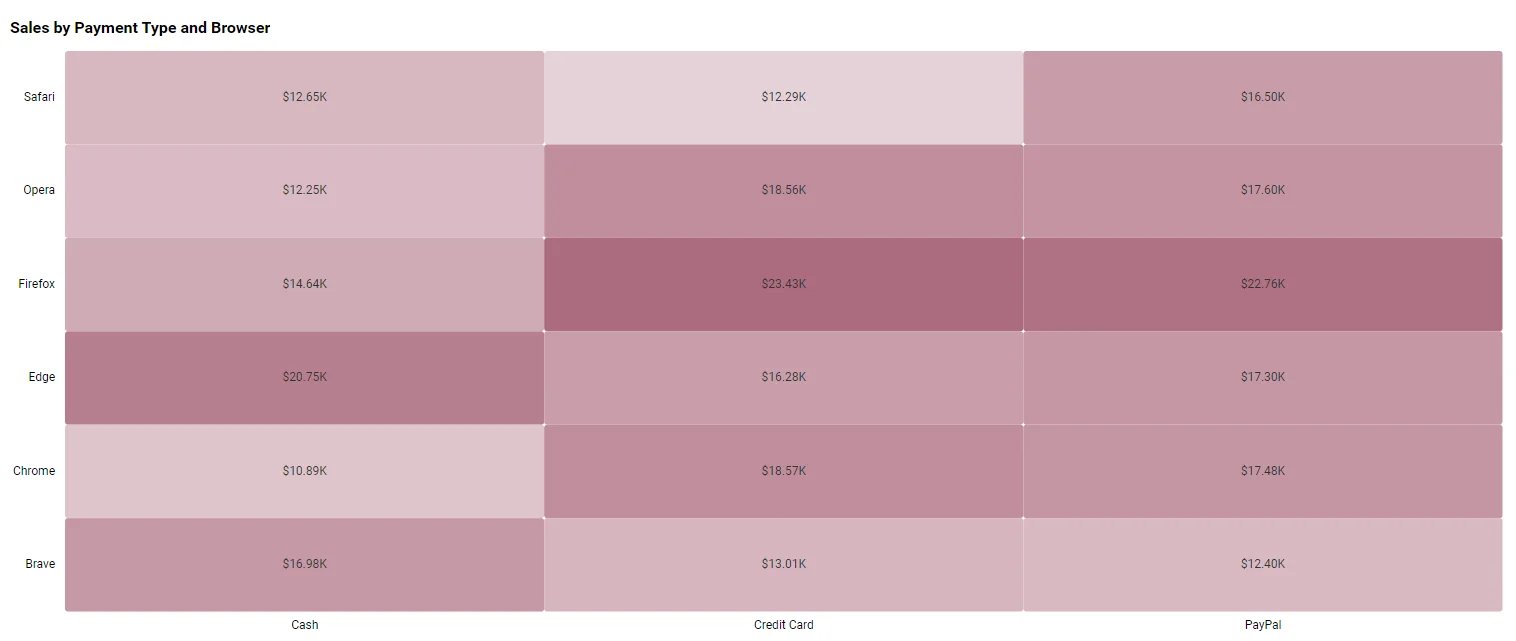
Sales by Payment Type and Browser
This metric helps in identifying preferred payment methods among customers so a company can optimize the checkout process accordingly. It can also highlight browser compatibility issues that may affect the user experience.
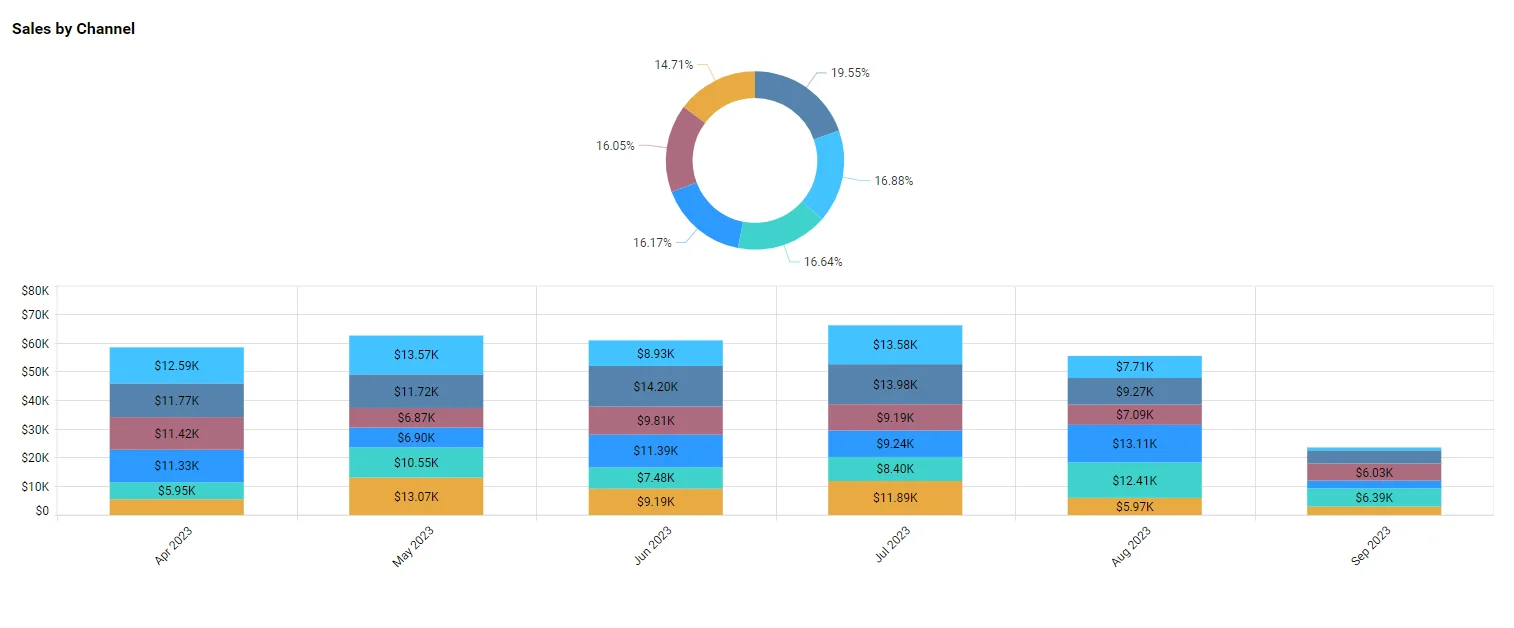
Sales by Channel
The Sales by Channel metric tracks the revenue generated from the digital marketing and sales channels used by an e-commerce business: X (formerly Twitter), Facebook, banners, LinkedIn, newsletters, and Google. Similar widgets help businesses understand which channels are the most effective at driving sales, allowing for optimized marketing strategies and budget allocation.
Page Views
This metric tracks the number of times a particular page on an e-commerce website was viewed by visitors. It lets an e-commerce company understand user engagement with and the overall performance of a website.

Average Order Value
This is a key metric in e-commerce that measures the average amount of money customers spend on each order or transaction within a specific time period, typically daily, weekly, monthly, or annually. It’s calculated by dividing the total revenue by the total number of orders during that time period.

Total Purchases
This metric tracks the cumulative number of customer purchases within a defined time period. Its importance lies in its ability to provide a clear snapshot of an online store’s business. By monitoring total purchase, businesses can gauge the overall health of their e-commerce operation.

Harnessing the potential of Bold BI in e-commerce analytics
Bold BI® is a business intelligence platform that aids e-commerce businesses in data-driven decision-making. It has powerful data visualization, so you can create interactive dashboards that present your e-commerce data in a visually engaging and understandable format. This helps business managers understand trends, patterns, and correlations in their data, enabling them to make informed decisions.
Bold BI prioritizes security, with access controls, encryption for data in transit and at rest, and compliance with industry-leading security standards to protect your data from unauthorized access. Bold BI also promotes collaboration, allowing team members team to work together on the same dashboard or report simultaneously, regardless of where they are located.
In summary, e-commerce analytics provide valuable insights into consumer behavior, website effectiveness, and promotional tactics, enabling businesses to refine processes, enhance user experiences, and expand their reach.
If you have any questions or need assistance, don’t hesitate to reach out through the Bold BI website; simply log in to submit your inquiries if you already have an account. If you’re not yet a customer, get started with Bold BI now by signing up for a free trial!