
AI Audit Trail: Building Trust and Governance in Analytics

TL;DR: AI is making analytics faster, smarter, and more accessible. But as organizations increasingly rely on AI-generated insights, trust has become a critical challenge. If users can’t understand what changed, who made the change, or whether the analytics environment is properly governed, confidence in those insights quickly declines. AI audit trails help solve this problem by providing transparency into activities, changes, and governance events across analytics environments. In this blog, you’ll learn how AI audit trails strengthen trust, support governance, and prepare organizations for the future of AI-powered analytics.
Introduction
Your AI assistant flags a 12% drop in customer retention and recommends immediate action. Before anyone acts, someone asks a critical question: Did anyone change the retention formula, dashboard, or permissions last week? If your team cannot answer quickly, the insight stalls. Worse, a decision could move forward based on a broken dashboard, outdated configuration, or unauthorized change.
This is one of the biggest challenges in AI-powered analytics. Organizations need more than intelligent insights. They need confidence in the analytics environment that produced them. That growing need for trust is making auditability a critical part of modern analytics.
An AI audit trail helps your team understand what changed, who made the change, when it happened, and whether the change was authorized. By creating a traceable history of activity across analytics environments, audit trails help organizations investigate unexpected results, strengthen governance, and improve decision-making confidence.
In this blog, you’ll learn what an AI audit trail is, why it matters, and how it helps build trust in AI-powered analytics.
What Is an AI Audit Trail?
An AI audit trail is a chronological record of activities and changes that may influence analytics outcomes and AI-assisted decision-making. It helps organizations understand what changed, who performed an action, when it occurred, and whether the action aligns with established governance policies.
It captures information such as user actions, dashboard modifications, permission updates, tenant activities, schedules, and administrative events, creating a verifiable record of activities across the analytics environment.
Unlike a traditional audit log that records individual system events, an AI audit trail provides the broader context needed to understand how changes, actions, and AI-driven processes may have contributed to a particular insight or recommendation.
As AI becomes more embedded in analytics workflows, audit trails help organizations trace activities, review decisions, and validate the environment behind AI-generated outputs.
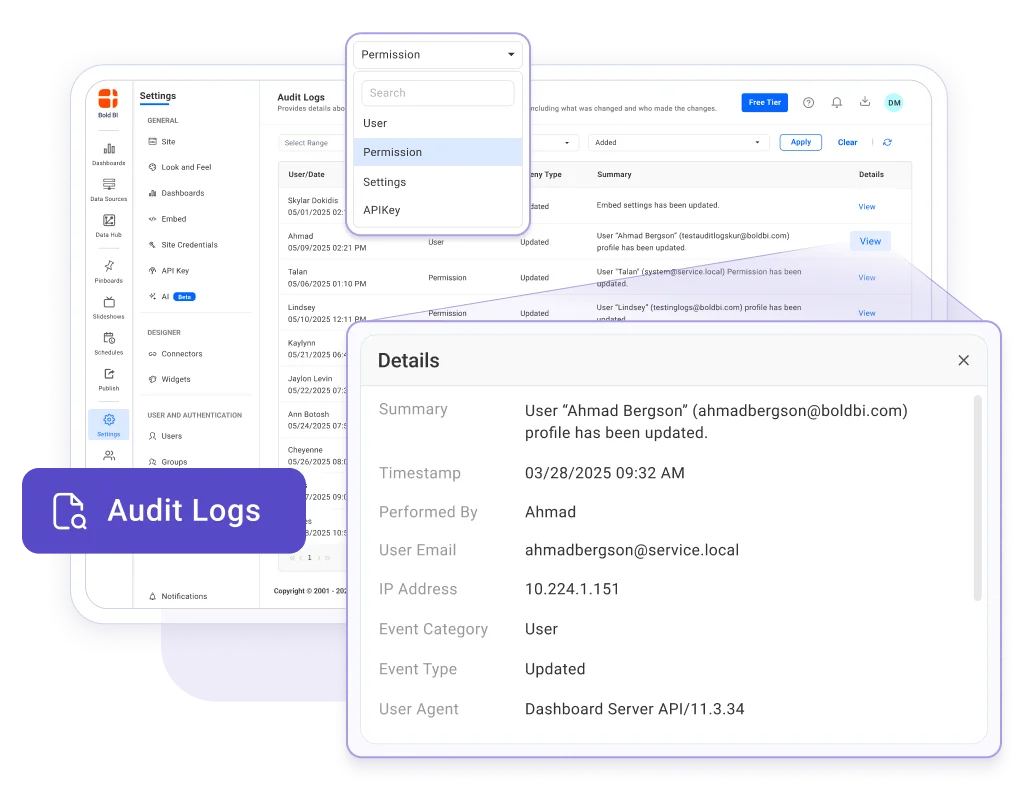
Let’s explore the key challenges preventing organizations from fully trusting AI-generated insights and why auditability has become more important than ever.
The Hidden Challenges Behind AI-Generated Insights
As organizations increase their reliance on AI-powered analytics, several challenges can make it difficult to fully trust the insights being generated.
- Limited visibility: Organizations often struggle to see what changes have occurred across dashboards, permissions, settings, and analytics assets. Without clear visibility into these activities, it becomes difficult to determine whether unexpected insights are caused by real business events or changes within the analytics environment.
- Lack of accountability: Modern analytics environments involve multiple users, including administrators, analysts, developers, and business stakeholders. When changes occur, organizations need a reliable way to identify who made the change, what was modified, and when it happened.
- Governance at scale: As analytics adoption expands across departments, business units, customers, and tenants, maintaining oversight becomes increasingly complex. What works for a single team may not be sufficient for a large enterprise operating across multiple environments.
- Compliance and security expectations: Organizations must often demonstrate transparency around user activity, access controls, and administrative actions. Without a documented history of changes and activities, meeting governance, security, and compliance requirements becomes significantly more challenging.
- Growing dependence on AI-driven decisions: AI-generated insights are increasingly influencing operational, financial, and strategic decisions. As the business impact of these insights grows, so does the need for transparency and confidence in the systems that produce them.
Taken together, these challenges highlight a common theme: organizations need greater visibility and control over their analytics environments to confidently trust and act on AI-generated insights.
So, how can organizations overcome these challenges and establish greater confidence in AI-powered analytics? Let’s explore how AI audit trails help bridge the gap between insights and trust.
How Audit Trails Build Confidence in AI-Generated Insights
An audit trail is much more than a record of activities. It is a foundation for building confidence in analytics environments. As organizations increasingly rely on AI-generated insights, they need visibility into the actions, changes, and events that may influence analytics outcomes. Rather than relying on assumptions, audit trails provide the evidence needed to understand and validate the environment behind AI-assisted recommendations.
To build confidence in AI-generated insights, organizations should be able to answer four fundamental questions:
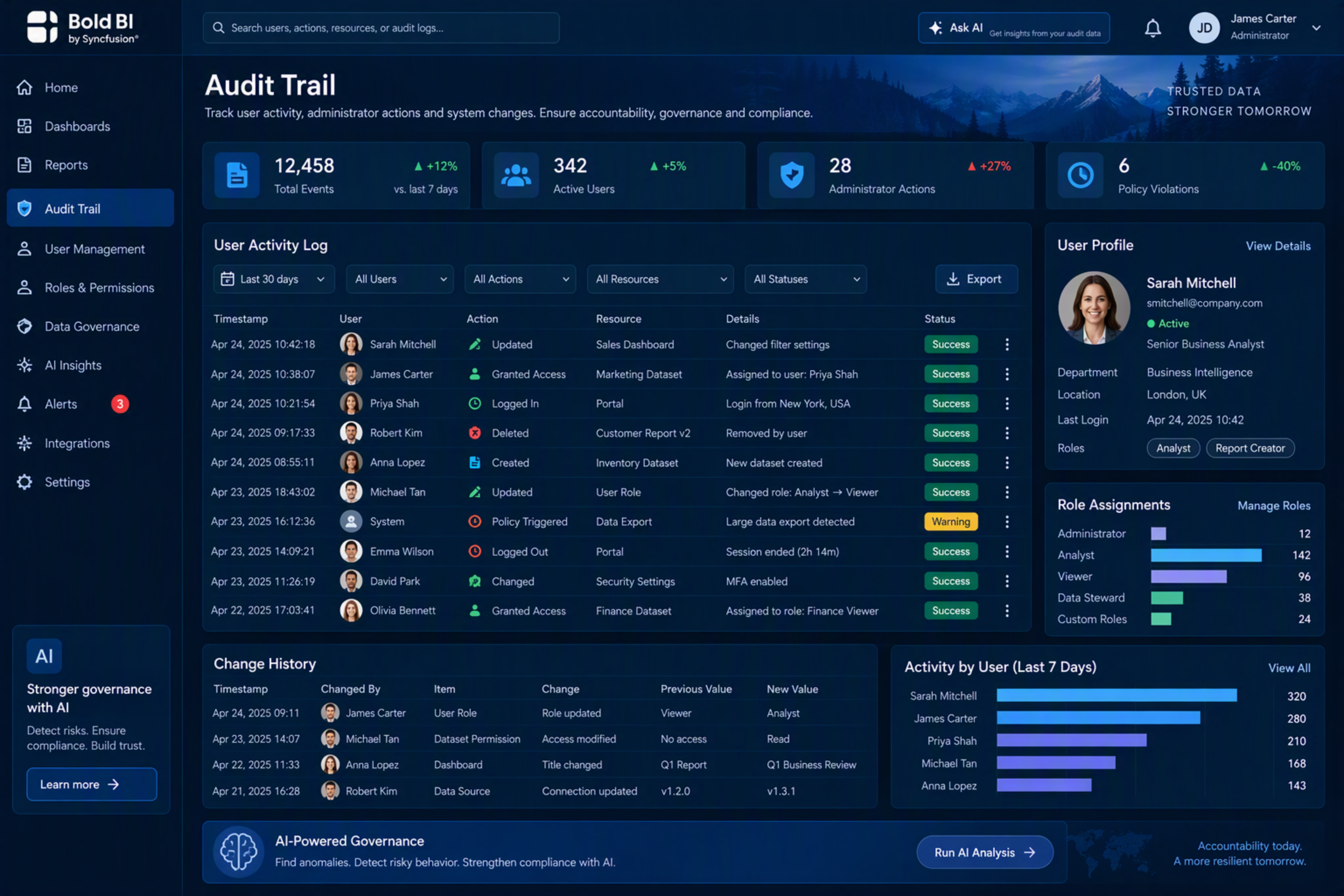
Who Performed the Action?
Organizations should be able to trace activities back to specific users, administrators, or teams. Whether a dashboard was modified, permissions were updated, or administrative settings were changed, knowing who performed the action strengthens accountability and simplifies investigations.
What Changed?
Understanding what was modified is just as important as knowing who made the change. Organizations should have visibility into dashboard updates, permission changes, configurations, schedules, and other analytics assets that may influence insights.
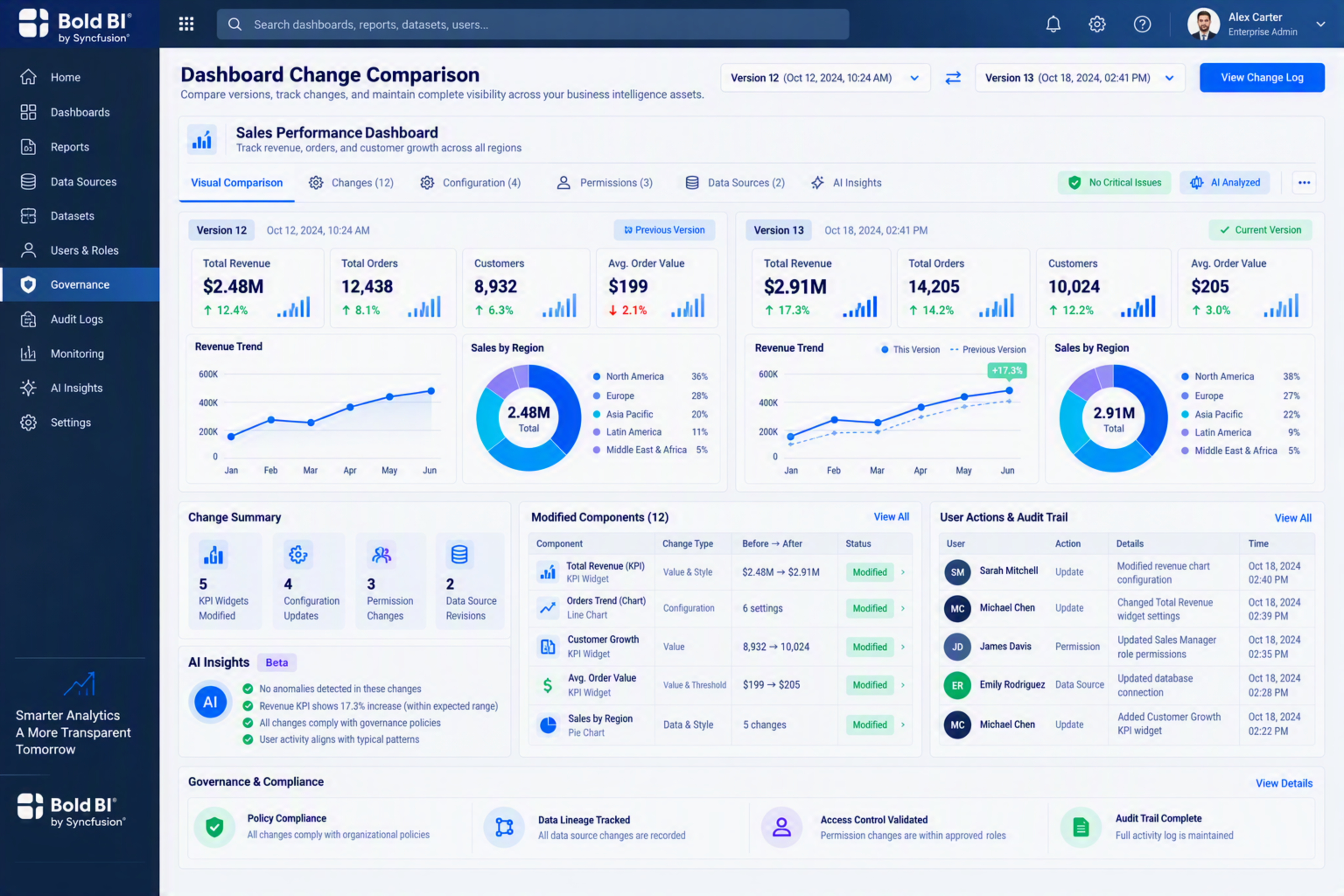
When Did It Happen?
Time-stamped records provide critical context when reviewing activities or investigating unexpected outcomes. By maintaining a chronological history of events, organizations can quickly establish what happened and in what sequence.
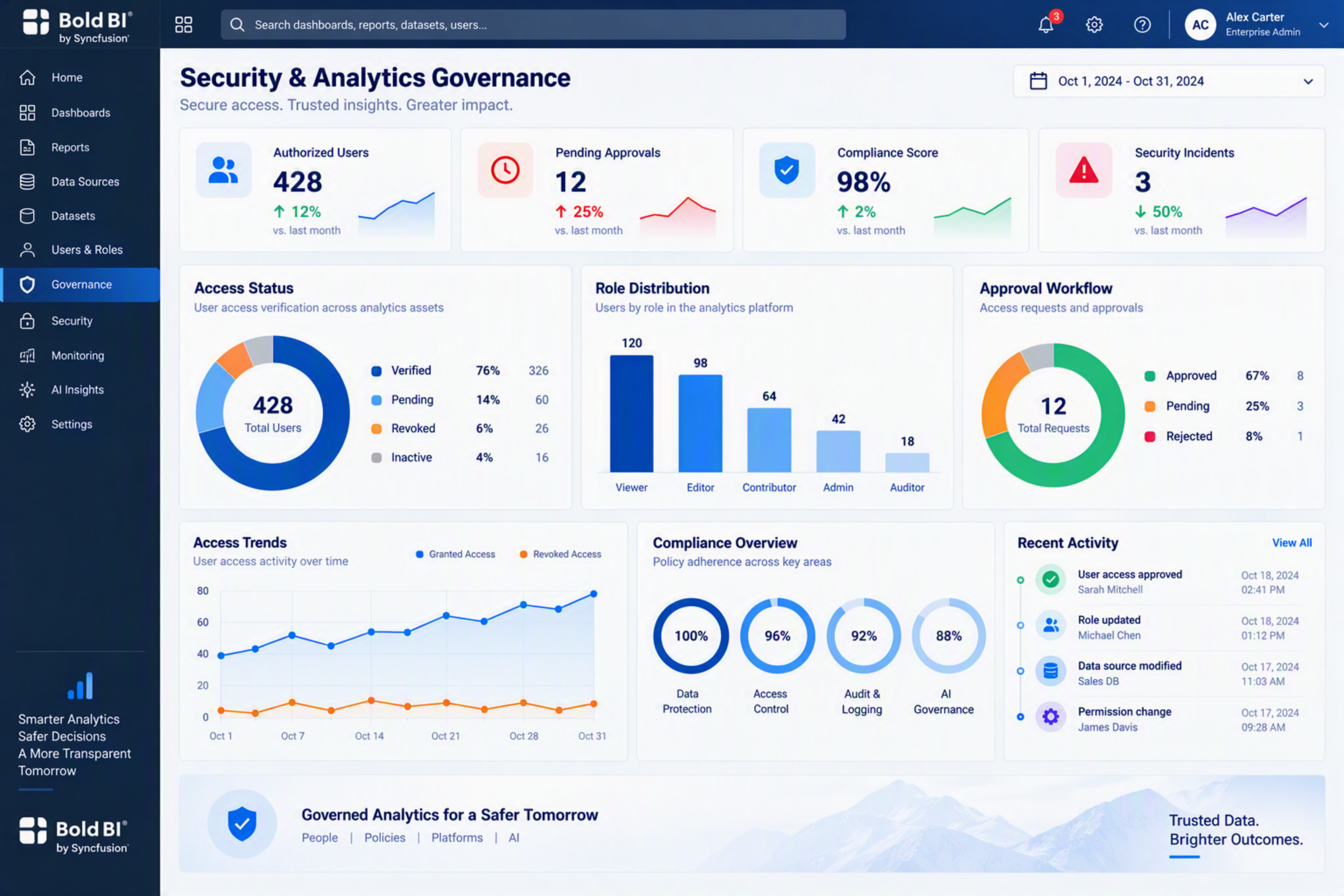
Was the Action Authorized?
Not every change is a concern, but every change should be verifiable. Organizations need confidence that activities align with established governance policies, security controls, and access permissions.
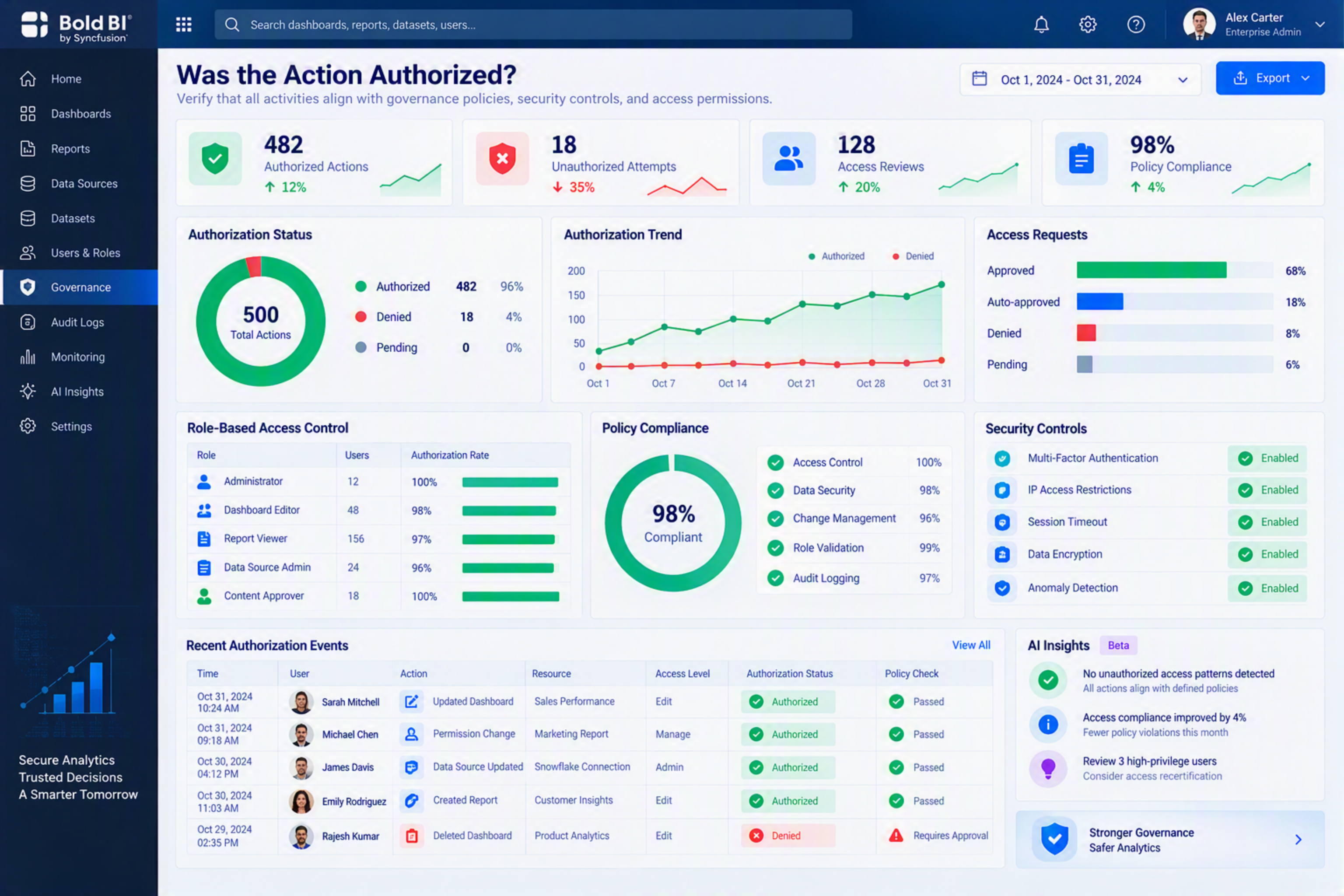
By answering these questions, audit trails help organizations move from assumptions to evidence. Instead of treating analytics as a black box, teams can trace activities, validate changes, and better understand the environment behind AI-generated insights.
This visibility delivers several important benefits:
- Greater transparency: Audit trails provide visibility into dashboard updates, permission changes, user activities, and system events. This helps organizations understand how their analytics environments evolve over time.
- Improved accountability: Recorded actions are linked to a user and timestamp, making it easier to understand ownership and responsibility when changes occur.
- Stronger governance: Organizations gain better oversight across dashboards, settings, permissions, and administrative actions, helping maintain governance standards at scale.
- Faster investigations: Instead of spending days asking who changed a dashboard, KPI, or permission setting, teams can quickly filter audit records by user, action, event type, and timestamp to identify the cause, often in minutes.
- Support for responsible AI adoption: Responsible AI requires more than intelligent algorithms. It requires analytics environments that are transparent, accountable, and governed. Audit trails help provide that foundation.
To build trust effectively, organizations must understand which activities, changes, and governance events should be recorded in the first place.
What Should an Analytics-Focused AI Audit Trail Capture?
An effective AI audit trail should capture the activities and changes that can influence analytics outcomes and AI-generated insights. By maintaining visibility across the analytics environment, organizations can better investigate unexpected results, strengthen governance, and validate AI-driven recommendations.
- User activity: Track user logins, dashboard views, exports, comments, and other interactions to understand how analytics assets are being accessed and used. User-level visibility helps establish accountability and supports activity monitoring.
- Dashboard and analytics changes: Monitor dashboard edits, widget updates, KPI modifications, schedule changes, and report configuration updates. These changes can directly affect the insights and recommendations users receive.
- Permission and access changes: Record role assignments, permission updates, user management activities, and authentication-related changes. Maintaining visibility into access controls is essential for security and governance.
- Administrative and system events: Track administrative actions such as settings updates, tenant management activities, licensing changes, and system configuration changes that may impact the analytics environment.
- Tenant and governance events: For enterprise and multi-tenant deployments, audit trails should record tenant-level activities, cross-tenant administrative actions, governance events, and policy-related changes to help maintain oversight at scale.
- Audit metadata: Every event should include supporting details such as the user, timestamp, action performed, affected resource, and event type. This context makes investigations and audits more effective.
It is important to understand the scope of an audit trail. Bold BI® audit trail focuses on configuration and structural activities such as dashboard updates, user actions, permission changes, schedules, tenant activities, and administrative events. Audit records are designed to provide visibility into operational and governance activities that affect the analytics environment.
Understanding the Broader AI Audit Trail Landscape
As AI adoption grows, organizations are expanding auditability beyond traditional analytics activities. In some AI systems, audit trails may also capture prompts, model interactions, generated outputs, approval workflows, and automated actions. These records help organizations improve traceability across the broader AI lifecycle.
However, auditability requirements vary depending on how AI is implemented. In analytics platforms, trust often depends not only on AI interactions themselves but also on the environment that influences AI-generated insights. Changes to dashboards, metrics, permissions, schedules, governance settings, and administrative configurations can directly affect the recommendations users receive.
For this reason, organizations should view AI auditability as a combination of two complementary layers:
- AI lifecycle auditability focused on prompts, outputs, approvals, and AI-driven actions.
- Analytics environment auditability focused on dashboards, permissions, configurations, governance controls, and user activities that shape analytics outcomes.
Together, these capabilities help organizations strengthen transparency, accountability, and trust in AI-powered decision-making. This article focuses primarily on the analytics environment layer because changes to dashboards, permissions, configurations, and governance settings can directly influence the insights users receive.
AI Audit Trail vs Audit Log vs AI Governance
Although these terms are often used interchangeably, they serve different purposes in modern analytics environments.
| Area | Audit Log | AI Audit Trail | AI Governance |
| Purpose | Records system events | Creates a traceable history of actions and decisions | Establishes policies and controls |
| Focus | Individual events | Context, accountability, and traceability | Responsible AI and risk management |
| Scope | Technical activity tracking | User activity, configuration changes, permission updates, and governance events | Organization-wide governance framework |
| Example | User login event | Dashboard change that influenced an AI recommendation | Policies defining AI usage standards |
| Primary Value | Operational visibility | Transparency and accountability | Compliance and responsible AI adoption |
In simple terms, audit logs record what happened, AI audit trails explain how events influence outcomes, and AI governance defines the rules that guide responsible AI use.
Why Log Retention and Immutability Matter
Trust depends on reliable records. Audit trails provide value only when historical events remain available, accurate, and protected from unauthorized modification. Bold BI® stores audit records securely, supports exporting logs, and maintains immutable audit records. Retention follows your database configuration policies, helping organizations preserve a trustworthy history of analytics activity for investigations, governance reviews, and operational audits.
Now let’s look at real-world scenarios where audit trails help organizations strengthen trust in AI-generated insights.
Real-World Scenarios Where Audit Trails Make a Difference
Audit trails become even more valuable as analytics expands across SaaS applications, embedded experiences, enterprise deployments, and multi-tenant environments. The following examples show how organizations use auditability to strengthen trust, improve governance, and investigate unexpected analytics outcomes.
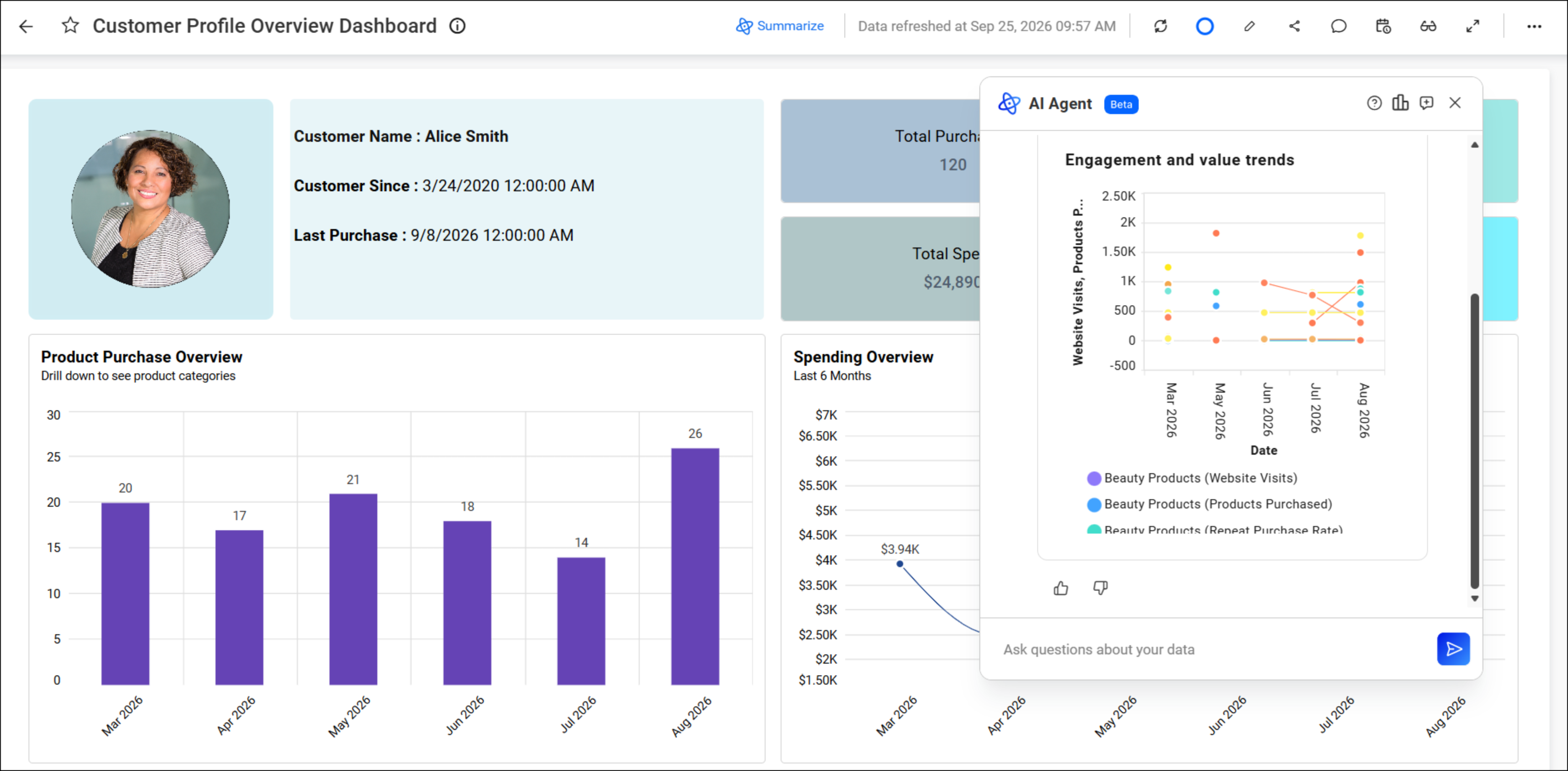
Embedded Analytics: Supporting Transparency Across Customer Portals
- Scenario: A customer notices a significant change in a KPI displayed within an embedded analytics dashboard.
- Challenge: Without visibility into recent activities, the organization struggles to determine whether the change resulted from business performance or a dashboard modification.
- How audit trails help: Audit records create a clear history of changes across embedded analytics experiences, making it easier to determine whether a KPI shift reflects actual business performance or a recent dashboard modification. This helps organizations explain outcomes and strengthen customer trust.
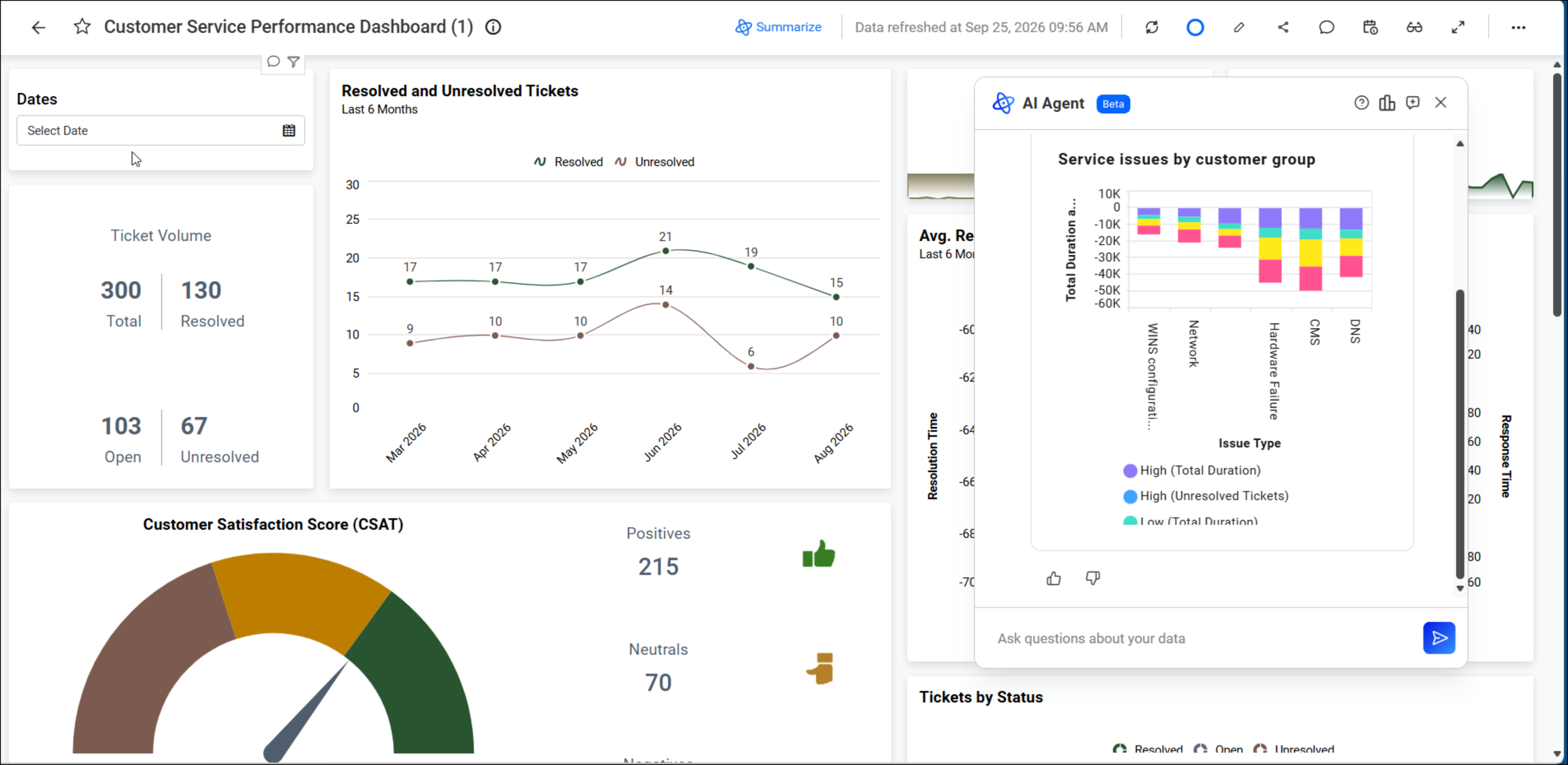
Multi-Tenant Analytics: Scaling Governance Across Environments
- Scenario: A managed service provider supports analytics for several customer environments within a shared deployment.
- Challenge: Administrators need to monitor activities within individual tenants while maintaining oversight across the entire deployment.
- How audit trails help: Tenant-level, multi-tenant, and User Management Server (UMS) audit visibility help administrators monitor activities across environments while maintaining oversight at scale. This makes it easier to support multiple customers, business units, or regions from a single analytics deployment.
Now that we’ve explored where audit trails deliver value in practice, let’s look at some practical steps organizations can take to implement auditability effectively across their analytics environments.
Practical Tips for Implementing an AI Audit Trail
Building an effective AI audit trail isn’t just about collecting activity records. The goal is to create a transparent and governed analytics environment that supports trust, accountability, and responsible AI adoption.
Organizations can strengthen their auditability strategy by following these practices:
- Define clear audit requirements before deploying AI-powered analytics initiatives.
- Monitor dashboard updates, permission changes, and user activities consistently.
- Establish ownership and accountability for analytics assets and governance processes.
- Review audit records regularly to identify unusual activities and potential risks.
- Integrate audit information with existing security, governance, and operational workflows.
- Maintain visibility across embedded analytics, SaaS deployments, and multi-tenant environments.
- Use APIs and automation to streamline monitoring and governance activities.
By approaching auditability as an ongoing governance practice rather than a compliance exercise, organizations can build greater confidence in their analytics environments while supporting long-term AI adoption.
As organizations strengthen auditability practices today, they also position themselves for the next generation of AI-powered analytics.
AI Audit Trail and Regulatory Readiness
As AI adoption grows, organizations face increasing expectations around transparency, accountability, and governance. Frameworks such as the EU AI Act, NIST AI Risk Management Framework, and ISO/IEC 42001 emphasize traceability and oversight throughout the AI lifecycle. Many emerging AI governance frameworks emphasize traceability across both the AI lifecycle and the systems that influence AI-generated outcomes. Audit trails help organizations prepare for these evolving expectations by providing the visibility and traceability needed to demonstrate accountability.
The Future of Governed and Agentic Analytics
Analytics is rapidly evolving from dashboards that report what happened to AI systems that explain, recommend, and even automate actions.
As organizations adopt AI assistants and agentic analytics, trust will depend on more than intelligent recommendations. Businesses will need visibility into how insights were generated, what changes influenced them, and whether recommendations can be traced and validated.
At the same time, governed AI will increasingly rely on trusted semantic layers that provide shared business definitions and governed metrics across the organization. Trusted semantic layers help ensure that both AI systems and your teams rely on the same governed definitions, metrics, and calculations. This shared business context helps AI-generated insights remain consistent, explainable, and aligned with organizational standards.
As AI agents begin taking actions instead of simply generating recommendations, organizations will need visibility into those actions, the systems involved, and the governance controls surrounding them. Trust will depend not only on what an AI agent suggests, but also on what it does.
Together, semantic layers and AI audit trails create a stronger foundation for AI governance by helping organizations validate insights, maintain accountability, and build confidence in AI-powered decision-making.
Where Bold BI Fits into the Future of Trusted Analytics
As organizations adopt AI-powered analytics, trust increasingly depends on visibility, accountability, and governance. Generating insights is only part of the challenge. Teams also need to understand what changed, who made the change, and whether the analytics environment supporting those insights remains properly governed.
With Bold BI, your team can:
- Monitor dashboard updates, user activities, permission changes, schedules, tenant operations, and administrative events through Bold BI audit trail.
- Filter audit records by user, action, event type, and date to investigate unexpected changes and identify their source.
- Support governance across tenant-level, multi-tenant, and User Management Server (UMS) environments in self-hosted deployments for enterprise-scale oversight.
- Export audit records and integrate with monitoring workflows through APIs, webhooks, and SIEM platforms such as Splunk, Microsoft Sentinel, and AWS CloudWatch.
- Maintain visibility into operational and governance activities across analytics environments.
- Use AI-powered analytics capabilities while maintaining appropriate governance and visibility into analytics operations.
- Use AI capabilities such as AI Copilot, AI Assistant, AI Agent, Prompt-to-Dashboard, Smart Narrations, and AI Credits Management within a governed analytics environment.
- Deploy across cloud, self-hosted, Docker, Kubernetes, and on-premises environments while applying governance controls appropriate to each deployment model.
By combining auditability, governed AI, enterprise scalability, and flexible deployment options, Bold BI helps teams make decisions with greater confidence.
As trust becomes a defining factor in analytics adoption, organizations that invest in transparency, governance, and responsible AI practices will be better positioned to unlock the full value of AI-generated insights.
Conclusion
AI helps organizations uncover insights faster, automate analysis, and make more informed decisions. However, the success of AI-powered analytics depends on more than advanced algorithms and intelligent recommendations. It depends on trust.
Organizations need confidence that the analytics environments supporting AI-generated insights are transparent, governed, and accountable. Without visibility into user activities, dashboard updates, permission changes, and system events, even valuable insights can be questioned.
This is why AI audit trails are becoming an essential part of modern analytics strategies. By improving transparency, strengthening governance, and creating clear accountability across analytics environments, audit trails help organizations bridge the gap between AI-generated insights and trusted decision-making.
As AI-native analytics, embedded analytics, SaaS analytics, enterprise multi-tenancy, and agentic analytics continue to evolve, auditability will play an increasingly important role in ensuring analytics remains not only intelligent but also trustworthy.
Ready to build trusted analytics?
Whether you’re delivering internal BI, embedded analytics, customer-facing dashboards, or AI-powered insights, Bold BI® helps your team strengthen governance, improve accountability, and make decisions with greater confidence.
- Start a free trial (No credit card required).
- Request a live demo.
Frequently Asked Questions
-
-
- 1.
What is an AI audit trail?
An AI audit trail is a documented record that helps organizations trace activities, decisions, changes, and events related to AI-assisted workflows and analytics environments. Depending on the implementation, it may include AI interactions, governance activities, user actions, and system changes that influence outcomes.
- 2.
Why are AI audit trails important?
AI audit trails improve transparency, accountability, and governance, helping organizations build trust in analytics and AI-assisted decision-making.
- 3.
How do AI audit trails build trust in AI-generated insights?
They provide visibility into user activities, dashboard updates, permission changes, and other events that may influence analytics outcomes.
- 4.
What should an AI audit trail track?
It should track dashboard edits, user activity, permission updates, administrative actions, system changes, and governance-related events.
- 5.
Why are AI audit trails important for embedded analytics and SaaS applications?
They help organizations maintain transparency across customer-facing analytics experiences, making it easier to investigate issues, validate insights, and build customer trust.
- 6.
How does Bold BI Audit Trail support analytics governance?
Bold BI Audit Trail helps organizations monitor dashboard changes, user activities, permission updates, and administrative actions, providing greater visibility and accountability across analytics environments.
- 7.
Can Bold BI Audit Trail help organizations operating in multi-tenant environments?
Yes. Tenant-level, multi-tenant, and User Management Server (UMS) audit visibility are available in self-hosted (on-premises) Bold BI deployments from version 8.1 onward. These capabilities help administrators monitor activities across tenants and maintain governance at scale.
- 8.
Does Bold BI Audit Trail capture dashboard data or analytics results?
Bold BI’s audit trail records configuration and operational events such as dashboard modifications, user actions, permission changes, schedules, tenant activities, and administrative events. Organizations should review their implementation and audit policies to determine what information they retain in their environment.
- 1.
-