Embedded Analytics Security: Risks and Best Practices

 21 min read
TL;DR: Embedded analytics security is critical to delivering trustworthy, customer-facing analytics experiences. As analytics becomes a standard feature in SaaS products, organizations must protect tenant data, enforce granular access controls, secure AI-powered experiences, and meet compliance requirements, or risk turning a product differentiator into a liability.
Introduction
Embedded analytics has moved from a nice-to-have to a standard product feature. The market is valued at $78.53 billion in 2025 and is projected to reach $169.18 billion by 2031, with cloud deployments already accounting for 59.1% of it (Mordor Intelligence, 2026). That growth cuts both ways.
Embedding analytics into your product puts real-time dashboards in front of customers, partners, and employees without asking them to leave your application. It also puts your data one misconfigured permission away from being exposed to the wrong person. Every dashboard you embed becomes part of your product’s attack surface, and every login, filter, and export is a decision about who sees what.
Getting this right protects more than data. It shortens security reviews during enterprise deals and lets your team ship customer-facing dashboards without waiting on a manual audit for every release.
To build a secure analytics experience, it’s important to understand how embedded analytics security differs from that of a traditional, separate BI application, and the controls needed to protect customer data at scale.
Embedded Analytics Security vs. Traditional BI Security
Although both approaches aim to secure data, embedded analytics introduces unique challenges related to customer access, tenant isolation, and application integration.
| Aspect | Embedded analytics security | Traditional BI security |
| Primary Users | Customers, partners, external users, and internal users. | Primarily internal employees and analysts. |
| Deployment Context | Embedded within applications and customer portals. | Accessed through dedicated BI platforms or reporting portals. |
| Data Exposure Risk | Larger attack surface due to customer-facing access, APIs, embedded components, and multi-tenant deployments. | Smaller attack surface primarily limited to internal BI environments and enterprise users. |
| Tenant Isolation | Often requires tenant isolation mechanisms to separate customer data. | Generally is less reliant on tenant isolation controls. |
| Access Control Model | Commonly uses RBAC and row-level security (RLS) to manage access. | Often focuses on departmental or role-based permissions. |
| Authentication Requirements | Frequently integrates with SSO, OAuth, OpenID Connect, and application authentication flows. | Commonly integrates with corporate identity providers and internal directories. |
| Attack Surface | May include APIs, embedded components, web applications, AI services, and external users. | Often centered around internal BI infrastructure and enterprise networks. |
| Scalability Challenges | Designed to support users across multiple organizations and tenants. | Typically focused on users within a single organization. |
| Compliance Considerations | May need to align with customer-specific regulatory and business requirements. | Primarily aligned with organizational compliance requirements. |
| Audit and Monitoring Needs | Often requires tenant-aware activity tracking and auditing. | Commonly focused on monitoring internal user activity. |
| AI Security Concerns | Requires controls to maintain data boundaries across AI-powered experiences. | Often focused on internal AI governance and data access policies. |
| Security Responsibility | Shared between the analytics platform and the implementing organization. | Usually managed by internal IT, security, and governance teams. |
| Business Impact of a Breach | May affect customers, user trust, and business operations. | May affect internal operations, users, and organizational data. |
The key takeaway is that traditional BI security focuses on protecting organizational data, while embedded analytics security focuses on protecting customer data at scale.
To understand why, let’s look at the most common security risks organizations face when embedding analytics into their applications.
Core Risks in Embedded Analytics
The risks associated with embedded analytics are not theoretical. They emerge from real-world deployment scenarios where analytics becomes accessible to thousands of external users across multiple organizations, on the same class of cloud infrastructure most embedded analytics deployments run on.
Cloud security reality check
Infrastructure hosting modern applications remains a frequent target for security incidents. According to the Wiz 2025 Cloud Data Security Report, 54% of cloud environments contain exposed workloads with sensitive data, while 72% have publicly exposed databases lacking sufficient access controls. For organizations embedding analytics into customer-facing applications, these findings reinforce the importance of strong tenant isolation, access controls, and governance from the start.
Understanding these risks is the first step toward building a secure analytics architecture:
- Cross-tenant data exposure: When tenant isolation is not properly enforced, users may gain access to another customer’s data, leading to security breaches, compliance violations, and loss of trust.
- Misconfigured access controls: Incorrectly assigned permissions can grant users broader access than intended, creating hidden security gaps that increase the risk of unauthorized data exposure. This maps directly to OWASP’s API Security Top 10, where Broken Object Level Authorization, a user accessing another tenant’s records simply by changing an ID in a request, is ranked the #1 API risk.
- UI-only filtering that can be bypassed: Relying solely on dashboard or front-end filters can leave underlying data unprotected, allowing users to access records beyond their authorized scope through direct queries, APIs, or misconfigured assets.
- AI-expanded attack surface: AI-powered features such as copilots and natural language querying can introduce new risks by exposing sensitive metadata, insights, or tenant-specific information without proper governance.
For example, a software vendor embedding customer usage dashboards without proper tenant isolation could unintentionally expose one customer’s metrics and operational data to another customer. Preventing this often depends less on adding new features and more on enforcing the right controls from the beginning.
Now that we’ve identified the key risks, let’s examine the security framework that helps mitigate them.
The 6 Layers of Embedded Analytics Security
Effective security is rarely achieved through a single control. Organizations need multiple safeguards working together to create a defense-in-depth strategy, an approach reflected in frameworks like NIST’s Zero Trust Architecture (SP 800-207), which assumes no user or request should be trusted by default, regardless of network location.
The following six layers form the foundation of a secure embedded analytics environment:
Access control (RBAC and row-level security)
Role-based access control (RBAC) determines what a user can do, such as building reports or exporting data. Row-level security determines what data they can see, filtered by identity and tenant. Both should be enforced at the query layer, never in the interface alone.
In practice, this means the identity your application already trusts should drive what a user sees in a dashboard. When a user authenticates, the claims in their SSO token or JWT (tenant ID, role, region, and so on) get passed to the analytics platform and evaluated as row-level filters before a single row of data is returned, not after the dashboard renders. If your analytics layer can only filter what’s displayed, rather than what’s queried, you don’t have row-level security; you have a suggestion.
Two conditions make this safe. The analytics platform must verify the token’s signature before trusting any claim inside it; an unverified JWT is just a user-supplied string. And the tenant identifier must come from those verified claims only, never from a query parameter, request body, or client-side variable the browser can reach. A tenant ID accepted from the client is Broken Object Level Authorization with extra steps. Get both conditions right, and one login can safely serve every tenant on your platform without a bespoke access layer for each new deal; get either wrong, and a single misrouted query can turn an enterprise security review into a stalled negotiation.
Authentication and single sign-on
You should log into embedded dashboards with the identity they already use in your application, through standards like SAML 2.0 or OpenID Connect (typically carrying signed JWTs), which avoids giving attackers a second set of credentials to target. The payoff shows up before a contract is even signed: fewer credentials to phish, fewer passwords for your support team to reset, and one less identity system for a prospect’s security team to interrogate during review. Multi-factor authentication (MFA) enforced at the identity provider adds a second layer of defense against credential theft and phishing, and should live upstream in your existing IdP rather than be rebuilt inside the analytics platform itself.
Encryption
Data should be encrypted at rest, typically with AES-256, and in transit using TLS 1.2 or higher (the protocol behind HTTPS), protecting information both while stored and while moving between systems. Handled well, encryption stops being a question prospects ask and becomes a box already checked on their security questionnaire, one less back-and-forth before the deal closes.
Multi-tenant data isolation
In shared environments, one tenant should never be able to see, query, or infer another tenant’s data, even indirectly. NIST’s cloud-native access control guidance is a useful reference point for teams designing isolation controls across multi-cloud or multi-tenant infrastructure. Get this wrong once, and a single cross-tenant leak can cost you the customer whose data was exposed, along with every prospect who hears about it during their own due diligence; get it right, and tenant isolation reads as a settled line in your security documentation rather than a live incident your team is scrambling to contain.
Audit logging
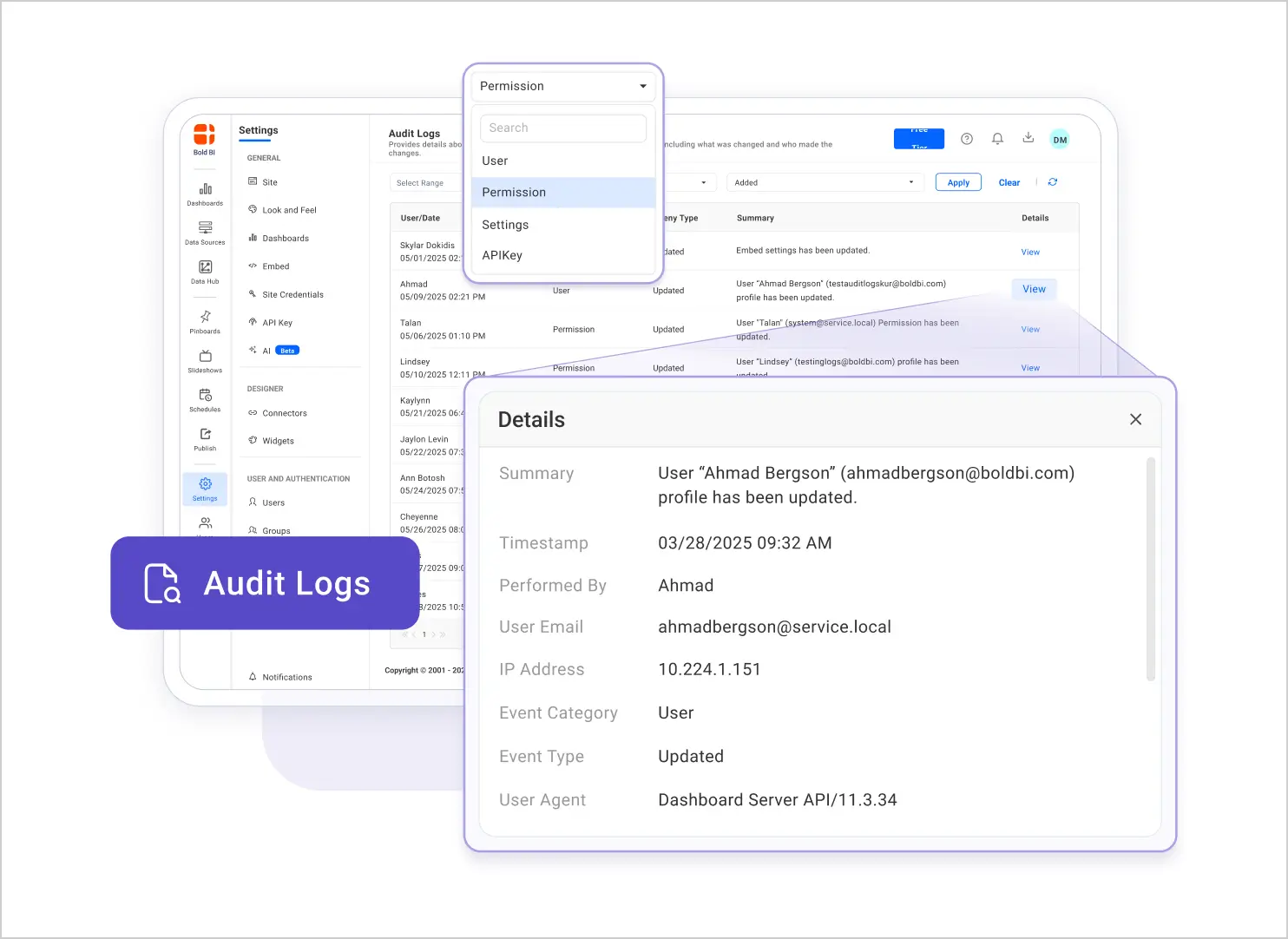
Every login, dashboard view, export, and configuration change should be logged with the details of who performed the action and when. This also supports alignment with compliance requirements such as SOC 2 and HIPAA. A complete, tenant-aware audit trail is usually what separates a security review that wraps up in a single call from one that stalls for weeks while your team reconstructs who accessed what, after the fact.
Compliance alignment
Your platform should provide capabilities that help organizations align with the regulatory frameworks relevant to their industry, such as GDPR for personal data or HIPAA for healthcare information, with documented controls behind that alignment. That documentation is what lets your team answer a compliance questionnaire directly, rather than routing every regulatory question through legal on a deal-by-deal basis.
Together, these six layers do more than reduce breach risk. They shorten the security review that increasingly gates every enterprise deal, turning it from a blocker into a checklist your team can walk through in one sitting.
However, one area deserves special attention: how tenant data is separated.
Multi-Tenant Data Isolation Models
Not every embedded analytics deployment isolates tenants the same way, and the model you choose affects both cost and risk. Three approaches are common:
- Shared schema with row-level security: All tenants share the same database tables, with row-level security filtering results by tenant. This is typically the lowest-cost approach but depends on consistent, well-tested filtering logic.
- Isolated schemas per tenant: Each tenant gets a separate schema within a shared database instance, giving cleaner separation at a moderate cost increase.
- Isolated databases per tenant: Each tenant gets a dedicated database, offering the strongest isolation of the three models, often preferred in regulated industries, at the highest infrastructure cost.
Regulated industries, such as healthcare and financial services, often require isolated databases. SaaS products serving many small customers more commonly use shared schemas with row-level security.
Security Considerations for AI-Powered Embedded Analytics
AI copilots and natural-language query features are quickly becoming standard in embedded analytics, and they introduce a genuinely new category of risk on top of the six layers above. This isn’t a hypothetical concern: Gartner predicts that by 2027, more than 40% of AI-related data breaches will stem from the improper use of generative AI across borders — unintended cross-border data transfers that occur when GenAI is embedded into products without clear oversight (Gartner, 2025).
Four risks specific to AI-powered analytics are worth planning for directly, and the first three map closely to the OWASP Top 10 for LLM Applications:
- Prompt injection: A user phrases a natural-language query in a way designed to make the AI ignore its access boundaries and return data outside their tenant or role.
- Sensitive metadata and schema leakage: An AI copilot that can “see” your data model to answer questions may inadvertently reveal table names, column definitions, or other tenants’ aggregate figures in its response, even when it isn’t returning raw records.
- Uncontrolled model endpoints: Ungoverned connections between the AI feature and third-party model providers can move data outside your compliance boundary without an obvious audit trail.
- Long-lived or exposed provider credentials: The API keys or tokens that connect an embedded analytics platform to an AI model provider are often long-lived by default, and if one is hardcoded into client-side code or a connection string, it can be pulled straight out of the browser or a leaked config file, no prompt injection or model compromise required.
The mitigation is the same principle as the rest of this guide, applied to a newer surface: AI features should inherit and enforce the same RBAC and row-level security rules as every other part of the platform, never bypass them. Where the AI feature connects to external model providers, look for governance controls, such as bring-your-own-key (BYOK) model configuration, that let your organization control which models process your data and keep that decision auditable. Treat the credentials behind that connection like any other secret: keep them server-side and out of client-side code or connection strings the browser can read, and issue them as short-lived, rotating tokens rather than static long-lived keys, so a single exposed credential has a short shelf life and a narrow blast radius.
Who’s Responsible: Platform vs. Your Team
Embedded analytics security works best when responsibilities are clearly defined. The analytics platform provides core security capabilities, but organizations remain responsible for implementing and managing those capabilities appropriately.
| Analytics platform responsibilities | Product team responsibilities |
| Authentication integrations. | User lifecycle management. |
| RBAC and RLS capabilities. | Role configuration. |
| Encryption technologies. | Secure application architecture. |
| Audit logging infrastructure. | Monitoring and review processes. |
| Security updates and patches. | Access governance. |
| Enforcing tenant-level filtering at the data layer. | Defining who should access which data. |
| Maintaining compliance-ready infrastructure. | Monitoring access activity and audit reviews. |
Understanding this shared responsibility model helps reduce security gaps that often arise from unclear ownership. Organizations can build many of these controls themselves, but doing so introduces long-term maintenance responsibilities. As applications scale, every new dashboard, tenant, and AI-powered feature may require additional security reviews and governance processes.
Beyond technical controls, organizations must also evaluate compliance requirements.
Compliance and Certifications to Look For
Compliance is not a one-time checkbox. It requires ongoing monitoring as your data, users, and platform evolve. When evaluating an embedded analytics platform, look past marketing language like “supports compliance” and ask what the platform actually does to meet each requirement:
- GDPR sets requirements for handling the personal data of individuals in the European Economic Area (EEA) and can apply to organizations worldwide that process EEA residents’ data.
- CCPA sets requirements for handling the personal information of California residents and can apply to organizations worldwide that process California residents’ data. Organizations evaluating analytics platforms should also understand how access, deletion, and opt-out requests are handled, and whether that extends to data surfaced through embedded dashboards.
- HIPAA sets standards for healthcare environments and protected health information (PHI). If an analytics vendor processes PHI on behalf of a covered entity, it typically acts as a business associate and should be willing to sign a Business Associate Agreement (BAA), a key requirement for HIPAA-compliant deployments.
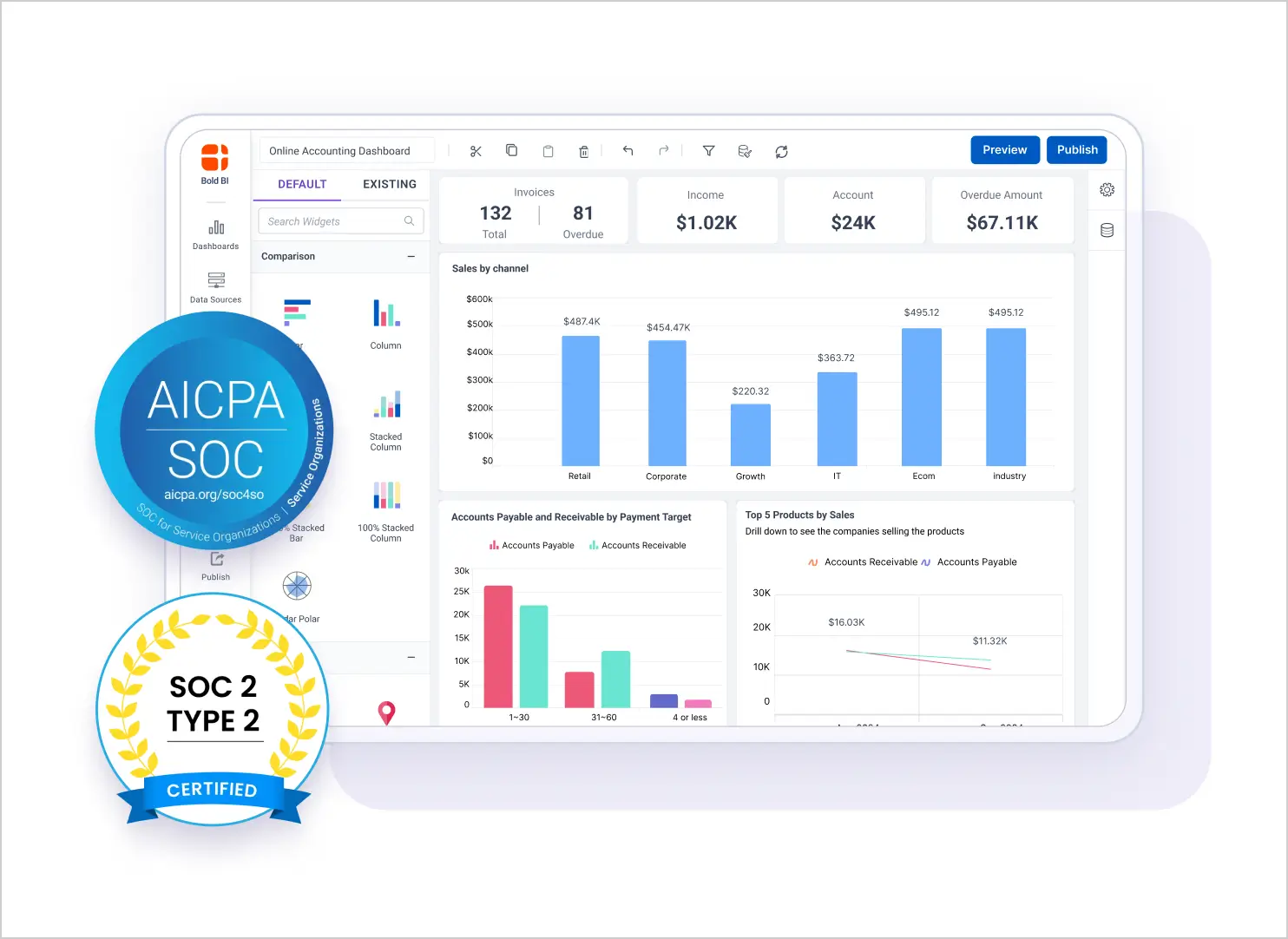
- SOC 2 Type 2 validates ongoing security, availability, and governance controls, not just a point-in-time assessment.
- The vendor will sign a Data Processing Agreement (DPA) if your deployment includes EU/EEA personal data.
- Data residency options align with your regulatory obligations, and the vendor discloses its sub-processors and applicable cross-border data transfer mechanisms.
Bold BI®, for example, maintains a SOC 2 Type 2 report covering the encryption, access control, and audit logging capabilities described in this guide. You can review the documented controls on Bold BI’s Legal Center security page.
To make the evaluation process easier, here’s what to look for, followed by a practical checklist buyers can use.
What to Look for in an Embedded Analytics Platform’s Security Architecture
Vendor security pages tend to converge on the same list of framework names. The more useful evaluation is architectural: ask where and how each control is enforced, not just whether it exists.
- Is row-level security enforced at the query layer, or only in the UI? Ask the vendor to show you what happens when a request bypasses the dashboard entirely, through a direct API call, for instance. If filtering only happens in rendering, it isn’t real security.
- Can tenants be isolated at the architecture level, not just the data level? Understand which of the three isolation models (shared schema, isolated schema, isolated database) the platform supports, and whether you can choose per-tenant based on contractual or regulatory requirements.
- Does the audit trail cover AI features the same way it covers dashboards? If the platform offers an AI copilot or natural-language query, its access, exports, and responses should generate the same audit log entries as a standard dashboard interaction.
- Are compliance claims backed by documentation, not just badges? Ask for the actual SOC 2 report, ISO certificate, or a mapping of controls to the relevant framework, rather than a logo on the pricing page.
- Who owns what, in writing? Get clarity on the platform’s responsibilities versus your team’s, using a shared-responsibility model like the one above, before the contract is signed rather than after an incident.
Run through these five questions with any vendor, and the answers tend to fall into two camps: platforms where RBAC, row-level security, tenant isolation, and AI-aware audit logging are already built into the product, and platforms where the same controls are technically possible but require your team to design and maintain the middleware, filtering logic, or logging integration yourselves. Bold BI is built in the first camp. These controls ship as part of the platform rather than as a project your engineering team has to scope and own. Neither approach disqualifies a vendor, but it determines who carries the maintenance burden once you’re in production, which is worth asking about directly rather than assuming a “yes” on a feature list means the control is already built in.
Embedded Analytics Security Best Practices
As embedded analytics becomes a core feature of modern applications, organizations need a proactive approach to protect customer data and prevent unauthorized access. The following best practices help establish a secure and scalable embedded BI environment.
- Enforce role-based access control (RBAC): Use RBAC to ensure users can access only the dashboards, reports, and features required for their responsibilities.
- Implement row-level security (RLS): Apply row-level security to restrict users to only the records and data relevant to their role or organization.
- Integrate secure authentication and single sign-on (SSO): Enable SSO and centralized authentication to simplify user management while strengthening security.
- Use multi-tenant data isolation: Enforce tenant boundaries at the application and data layers to prevent cross-tenant data exposure.
- Encrypt data in transit and at rest: Protect sensitive information by encrypting data during transmission and while it is stored.
- Enable comprehensive audit logging: Track user activities, access events, and administrative actions to improve visibility and support compliance.
- Apply security controls beyond the user interface: Enforce security at the data layer so users cannot bypass restrictions through the application interface.
- Secure APIs and embedding tokens: Use secure token management, encrypted communications, and controlled API access to protect embedded analytics environments.
- Establish AI governance controls: Ensure AI-powered features follow existing permissions and do not expose unauthorized data or insights.
- Regularly review permissions and security policies: Periodically audit roles, access rules, and security settings to identify and address potential vulnerabilities.
- Support regulatory and governance requirements: Ensure your analytics deployment includes capabilities that help meet industry and organizational requirements.
- Adopt a defense-in-depth approach: Combine multiple security layers, including authentication, RLS, encryption, auditing, and AI governance, to strengthen overall protection.
By implementing these embedded analytics security best practices, organizations can reduce risk, protect customer data, and confidently scale secure analytics experiences.
A Quick Buyer’s Checklist
Use this checklist when evaluating any embedded analytics platform, whether that is Bold BI or another provider:
- Row-level security is enforced at the query layer, not just in the interface.
- SSO integrates with your existing identity provider.
- Multi-factor authentication (MFA) is supported through your identity provider for an added layer of login security.
- Data is encrypted at rest and in transit.
- Tenant isolation is supported by the platform and can be integrated into your security architecture.
- Audit logs cover logins, dashboard access, and data exports.
- AI features, if offered, follow the same access rules as dashboards.
- The vendor documents its compliance controls rather than only naming frameworks.
Evaluating more than security? Our Embedded Analytics Buyer’s Guide covers the full picture, APIs, licensing models, and support structure alongside security, free to view, no form required.
With that framework established, here’s the difference between meeting these requirements yourself and starting from a platform that already has them built in.
How Bold BI Applies These Principles
Bold BI builds these layers directly into the platform, making it straightforward to run secure embedded BI at scale:
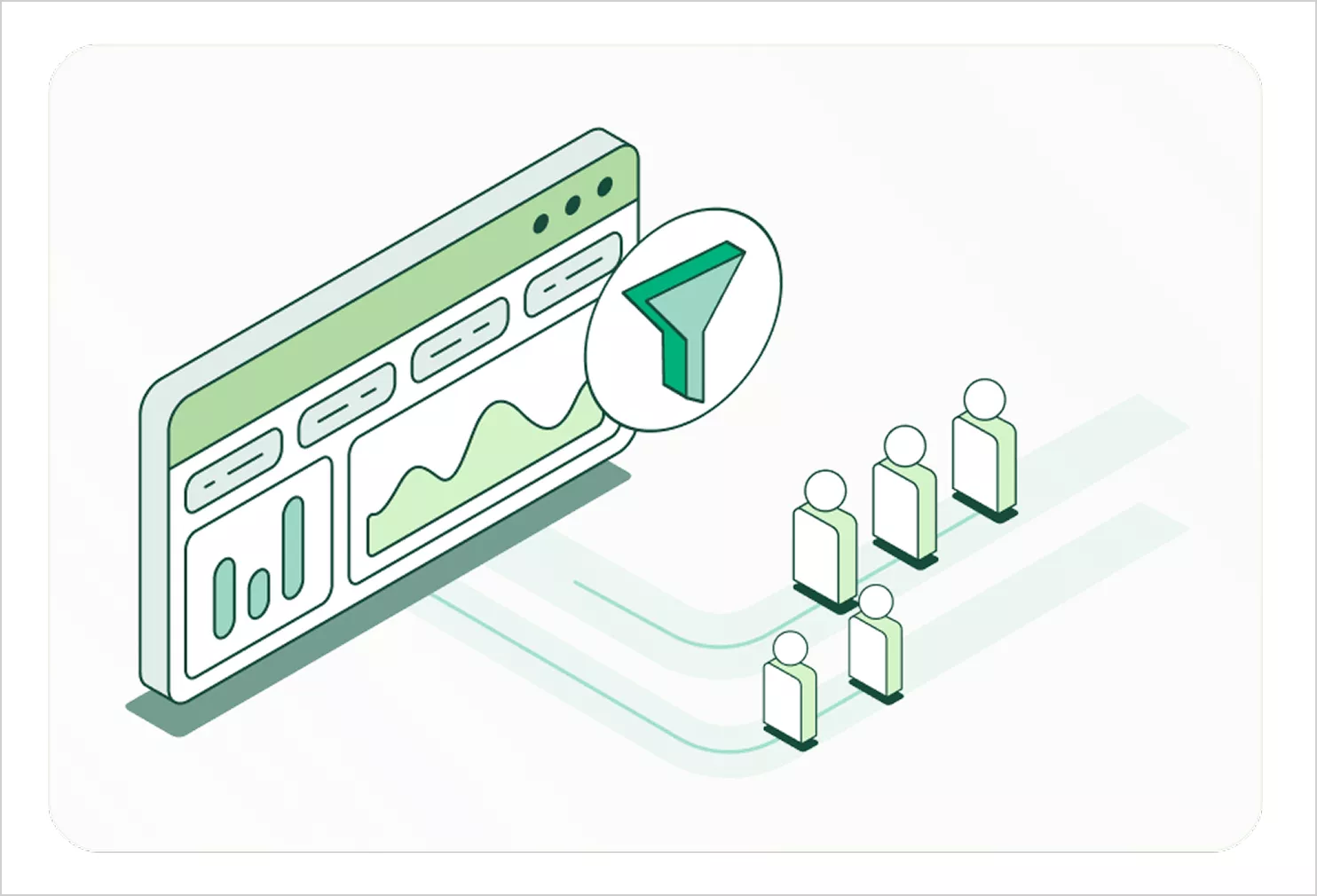
- Row-level security for data access scoped to every tenant: Ensures users can access only the data relevant to their roles.
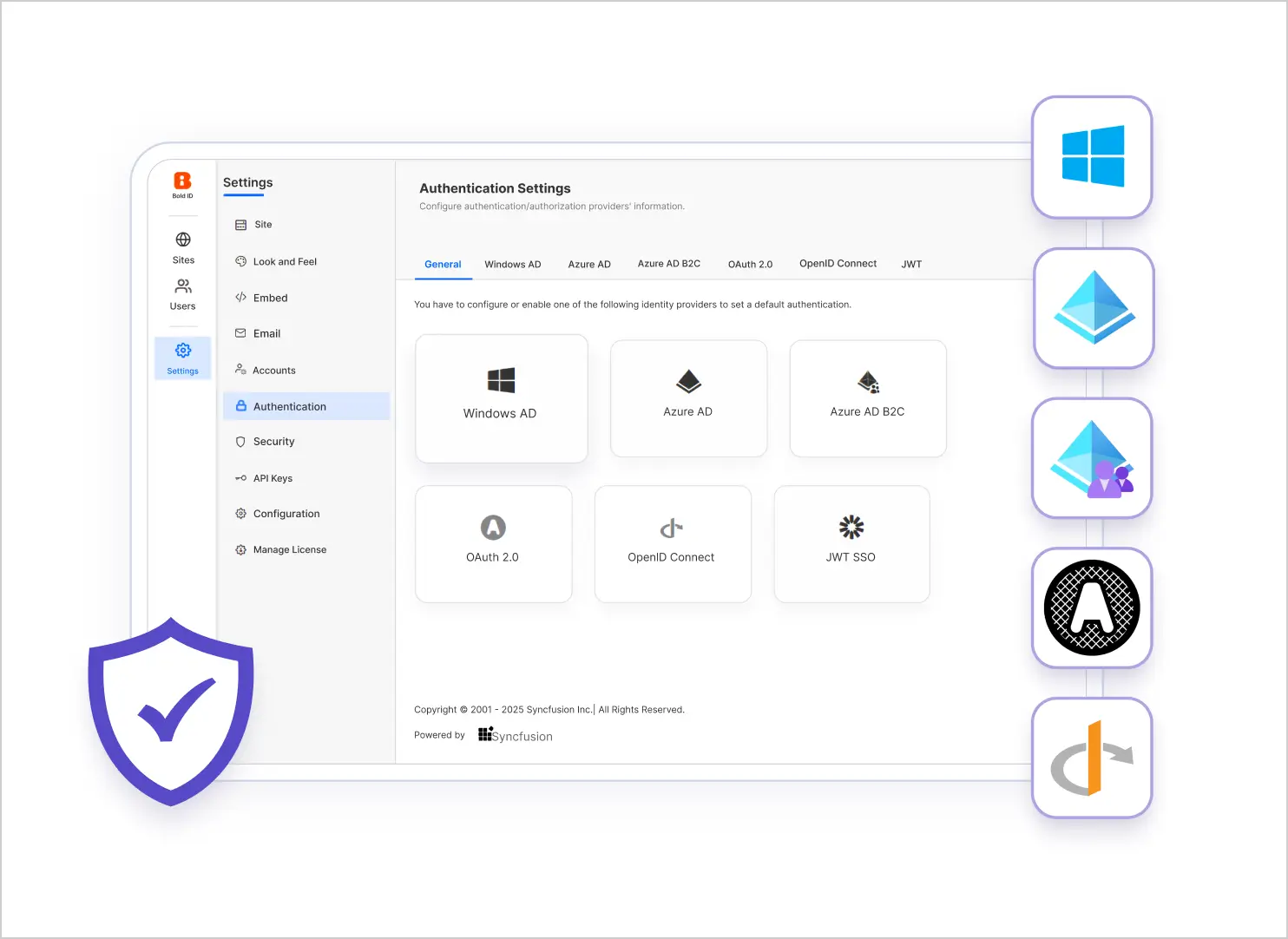
- Authentication and SSO for secure, frictionless sign-in: Allows users to securely sign in using existing enterprise credentials.
- Multi-tenant support for consistent customer data isolation: Helps maintain data isolation across customers in shared environments.
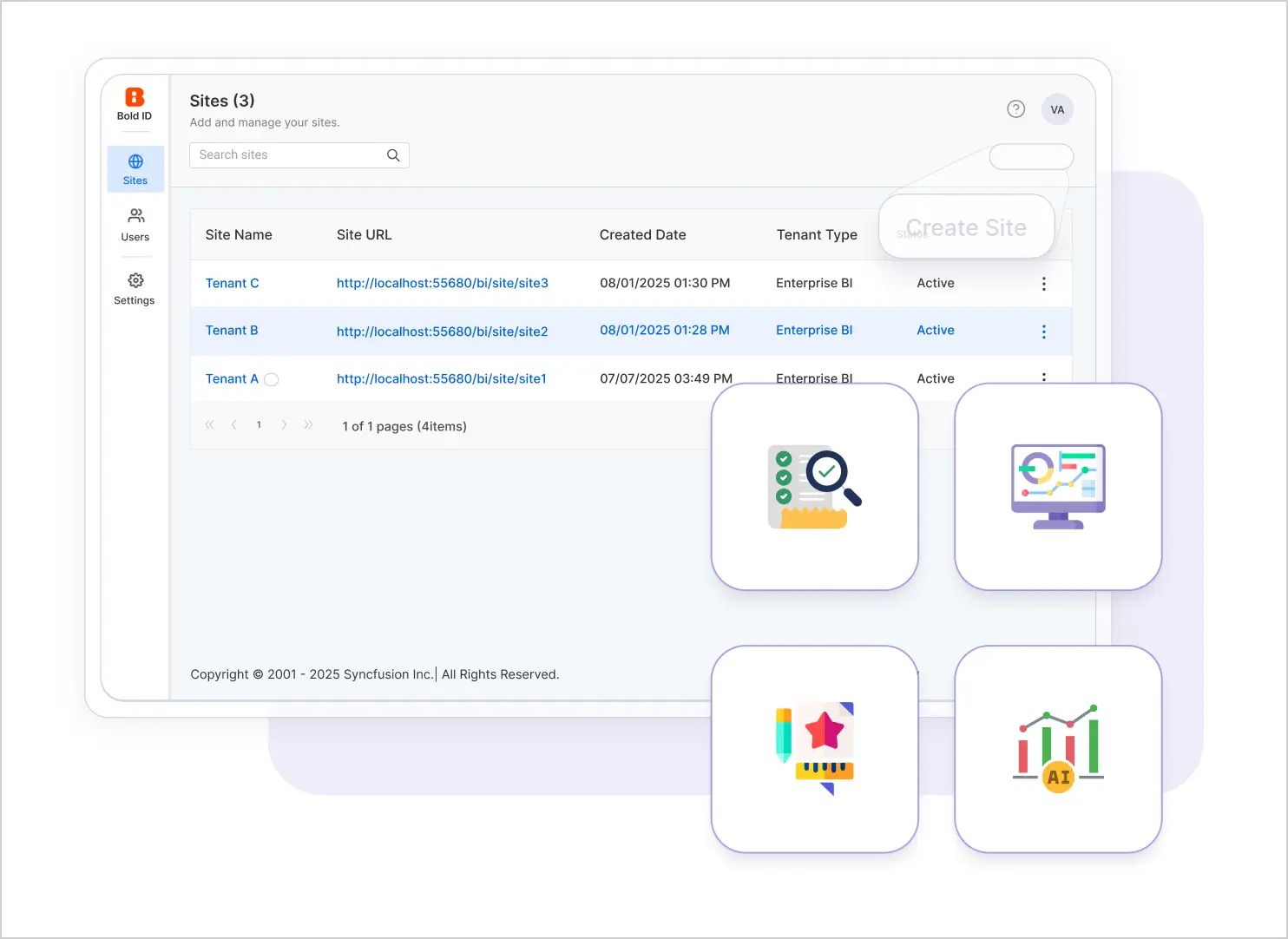
- Audit trails for full visibility and compliance-ready records: Provides visibility into user activities and dashboard interactions.
- Encryption for data protected at rest and in transit: Protects data at rest with AES-256 and in transit using TLS.
- SOC 2 Type 2 certification for independently verified security: Independently examined against industry-recognized security standards.
- AI Copilot and AI Agent for insights you can trust: Ensure AI-generated insights follow existing access controls. When Bold BI’s AI Copilot explains why a metric moved or an AI Agent flags an anomaly and recommends what to check first, that explanation is generated under the same row-level and role-based rules as the dashboard itself. The story it tells a user is exactly as tenant-scoped as the data behind it.
- BYOK for full control over AI governance: Gives organizations greater control over AI usage and governance.
For example, Assurance Agency, a full-service insurance brokerage, uses Bold BI’s row-level security to give different agent groups access to only their own data within a single embedded application, rather than building and maintaining separate dashboards per group. According to Sam Davidson, the agency’s Application Development Manager, the combination of row-level security, on-premises connectivity, and embedding flexibility cut development time, while Bold BI’s straightforward licensing model helped the team save around $200,000 in annual costs.
If you want a closer look at how these controls come together for SaaS-specific deployments, including industry examples for healthcare, retail, and finance, read our guide on “Secure Embedded Analytics for SaaS Applications in 2026.”
Final Thoughts
As embedded analytics becomes an increasingly important part of modern applications, security must be built into every layer of the analytics experience. Protecting customer data requires more than authentication. It demands strong tenant isolation, granular access control, encryption, auditing, compliance readiness, and, increasingly, AI governance.
Bold BI® helps organizations implement these principles through comprehensive RBAC, row-level security, SSO authentication, multi-tenant deployment support, audit logging, and enterprise-grade security capabilities designed for modern embedded analytics deployments.
Run Bold BI against the buyer’s checklist above with your own data: start a free trial or book a demo and see how many boxes it checks before your team writes a single line of security code.
Frequently Asked Questions
- 1.
What is embedded analytics?
Embedded analytics places dashboards, reports, and visualizations directly inside an application so users can access insights and metrics without switching to a separate BI platform.
- 2.
What is the difference between security analytics and embedded analytics security?
Security analytics focuses on detecting and investigating cybersecurity threats, while embedded analytics security focuses on protecting the dashboards, reports, and data delivered through embedded BI applications.
- 3.
What is embedded analytics security?
Embedded analytics security protects dashboards, reports, and data within applications through controls like authentication, access management, and data isolation.
- 4.
How is embedded analytics security different from security for traditional, separate BI apps?
Traditional business intelligence security is primarily focused on protecting internal analytics environments used by employees. Embedded analytics security must also protect customer-facing experiences and provide tenant isolation across external users and organizations.
- 5.
What’s the biggest risk with AI-powered embedded analytics?
The biggest risk is the accidental exposure of sensitive data through AI-generated responses or poorly governed AI interactions, such as an AI copilot revealing another tenant’s data through a natural-language query.
- 6.
Does row-level security replace the need for RBAC?
RBAC controls what users can access, while RLS controls which data records they can see. Both are necessary for secure analytics.